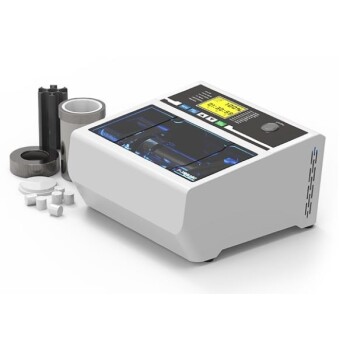
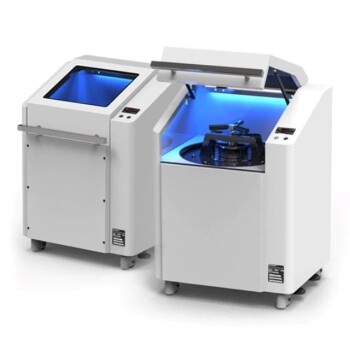
In Bisphenol A (BPA) degradation experiments, the laboratory shaker or constant temperature incubator acts as the primary mechanism for continuous, controlled agitation. Its function is to drive pollutant molecules from the bulk liquid phase to the surface of the catalyst, such as nanoscale zero-valent iron (nZVI), by providing a specific and constant stirring speed.
By standardizing the stirring power, these devices enhance convective mass transfer and eliminate macroscopic diffusion limitations. This ensures that the data you collect reflects true reaction kinetics rather than the physical speed at which molecules drift through the solution.
The Mechanics of Pollutant Transport
Enhancing Convective Mass Transfer
The primary challenge in degradation experiments is getting the target molecule (BPA) to the active sites of the catalyst.
Without external energy, molecules rely on slow natural diffusion. A shaker provides the stirring power necessary to generate convective mass transfer, physically forcing the liquid to circulate and transport molecules rapidly from the bulk solution to the catalyst surface.
Eliminating Macroscopic Limitations
When mixing is insufficient, a "stagnant film" can form around the catalyst particles.
This film acts as a barrier, slowing down the reaction regardless of how efficient the catalyst is. By maintaining a specific stirring speed, the incubator or shaker disrupts this layer, ensuring that macroscopic mass transfer limitations do not skew your results.
Ensuring Data Integrity
Isolating True Reaction Kinetics
To accurately measure how fast a chemical degradation occurs, you must control the environment variables.
If the solution is not well-mixed, you end up measuring the rate of diffusion rather than the rate of the chemical reaction. Using a constant temperature incubator ensures that the kinetic data obtained is a result of the chemical interaction between the BPA and the catalyst, not a lack of mixing.
Maintaining Solution Uniformity
Beyond kinetics, consistency is vital for reproducibility.
As noted in photocatalytic studies involving nanofiber membranes, these devices maintain a uniform mixture throughout the experiment. This ensures that all active sites on the catalyst are equally exposed to the pollutant, guaranteeing the accuracy of degradation efficiency tests.
Understanding Operational Variables and Trade-offs
The Impact of Agitation Speed
While mixing is essential, the speed of the shaker is a critical variable that must be optimized.
Insufficient speed fails to eliminate mass transfer resistance, leading to false-negative results regarding catalyst efficiency. Conversely, excessive speed could potentially damage delicate catalyst structures (like nanofibers) or introduce shear forces that alter the physical properties of the nZVI aggregates.
Temperature Stability vs. Mixing
A constant temperature incubator adds a layer of thermal control to the mechanical mixing.
This is a trade-off in complexity and cost compared to a simple shaker, but it is necessary if the reaction is temperature-sensitive. Without thermal regulation, the heat generated by vigorous mechanical stirring or external ambient changes could introduce thermal variables that corrupt the kinetic data.
Making the Right Choice for Your Goal
To ensure your BPA degradation data is valid and reproducible, you must align your equipment settings with your specific experimental objectives.
- If your primary focus is determining reaction kinetics: Ensure the stirring speed is high enough to reach a plateau where increased speed no longer changes the reaction rate, confirming that mass transfer limitations are eliminated.
- If your primary focus is catalyst stability: Select a mixing method that maintains uniformity without exerting excessive shear force that could degrade the physical structure of membranes or nZVI particles.
Mastering the agitation environment is the first step toward distinguishing between physical transport phenomena and true chemical degradation.
Summary Table:
| Feature | Role in BPA Degradation | Impact on Experimental Data |
|---|---|---|
| Controlled Agitation | Drives BPA molecules to catalyst active sites (e.g., nZVI) | Enhances convective mass transfer |
| Stirring Speed | Disrupts the "stagnant film" around particles | Eliminates macroscopic diffusion limitations |
| Thermal Regulation | Maintains constant temperature during mechanical mixing | Ensures kinetic data is not skewed by thermal variables |
| Solution Uniformity | Keeps catalysts and pollutants evenly distributed | Guarantees reproducibility and accurate efficiency tests |
Elevate Your Environmental Research with KINTEK
Precision in BPA degradation experiments starts with reliable equipment. KINTEK specializes in high-performance laboratory tools designed to eliminate variables and ensure data integrity. Whether you are optimizing catalyst kinetics or studying material stability, our range of shakers, constant temperature incubators, and cooling solutions provides the consistency your research demands.
From high-temperature furnaces and crushing systems to advanced homogenizers and shakers, we offer a comprehensive portfolio for cutting-edge material science.
Ready to standardize your laboratory workflow? Contact KINTEK today to find the perfect solution for your lab!
References
- Larissa L. S. Silva, Fabiana Valéria da Fonseca. Evaluation of Nano Zero-Valent Iron (nZVI) Activity in Solution and Immobilized in Hydrophilic PVDF Membrane for Drimaren Red X-6BN and Bisphenol-a Removal in Water. DOI: 10.3390/pr7120904
This article is also based on technical information from Kintek Solution Knowledge Base .
Related Products
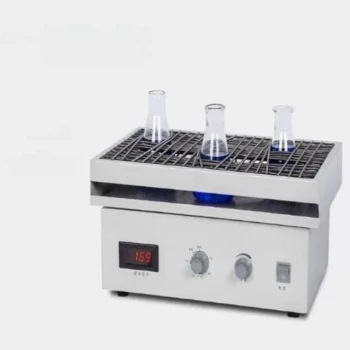
- Laboratory Multifunctional Small Speed-Adjustable Horizontal Mechanical Shaker for Lab
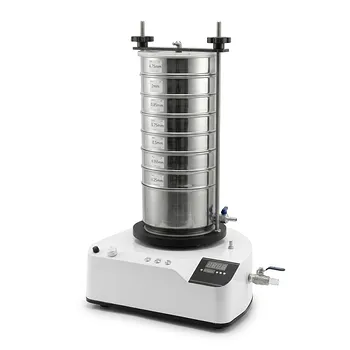
- Laboratory Vibratory Sieve Shaker Machine for Dry and Wet Three-Dimensional Sieving
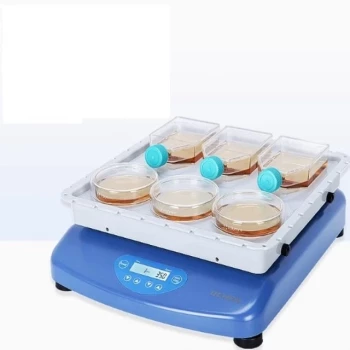
- Laboratory Oscillating Orbital Shaker
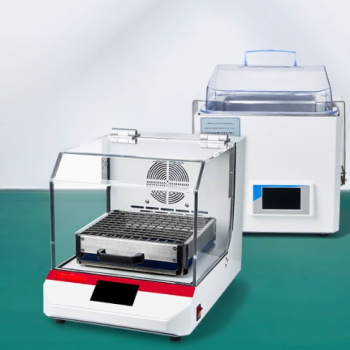
- Shaking Incubators for Diverse Laboratory Applications
- Laboratory Vibratory Sieve Shaker Machine Slap Vibrating Sieve
People Also Ask
- How do static culture and shaking culture affect the morphology of BC? Optimize Lab Shaker Results
- What is the role of a laboratory shaker in silane sol preparation? Master Uniform Aramid Fabric Coating
- Why is a laboratory shaker required for continuous 24-hour catalyst treatment? Achieve Deep Uniform Impregnation
- What is the function of a laboratory shaker in evaluating Fe-C@C nanoparticles? Optimize Methylene Blue Adsorption
- How do laboratory shakers or stirrers influence the efficiency of hydrogen production during dark fermentation?