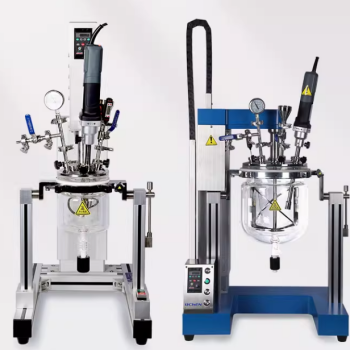
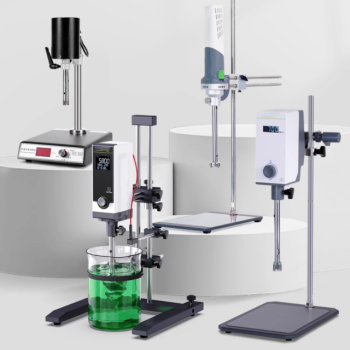
Ultrasonic homogenizers and crushers resolve substrate degradation issues by utilizing acoustic cavitation to generate intense mechanical shear forces and localized high temperatures. These physical forces actively break down complex macromolecular flocs and disrupt stubborn cell walls, forcing intracellular organic matter into the liquid phase. This transformation significantly increases the solubility of the waste, making it immediately available for biological conversion.
The core challenge in bio-hydrogen production is that lignocellulosic waste is naturally resistant to breakdown, creating a bottleneck in the process. Ultrasonic pretreatment solves this by physically shattering cell structures to release organic matter, effectively overcoming the rate-limiting step of substrate degradation.
The Mechanism: Acoustic Cavitation
To understand why this technology works, you must first understand the physical phenomenon it exploits.
Generating Shear Forces
Ultrasonic devices transmit high-frequency sound waves into the liquid substrate.
These waves create cycles of high and low pressure, causing the formation and violent collapse of microscopic bubbles—a process known as cavitation.
The collapse of these bubbles generates intense mechanical shear forces that act directly on the solid matter suspended in the liquid.
Localized Thermal Energy
In addition to mechanical force, the cavitation process produces extreme, localized high temperatures.
While the overall bulk temperature of the liquid may remain stable, these microscopic "hot spots" aid in the thermal disintegration of solid structures.
This thermal effect weakens the structural integrity of the organic waste, making it more susceptible to mechanical breakdown.
Overcoming the Biological Bottleneck
The primary value of ultrasonication lies in how it changes the biological availability of the waste.
Disrupting Cell Walls
Lignocellulosic waste is protected by rigid cell walls that resist microbial attack.
The shear forces from the homogenizer physically disrupt and rupture these cell walls.
By breaching this barrier, the technology exposes the internal components of the cell that were previously inaccessible.
Breaking Down Macromolecular Flocs
Waste material often aggregates into large, complex clumps known as macromolecular flocs.
Ultrasonic crushing breaks these flocs into much smaller structures.
This reduction in particle size increases the surface area available for enzymatic activity, accelerating the digestion process.
Releasing Intracellular Matter
Once the cell walls are compromised, intracellular organic matter is released directly into the liquid phase.
This process moves nutrients from a solid, protected state to a soluble, accessible state.
This solubilization is critical because bacteria can only process dissolved organic matter efficiently.
Improving Bioavailability
The net result of cell disruption and solubilization is a drastic increase in bioavailability.
By converting complex solids into soluble organics, the technology removes the primary hurdle—or rate-limiting step—in the hydrogen production process.
This allows the bio-hydrogen system to operate at a faster rate with higher conversion efficiency.
Understanding the Trade-offs
While ultrasonic pretreatment is highly effective, it introduces specific operational considerations.
Energy Intensity Requirements
The generation of cavitation and shear forces requires energy input to power the ultrasonic transducers.
The efficiency gain in hydrogen production must be weighed against the electrical energy consumed by the homogenizer.
Operators must tune the intensity to ensure it is sufficient to break cell walls without expending unnecessary power.
Making the Right Choice for Your Project
Implementing ultrasonic pretreatment is a strategic decision based on the nature of your feedstock.
- If your primary focus is processing recalcitrant waste: Use ultrasonic homogenizers to fracture the rigid cell walls of lignocellulosic material that standard digestion cannot break down.
- If your primary focus is maximizing reaction speed: Deploy this technology to solubilize organic matter instantly, eliminating the lag time caused by slow hydrolysis.
Ultrasonic pretreatment effectively transforms the degradation of organic waste from a passive biological wait time into an active, rapid physical process.
Summary Table:
| Feature | Impact on Substrate Degradation |
|---|---|
| Mechanism | Acoustic Cavitation (Mechanical Shear & Localized Heat) |
| Cellular Effect | Physical rupture of rigid cell walls and macromolecular flocs |
| Physical Change | Increased solubility and reduced particle surface area |
| Biological Benefit | Overcomes rate-limiting hydrolysis for faster bio-conversion |
| Result | Higher hydrogen yield from recalcitrant organic waste |
Maximize Your Bio-Hydrogen Yield with KINTEK Precision
Don't let rigid cell walls bottleneck your production. KINTEK specializes in advanced laboratory solutions, including high-performance ultrasonic homogenizers, crushing systems, and high-pressure reactors designed to transform recalcitrant organic waste into accessible fuel sources.
From battery research tools to specialized cooling solutions like freeze dryers, our comprehensive portfolio empowers researchers and industrial producers to achieve superior efficiency. Unlock the full potential of your biomass today—Contact KINTEK for a customized equipment consultation!
References
- Vinayak Laxman Pachapur, Gerardo Buelna. Seed Pretreatment for Increased Hydrogen Production Using Mixed-Culture Systems with Advantages over Pure-Culture Systems. DOI: 10.3390/en12030530
This article is also based on technical information from Kintek Solution Knowledge Base .
Related Products
- Lab Sterile Slapping Type Homogenizer for Tissue Mashing and Dispersing
- High Performance Lab Homogenizer for Pharma Cosmetics and Food R&D
- High Shear Homogenizer for Pharmaceutical and Cosmetic Applications
People Also Ask
- How does a laboratory automatic masticator or homogenizer facilitate the processing of biofilm samples? Optimize Accuracy
- How do lab stirrers & homogenizers ensure uniform distribution? Optimize Your Complex Multiphase Chemical Mixing
- What role does a laboratory homogenizer play in radioactive cesium detection? Ensure Accuracy in Wildlife Sampling
- How does a homogenizer affect the quality of electrode slurry? Master Battery Consistency with High-Shear Mixing
- Why is maintaining nanoparticle dispersion critical for photocatalytic reactors? Maximize Your Reaction Efficiency