Laboratories utilize a specialized suite of instruments designed to handle the distinct phases of material research, ranging from electrochemical analysis to physical sample preparation. For battery research specifically, scientists rely on dedicated electrolytic cells, while material consistency is achieved through homogenizers and shakers, and particle geometry is controlled via crushing and sieving systems.
Success in advanced materials research relies heavily on the precision of sample preparation and analysis. The core toolkit spans electrolytic cells for electrochemical testing, homogenizers for consistent material blending, and crushing systems for controlling particle geometry.
Tools for Battery Research
To conduct valid battery experiments, researchers must isolate specific electrochemical variables.
Dedicated Electrolytic Cells
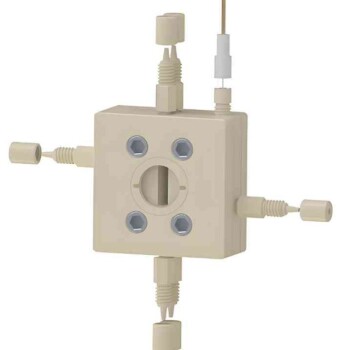
Electrolytic cells are the foundational tools for battery research. They allow scientists to simulate battery performance and analyze electrochemical reactions under controlled conditions.
Specialized Research Instruments
Beyond basic cells, advanced research requires a range of dedicated battery tools. These instruments are designed to support the rigorous demands of testing energy storage materials and electrolytes.
Material Homogenization and Mixing
Achieving a uniform sample is critical before any testing can begin.
Homogenizers for Blending
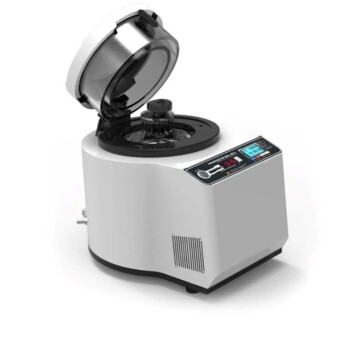
Laboratories use homogenizers when the goal is thorough blending or emulsification. These tools are essential for processing samples that require the stable mixture of immiscible liquids or the suspension of solids.
Shakers for Uniform Mixing
For general agitation, shakers provide a consistent mechanism for mixing. They ensure that components are distributed evenly throughout a sample container without the high-shear force of a homogenizer.
Particle Size Reduction and Classification
Controlling the physical size of material particles is often a prerequisite for effective chemical reaction or analysis.
Crushing Systems
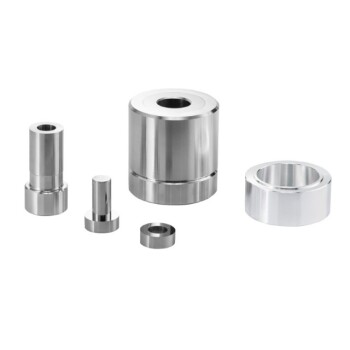
Crushing systems are employed for precise particle size reduction. These tools break down raw materials into smaller, manageable fragments suitable for further processing or testing.
Sieving Systems
Once materials are crushed, sieving systems are used for material classification. These allow researchers to separate particles by size, ensuring the sample meets the exact specifications required for the experiment.
Understanding the Trade-offs
Selecting the right tool involves balancing the aggressive nature of the processing with the integrity of the sample.
Mechanical Force vs. Sample Integrity
Crushing and homogenization apply significant mechanical energy to a sample. While effective for size reduction, this energy can generate heat or stress that might alter sensitive materials if not monitored.
Uniformity vs. Structure
While shakers are excellent for maintaining the structural integrity of a mixture, they may not be sufficient for creating emulsions. Conversely, homogenizers create perfect blends but may destroy delicate particulate structures in the process.
Selecting the Right Equipment for Your Workflow
Choosing the correct instrument depends entirely on the physical state of your input material and the required state of your output sample.
- If your primary focus is electrochemical analysis: Prioritize high-quality electrolytic cells to ensure accurate simulation of battery environments.
- If your primary focus is sample consistency: Invest in homogenizers for emulsions or shakers for general uniformity to eliminate variables caused by poor mixing.
- If your primary focus is material geometry: Utilize crushing and sieving systems to strictly control particle size and classification before testing begins.
Precision in tool selection is the first step toward precision in research results.
Summary Table:
| Tool Category | Primary Equipment | Core Function |
|---|---|---|
| Battery Research | Electrolytic Cells | Electrochemical testing and battery simulation |
| Homogenization | Homogenizers & Shakers | Sample blending, emulsification, and consistent mixing |
| Size Reduction | Crushing Systems | Precise breaking down of raw materials |
| Classification | Sieving Systems | Separating particles by size to meet specifications |
Elevate Your Material Research with KINTEK Precision
At KINTEK, we understand that groundbreaking research starts with meticulous sample preparation. Our comprehensive range of laboratory equipment is designed to meet the rigorous demands of modern battery science and material engineering.
Whether you are conducting electrochemical analysis with our specialized electrolytic cells and electrodes, perfecting mixtures with high-performance homogenizers and shakers, or controlling material geometry using our advanced crushing, milling, and sieving systems, KINTEK provides the reliability you need.
Our value to your laboratory includes:
- Comprehensive Battery Solutions: From research tools to dedicated consumables.
- Superior Sample Prep: Precision crushing systems and hydraulic presses (pellet, hot, isostatic) for perfect samples.
- High-Temperature Excellence: A full suite of muffle, vacuum, and CVD furnaces.
- Advanced Cooling & Maintenance: ULT freezers, freeze dryers, and high-quality ceramic/PTFE consumables.
Ready to optimize your workflow? Contact KINTEK today to consult with our experts and find the perfect equipment for your specific research goals.
References
- Heping Xie, Bin Chen. Cu-modified Ni foams as three-dimensional outer anodes for high-performance hybrid direct coal fuel cells. DOI: 10.1016/j.cej.2020.128239
This article is also based on technical information from Kintek Solution Knowledge Base .
Related Products
- Button Battery Case for Battery Lab Applications
- Laboratory Hydraulic Press Lab Pellet Press for Button Battery
- Button Battery Storage Box for Battery Lab
- Conductive Carbon Cloth Carbon Paper Carbon Felt for Electrodes and Batteries
- Lab Sterile Slapping Type Homogenizer for Tissue Mashing and Dispersing
People Also Ask
- What is the primary role of standardized coin cell cases in Li/LSTH/Li assembly? Ensure Precise Battery Testing Results
- What is the significance of using a 2032-type coin cell configuration? Isolate Intrinsic Graphene Performance.
- What are the uses of desiccators and specific thermal regulators? Expert Insights for Vapor-Assisted Conversion
- What is the purpose of using a high-pressure hydraulic crimper for CR2032 coin cell assembly? Ensure Superior Sealing
- Why is the use of reaction containers with environmental control capabilities essential in mechanochemistry?