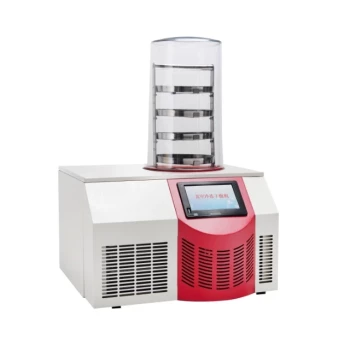
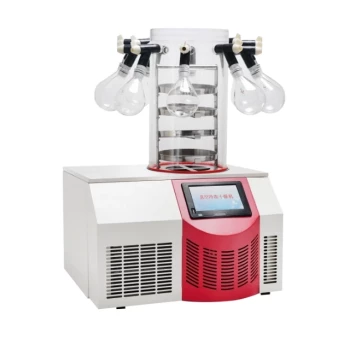
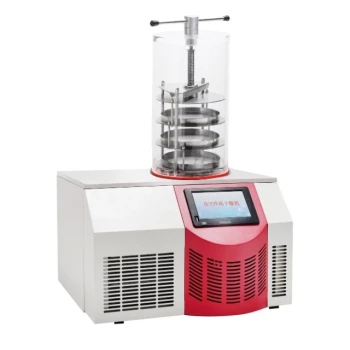
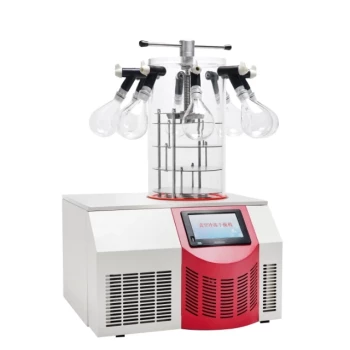
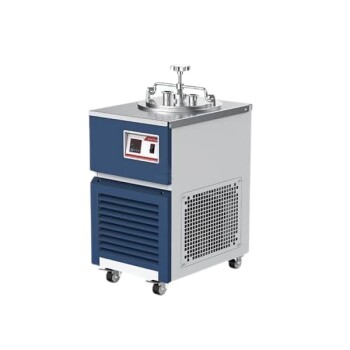
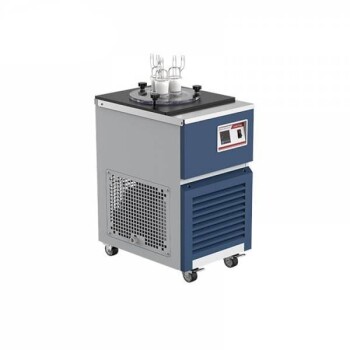
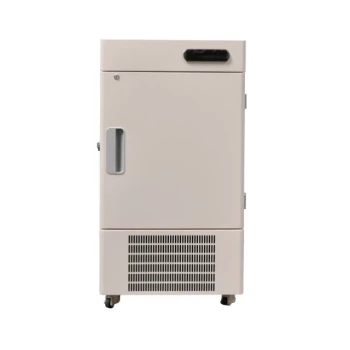
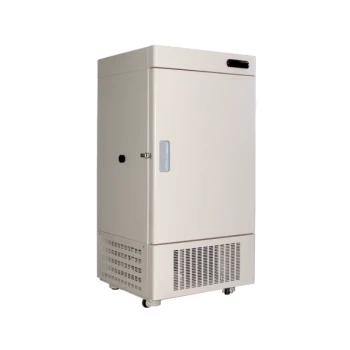
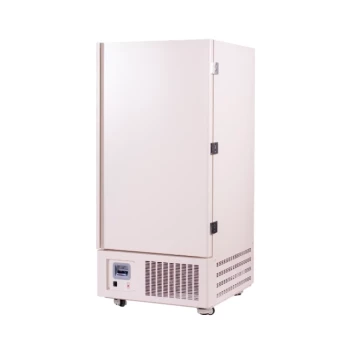
The laboratory vacuum freeze dryer serves a critical role in data integrity by dehydrating neutralized starch granules through sublimation rather than evaporation. By removing moisture under vacuum at extremely low temperatures, this apparatus "locks in" the specific physical and chemical changes induced by the electric field treatment. This process effectively prevents the structural collapse or thermal damage often caused by standard drying methods, ensuring that subsequent analyses reflect the true effects of the experiment.
Core Takeaway While standard heat drying can distort experimental results through thermal stress and surface tension, vacuum freeze drying maintains the precise micro-morphology and crystal structure of treated starch. This preservation is a prerequisite for accurate characterization using high-sensitivity instruments like Scanning Electron Microscopes (SEM).
Preserving Structural Integrity
The Mechanism of Sublimation
The freeze dryer removes moisture by converting ice directly into vapor, a process known as sublimation.
This bypasses the liquid phase entirely, eliminating the surface tension forces that typically cause pore collapse or structural distortion during drying.
Preventing Agglomeration
In liquid-to-solid phase transitions common in oven drying, particles often clump together.
Freeze drying effectively inhibits this severe agglomeration, ensuring the starch granules remain distinct and the material's original three-dimensional structure is maintained.
Thermal Stability
Conventional hot-air drying subjects samples to heat that can alter delicate features.
By operating at sub-zero temperatures, the freeze dryer ensures that the starch granules remain thermally stable, preventing any degradation that could be mistaken for experimental results.
Enabling Accurate Downstream Analysis
Micro-Morphological Observation (SEM)
Induced electric fields often cause specific physical changes, such as surface erosion and roughening, on starch granules.
Freeze drying preserves these minute surface details, allowing Scanning Electron Microscopy (SEM) to capture the true extent of the modification without artifacts introduced by the drying process.
Crystal Structure Analysis (XRD & DSC)
The electric field treatment frequently alters the internal crystallinity of the starch.
Because the freeze drying process is non-thermal, it ensures that any changes detected by X-ray Diffraction (XRD) or Differential Scanning Calorimetry (DSC) are attributed solely to the electric field treatment, not to heat damage from the drying phase.
Understanding the Methodological Trade-offs
The Pitfall of Hot-Air Drying
Using standard hot-air drying introduces a significant confounding variable: thermal deformation.
This method can cause starch granules to shrink or collapse, obscuring the specific textural changes and porous structures created by the electric field.
Operational Complexity vs. Data Quality
Freeze drying is generally a more time-consuming and complex process compared to conventional oven drying.
However, when the research goal involves analyzing nano-scale structures or precise crystalline changes, the fidelity provided by freeze drying outweighs the efficiency of faster methods.
Making the Right Choice for Your Research
To ensure your analytical data is valid, select your drying method based on the specific properties you need to measure.
- If your primary focus is surface topography: Use vacuum freeze drying to retain surface erosion and roughness for high-fidelity SEM imaging.
- If your primary focus is crystalline structure: Rely on this method to prevent thermal interference with XRD and DSC results, ensuring observed changes are genuine.
By eliminating the variables of heat and surface tension, the vacuum freeze dryer transforms sample preparation from a routine step into a critical assurance of scientific accuracy.
Summary Table:
| Feature | Vacuum Freeze Drying | Conventional Hot-Air Drying |
|---|---|---|
| Mechanism | Sublimation (Solid to Gas) | Evaporation (Liquid to Gas) |
| Temperature | Sub-zero (Cold) | High Temperatures (Heat) |
| Structure | Prevents pore collapse/agglomeration | Causes shrinkage and thermal stress |
| Data Integrity | High (Reflects true experimental effects) | Low (Introduces thermal artifacts) |
| Best For | SEM, XRD, and DSC analysis | General drying where structure is less critical |
Elevate Your Research Precision with KINTEK
Don't let inferior drying methods compromise your experimental data. KINTEK specializes in advanced laboratory solutions designed to preserve the most delicate samples. Whether you are analyzing starch granules or sensitive biological materials, our high-performance vacuum freeze dryers and cold traps ensure your samples maintain their original three-dimensional structure and chemical integrity.
From high-temperature furnaces and crushing systems to precision hydraulic presses and laboratory consumables, KINTEK provides the comprehensive tools needed for cutting-edge material science and battery research.
Ready to achieve superior analytical results? Contact our technical experts today to find the perfect freeze-drying or cooling solution for your lab's specific needs!
References
- Yuyi Zhou, Xueming Xu. Electrofluid enhanced hydrolysis of maize starch and its impacts on physical properties. DOI: 10.1039/c7ra00080d
This article is also based on technical information from Kintek Solution Knowledge Base .
Related Products
- Benchtop Laboratory Vacuum Freeze Dryer
- High Performance Laboratory Freeze Dryer
- High Performance Laboratory Freeze Dryer for Research and Development
- Benchtop Laboratory Freeze Dryer for Lab Use
- Vacuum Cold Mounting Machine for Sample Preparation
People Also Ask
- What are the technical advantages of using a laboratory freeze dryer for porous carbon precursors? Preserve 3D Networks
- How do laboratory freeze dryers support scientific research? Preserve Sample Integrity for Reproducible Results
- Why is a laboratory freeze dryer preferred over traditional heating? Preserve Biochar Structure & Maximize Porosity
- What types of liquid samples can be processed using a laboratory freeze dryer? Preserve Your Sensitive Materials
- What role do laboratory freeze dryers play in the food industry? Unlock Superior Food Preservation