Liquid nitrogen provides physical protection for heat-sensitive drugs by acting as a chemically inert, high-efficiency heat exchange medium with a boiling point of -196 °C. This extreme temperature differential drives an ultra-fast freezing rate, which is the primary mechanism that safeguards biological structures from thermal and physical damage.
The ultra-fast freezing speed provided by liquid nitrogen effectively bypasses the critical ice crystal growth phase. This prevents damaging phase separation and significant pH shifts, maximizing the preservation of biological activity in macromolecules like proteins.
The Mechanics of Ultra-Fast Freezing
Extreme Temperature Differential
Liquid nitrogen possesses an extremely low boiling point of -196 °C. When introduced during the freezing stage of Spray Freeze-Drying, this creates a massive temperature difference between the medium and the drug formulation.
High-Efficiency Heat Exchange
Because of this temperature gap, liquid nitrogen functions as a high-efficiency heat exchange medium. It rapidly extracts heat from the drug droplets, transitioning them from liquid to solid almost instantaneously.
Chemical Inertness
Beyond its thermal properties, liquid nitrogen is chemically inert. This ensures that the freezing medium itself does not react with the drug substance, providing a neutral environment that maintains the chemical integrity of sensitive formulations.
Preserving Biological Integrity
Bypassing Crystal Growth
The most critical protective factor is the ultra-fast freezing rate. By freezing the drug instantly, the process quickly passes through the phase where ice crystals typically grow.
Preventing Structural Damage
Large ice crystals can physically sheer or damage delicate molecular structures. By minimizing the time spent in the crystal growth phase, liquid nitrogen ensures the physical structure of biological macromolecules remains intact.
Stabilizing the Chemical Environment
Rapid freezing locks the molecular arrangement in place. This prevents phase separation, ensuring the drug components do not dissociate during the transition from liquid to solid.
Maintaining pH Balance
Slow freezing processes can lead to solute concentration, causing localized pH changes. Liquid nitrogen’s speed prevents these significant pH shifts, which are often responsible for denaturing proteins and reducing drug potency.
The Pitfalls of Inadequate Freezing Rates
The Risk of Phase Separation
If the freezing rate is insufficient, the formulation may suffer from phase separation. This results in a non-uniform drug product where active ingredients are not evenly distributed or stabilized.
Loss of Bioactivity
Heat-sensitive medications, particularly proteins, rely on specific folding and structural integrity to function. Failing to freeze them rapidly leads to a loss of biological activity, rendering the drug ineffective.
Making the Right Choice for Your Project
To ensure the viability of heat-sensitive drugs, you must align your freezing method with the specific stability needs of your molecule.
- If your primary focus is preserving protein structure: Utilize liquid nitrogen to ensure an ultra-fast freezing rate that bypasses the ice crystal growth phase.
- If your primary focus is chemical stability: Rely on the rapid transition provided by liquid nitrogen to prevent phase separation and dangerous pH shifts.
By leveraging the extreme thermal properties of liquid nitrogen, you effectively lock in the potency and structure of your most sensitive biological assets.
Summary Table:
| Feature | Protection Mechanism | Benefit for Heat-Sensitive Drugs |
|---|---|---|
| Temperature (-196°C) | Ultra-fast heat extraction | Bypasses damaging ice crystal growth phase |
| Chemical Inertness | Non-reactive environment | Maintains chemical integrity of the formulation |
| Freezing Speed | Instantaneous solidification | Prevents phase separation and significant pH shifts |
| Structural Locking | Rapid molecular stabilization | Preserves protein folding and biological activity |
Secure Your Biological Assets with KINTEK
Don't compromise the potency of your heat-sensitive medications. KINTEK specializes in advanced laboratory solutions, including high-performance cooling systems, ULT freezers, and freeze dryers designed to maintain the highest levels of biological integrity. Whether you are conducting protein research or developing complex formulations, our comprehensive range of tools—from high-pressure reactors to PTFE consumables—ensures your lab achieves precise, repeatable results.
Ready to optimize your Spray Freeze-Drying process? Contact KINTEK today to discover how our expert equipment can protect your most sensitive drug developments.
References
- Merve B. Adali, Roberto Pisano. Spray Freeze-Drying as a Solution to Continuous Manufacturing of Pharmaceutical Products in Bulk. DOI: 10.3390/pr8060709
This article is also based on technical information from Kintek Solution Knowledge Base .
Related Products
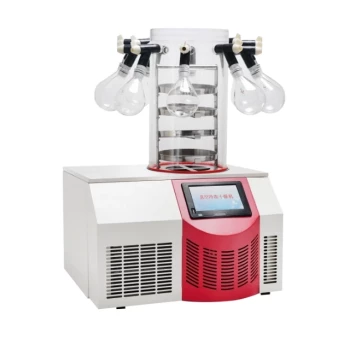
- High Performance Laboratory Freeze Dryer
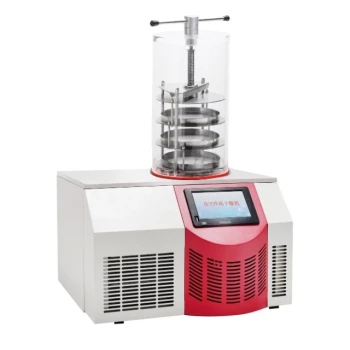
- High Performance Laboratory Freeze Dryer for Research and Development
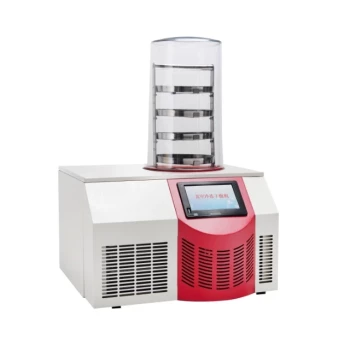
- Benchtop Laboratory Vacuum Freeze Dryer
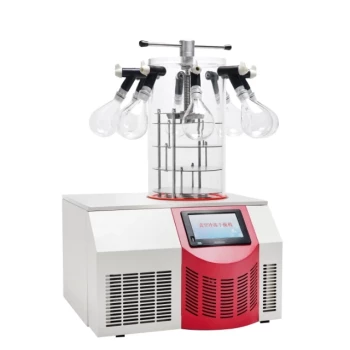
- Benchtop Laboratory Freeze Dryer for Lab Use
People Also Ask
- What role does a laboratory freeze dryer play in the synthesis of graphene-based electrocatalysts? Preserve 3D Structures
- What are the technical advantages of using a laboratory freeze dryer for porous carbon precursors? Preserve 3D Networks
- What types of liquid samples can be processed using a laboratory freeze dryer? Preserve Your Sensitive Materials
- How do laboratory freeze dryers support scientific research? Preserve Sample Integrity for Reproducible Results
- Why is a laboratory freeze dryer preferred over traditional heating? Preserve Biochar Structure & Maximize Porosity