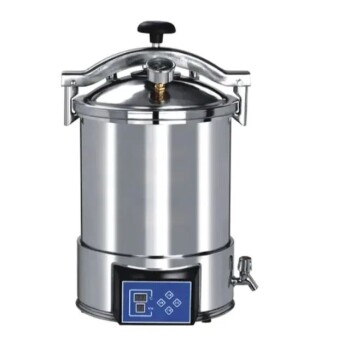
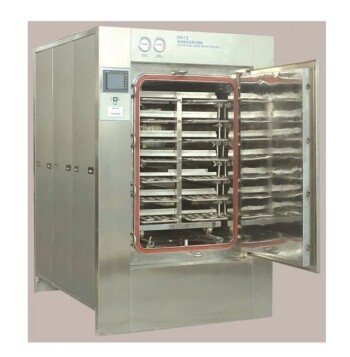
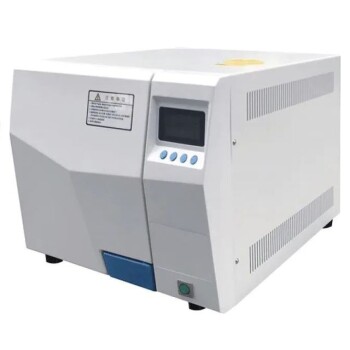
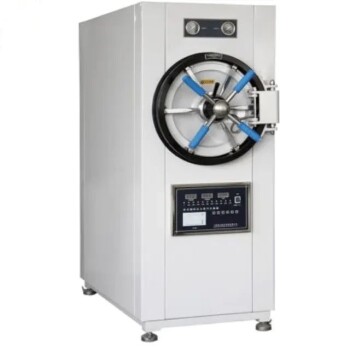
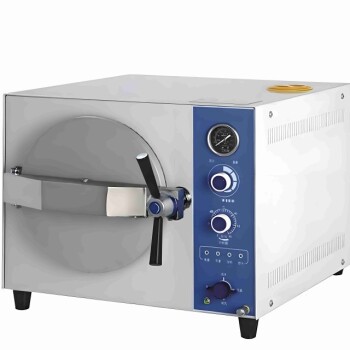
An industrial autoclave functions as the central "simulation chamber" for reproducing the harsh operating environment of a Pressurized Water Reactor (PWR). It creates a strictly controlled, sealed ecosystem that subjects material specimens to the exact high-temperature, high-pressure, and chemically aggressive water conditions found in an active nuclear primary circuit.
By isolating these extreme variables in a laboratory setting, the autoclave allows researchers to predict material lifespan and safety without the risks of an active nuclear core. It is the definitive tool for observing how protective oxide films grow and evolve under realistic service conditions.
Replicating Extreme Physical Conditions
The primary function of the autoclave is to mimic the intense physical stress of a reactor's interior.
Sustaining High Temperatures
To simulate the heat of a PWR primary circuit, the autoclave creates a thermal environment exceeding 550 K (approx. 277°C), with specific experiments reaching as high as 330°C. This ensures that materials are tested at the exact thermal energy levels they will experience during operation.
Managing Extreme Pressure
Temperature alone is insufficient; the environment must also be highly pressurized to keep water in a liquid state at these temperatures. The autoclave maintains pressures ranging from 6 MPa up to 150 bar (approx. 15 MPa). This pressure is critical for testing the mechanical integrity of components like Alloy 690TT tubes.
Ensuring Environmental Stability
The equipment does not just reach these levels; it maintains them with high precision. Whether for a short test or a 500-hour continuous exposure, the autoclave ensures the physical environment remains static and predictable.
Controlling the Chemical Ecosystem
A PWR primary circuit is not filled with pure water; it contains a complex chemical mixture designed to control reactivity and corrosion. The autoclave reproduces this specific chemistry.
Precise Chemical Injections
The autoclave allows researchers to introduce specific concentrations of boron, lithium, and zinc into the water. This replicates the coolant chemistry used in actual reactors to manage reactivity and minimize radiation field buildup.
Testing Corrosive Resistance
By combining high heat with this specific chemical mix, the autoclave creates a corrosive environment. This allows for the assessment of how well a material resists degradation when exposed to aggressive coolants over time.
Analyzing Material Response
The ultimate goal of using an autoclave is to observe the "skin" of the material—the oxide film.
Facilitating Long-Term Immersion
The autoclave supports both static and dynamic immersion testing. This flexibility allows researchers to simulate different flow conditions within the reactor, from stagnant areas to high-flow coolant channels.
Observing Oxide Evolution
As materials sit in this simulated environment, they develop oxide films. The autoclave allows scientists to track the growth, thickness, and stability of these films, which serve as the primary barrier against catastrophic failure in a real reactor.
Understanding Simulation Trade-offs
While autoclaves are essential, understanding their operational configurations is vital for accurate data interpretation.
Static vs. Dynamic Limitations
An autoclave can facilitate static immersion, which is excellent for studying chemical interactions but may not replicate the mechanical erosion caused by fast-moving water. Dynamic immersion adds complexity but better simulates the flow-assisted corrosion found in active coolant loops.
The Challenge of Duration
Simulating a 40-year reactor lifespan is impossible in a lab. Researchers must rely on shorter windows, such as 500 hours, to extrapolate long-term behavior. While highly accurate for initial oxidation rates, these tests represent "accelerated" or "snapshot" views of a material's life.
Making the Right Choice for Your Goal
To get the most out of autoclave testing, you must align the configuration with your specific research objectives.
- If your primary focus is Chemical Compatibility: Prioritize the precise control of boron, lithium, and zinc concentrations to see how specific chemistries interact with the alloy surface.
- If your primary focus is Oxide Film Stability: Ensure the test duration is sufficient (e.g., 500+ hours) to allow the oxide film to fully nucleate and grow.
- If your primary focus is Mechanical Integrity: Verify that the autoclave can sustain the upper limits of pressure (150 bar) to test the material's stress limits under heat.
The industrial autoclave is the bridge between theoretical metallurgy and operational safety, proving that a material can survive the environment before it is ever installed in a reactor.
Summary Table:
| Parameter | Typical Simulation Range | Purpose in PWR Testing |
|---|---|---|
| Temperature | 277°C to 330°C (550K+) | Mimics thermal energy of active reactor cores |
| Pressure | 6 MPa to 15 MPa (150 bar) | Maintains liquid state and mechanical stress |
| Water Chemistry | Boron, Lithium, Zinc additives | Replicates coolant corrosive environment |
| Test Duration | Up to 500+ Hours | Tracks oxide film growth and material degradation |
Ensure Nuclear Material Safety with KINTEK Precision
Reliable simulation starts with precision engineering. KINTEK specializes in advanced laboratory equipment, providing the high-performance industrial autoclaves and high-temperature high-pressure reactors essential for replicating the most demanding PWR environments. Whether you are analyzing oxide film evolution or testing the mechanical integrity of Alloy 690TT, our solutions offer the stability and control your research demands.
From high-temperature furnaces and crushing systems to specialized ceramics and crucibles, KINTEK delivers the tools to bridge the gap between metallurgy and operational safety.
Ready to elevate your material testing? Contact our specialists today to find the perfect autoclave configuration for your laboratory.
References
- Haibo Wei, Lisheng Chi. Influence of Zn Injection on Corrosion of 304SS Under PWR Primary Side Conditions. DOI: 10.3389/fmats.2022.833291
This article is also based on technical information from Kintek Solution Knowledge Base .
Related Products
- Customizable High Pressure Reactors for Advanced Scientific and Industrial Applications
- Desktop Fast High Pressure Laboratory Autoclave Sterilizer 16L 24L for Lab Use
- Portable Digital Display Automatic Laboratory Sterilizer Lab Autoclave for Sterilization Pressure
- Laboratory Sterilizer Lab Autoclave Herbal Powder Sterilization Machine for Plant
- Desktop Fast Laboratory Autoclave Sterilizer 20L 24L for Lab Use
People Also Ask
- What is the function of high-pressure reactors in the synthesis of MFI-type zeolites? Master Dry Gel Conversion.
- Graphene Fiber Synthesis: Key High-Pressure Reactor Processing Conditions Explained
- What is the primary function of a high-pressure reactor in NiMoO4 preparation? Optimize Hydrothermal Catalyst Synthesis
- What reactor is used for high pressure reactions? Select the Right Autoclave for Your Lab
- What are the hazards of high pressure reactors? A Guide to Managing Explosive Risks