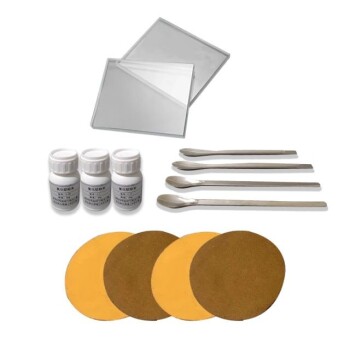
When standard 1.0µm polishing is insufficient, you must reset the surface using a coarser abrasive. Immediately switch to 1200 grit metallographic sandpaper to grind down the deep scratches. Once the defects are removed, resume your standard polishing sequence, ensuring you finish with 0.05µm alumina powder to achieve a mirror-like surface.
Deep scratches that resist 1.0µm powder indicate structural damage requiring mechanical leveling. You must first grind the surface flat with 1200 grit sandpaper before progressively polishing with finer alumina to restore the electrode's electrochemical performance.
The Remediation Protocol
To restore an electrode that has sustained deep physical damage, you must follow a specific two-phase process. This ensures you remove the defect without permanently compromising the electrode's geometry.
Phase 1: Coarse Grinding
If the 1.0µm alumina powder is not removing the lines, the scratches are likely deeper than the abrasive particles.
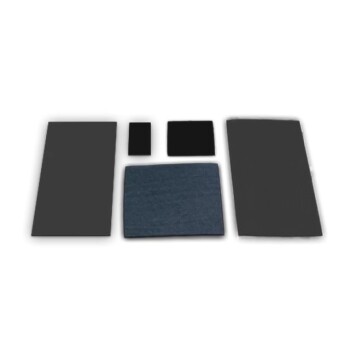
You must step back and use 1200 grit metallographic sandpaper. This coarser grit provides the mechanical force necessary to grind down the surrounding material until it is level with the bottom of the scratch.
Phase 2: Restoring the Mirror Finish
Once the deep scratches are removed, the surface will be uniform but too rough for experimental use.
You must immediately return to your standard polishing sequence. It is critical to finish this process using 0.05µm alumina powder. This final step removes the micro-abrasions left by the sandpaper and intermediate steps, resulting in the required mirror-like finish.
Common Pitfalls to Avoid
While coarser grinding is necessary for deep scratches, it introduces specific risks that must be managed.
Incomplete Polishing Sequences
A common error is rushing the transition from sandpaper back to experimental use.
If you stop after the 1200 grit step, or even after the 1.0µm step, the electrode surface area will remain artificially high due to micro-roughness. You must follow through all the way to the 0.05µm stage to ensure data reliability.
Over-Reliance on Fine Powder
Attempting to polish out a deep scratch using only 1.0µm or 0.05µm powder is ineffective and inefficient.
Fine powders are designed for surface finishing, not material removal. Continuing to use them on deep defects will simply round over the edges of the scratch rather than removing it, leading to persistent surface inconsistencies.
Making the Right Choice for Your Goal
To ensure your electrode is prepared correctly for your specific experimental needs, follow these guidelines:
- If your primary focus is removing visible damage: Utilize 1200 grit metallographic sandpaper to mechanically level the surface and eliminate deep defects.
- If your primary focus is maximizing sensitivity: Ensure you complete the process with 0.05µm alumina powder to achieve the requisite mirror-like finish.
Proper surface preparation is the single most critical variable in ensuring reproducible electrochemical data.
Summary Table:
| Remediation Stage | Material Required | Purpose |
|---|---|---|
| Phase 1: Coarse Grinding | 1200 Grit Metallographic Sandpaper | Mechanically level the surface and remove deep structural scratches. |
| Phase 2: Intermediate Polish | 1.0µm Alumina Powder | Remove micro-abrasions left by sandpaper. |
| Phase 3: Final Polishing | 0.05µm Alumina Powder | Achieve a mirror-like finish and ensure electrochemical data reliability. |
Elevate Your Research Precision with KINTEK
Don't let surface defects compromise your electrochemical data. KINTEK provides high-performance electrolytic cells, electrodes, and professional-grade polishing consumables designed for the most demanding laboratory environments.
Whether you are managing complex battery research or specialized material analysis, our comprehensive range of high-temperature furnaces, hydraulic presses, and precision lab equipment ensures your success. Our experts are ready to help you select the perfect tools to maintain your laboratory's efficiency.
Contact KINTEK Today for Expert Solutions and Equipment!
Related Products
- Reference Electrode Calomel Silver Chloride Mercury Sulfate for Laboratory Use
- Metal Disc Electrode Electrochemical Electrode
- RRDE rotating disk (ring disk) electrode / compatible with PINE, Japanese ALS, Swiss Metrohm glassy carbon platinum
- Rotating Platinum Disk Electrode for Electrochemical Applications
- Platinum Sheet Electrode for Battery Lab Applications
People Also Ask
- What is the function of a reference electrode? Master Precision in Three-Electrode Reactor Reconstruction
- What is the recommended maintenance for the filling solution of a reference electrode? A Guide to Stable & Accurate Readings
- Which electrode is used as a ground reference? Master the Key to Accurate Electrochemical Measurements
- What is the reference electrode in potentiometry? The Key to Stable & Accurate Measurements
- Which electrode is used as a reference? A Guide to Accurate Electrochemical Measurements