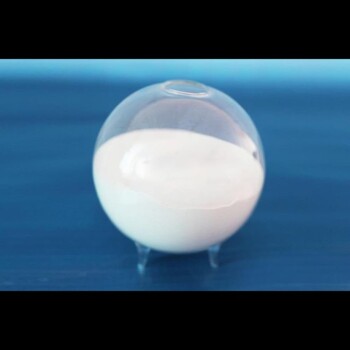
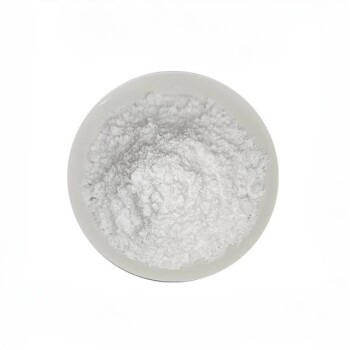
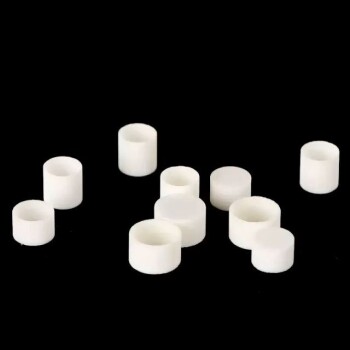
High-purity alumina powder functions as a critical inert spacer within the coating mixture. In the pack cementation process, its defining role is to physically separate active aluminum particles to prevent them from fusing together (sintering) during high-temperature cycles. By maintaining this separation, the powder ensures a porous structure that allows reactant gases to circulate freely, resulting in a uniform protective coating on the engine blade.
The alumina powder acts as a non-reactive structural skeleton; without it, the active coating ingredients would collapse into a solid mass, blocking the chemical reactions required to protect the aerospace component.
The Mechanics of the Pack Mixture
Preventing Active Powder Sintering
The pack mixture contains active aluminum or alloy powders which are responsible for forming the coating. When subjected to temperatures between 1023K and 1223K, these metallic powders naturally tend to melt or sinter together.
High-purity alumina powder is mixed in as an inert filler to physically separate these metallic particles. This prevents the formation of large, solid clumps (agglomerates) that would render the pack useless and lead to coating failure.
Facilitating Gas Circulation
For the coating process to work, volatile halide gases must travel from the activator to the surface of the engine blade.
The alumina filler maintains the necessary permeability and porosity within the packed bed. This porous structure acts as a highway system, ensuring that the halide gases can circulate freely and reach every contour of the blade surface for uniform deposition.
Ensuring Process Stability
Chemical Inertness
High-purity alumina is selected specifically for its chemical stability. It acts as a neutral vessel for the reaction, ensuring that the filler itself does not react with the sodium fluoride (NaF) activator or the active aluminum source.
This inertness is crucial for maintaining the purity of the diffusion layer. It ensures that no unwanted contaminants are introduced into the high-performance alloy of the engine blade.
Thermal Resilience
The process requires prolonged heating at extreme temperatures. High-purity alumina withstands this thermal stress without degrading or changing phase.
This thermal stability ensures the reaction environment remains consistent from the beginning of the heating cycle to the end, guaranteeing predictable coating thickness and quality.
Understanding the Trade-offs
The Importance of Purity
While standard alumina is cheaper, using high-purity alumina is non-negotiable for aerospace applications. Lower-grade powders often contain trace impurities (such as silica or iron oxides) that can become reactive at operating temperatures.
If these impurities vaporize or diffuse into the blade, they can compromise the superalloy's mechanical properties, leading to premature component fatigue or failure.
Balancing Filler Ratios
There is a delicate balance in the ratio of filler to active powder.
Too much alumina filler can dilute the active ingredients excessively, leading to a coating that is too thin or takes too long to form. Conversely, too little filler risks partial sintering and uneven gas flow, resulting in "patchy" protection on the blade.
Making the Right Choice for Your Process
Optimizing the pack cementation process requires balancing the physical structure of the pack with the chemical requirements of the coating.
- If your primary focus is Coating Uniformity: Ensure your alumina powder has a particle size distribution that maximizes porosity, allowing optimal gas flow to complex blade geometries.
- If your primary focus is Substrate Integrity: Verify the chemical analysis of your alumina batch to ensure impurity levels are near zero, preventing cross-contamination with the blade alloy.
Ultimately, the alumina powder is not just a filler; it is the structural guarantor of the entire coating reaction.
Summary Table:
| Feature | Role of Alumina in Pack Cementation | Benefit to Aerospace Components |
|---|---|---|
| Physical Separation | Prevents active metallic particles from sintering/fusing | Maintains pack integrity and prevents clumping |
| Porosity & Permeability | Creates a structural skeleton for gas circulation | Ensures uniform gas flow for consistent coating thickness |
| Chemical Inertness | Remains non-reactive with activators and sources | Prevents contamination of high-performance superalloys |
| Thermal Stability | Withstands temperatures up to 1223K without phase change | Guarantees process stability during long heating cycles |
Precision in aerospace coatings starts with the right materials and equipment. KINTEK provides the specialized high-temperature furnaces and high-purity consumables—including premium alumina and ceramics—essential for flawless pack cementation. Whether you are developing advanced diffusion layers or performing critical battery research, our range of vacuum furnaces, crushing systems, and thermal solutions ensures your laboratory achieves peak performance and component integrity. Contact our technical experts today to optimize your coating process with KINTEK’s industry-leading equipment.
References
- Jakub Jopek, Marcin Drajewicz. High Temperature Protective Coatings for Aeroengine Applications. DOI: 10.21062/mft.2023.052
This article is also based on technical information from Kintek Solution Knowledge Base .
Related Products
- High Purity Alumina Granulated Powder for Engineering Advanced Fine Ceramics
- Advanced Engineering Fine Ceramics Low Temperature Alumina Granulation Powder
- High Quality Alumina Ceramic Screw for Engineering Advanced Fine Ceramics with High Temperature Resistance and Insulation
- High Temperature Wear-Resistant Alumina Al2O3 Plate for Engineering Advanced Fine Ceramics
- High Temperature Alumina (Al2O3) Furnace Tube for Engineering Advanced Fine Ceramics
People Also Ask
- How should alumina powder be selected for polishing a disc electrode, and what is the procedure for removing scratches? Achieve a Perfect Mirror Finish
- What are the properties and handling precautions for alumina powder as a polishing material? Achieve a Flawless Finish with Precision
- Why is it necessary to apply alumina powder to graphite molds for TiC10/Cu-Al2O3? Ensure Smooth Release.
- What measures should be taken to prevent cross-contamination when using different sizes of alumina powder?
- What is the most common industrial ceramic? Discover Why Alumina Dominates Countless Applications