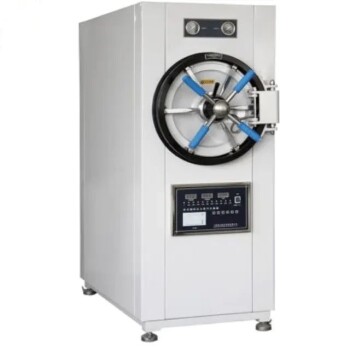
The specific reaction conditions provided by a PTFE-lined stainless steel autoclave for NVP/C synthesis are a sealed, hydrothermal environment maintained at a constant temperature of 190°C. This enclosed system generates significant internal pressure, which facilitates the complete dissolution of vanadium, phosphorus, and carbon sources into a uniform liquid phase.
The autoclave creates a controlled high-pressure and high-temperature ecosystem that is essential for producing a homogenous precursor solution, directly dictating the crystal structure and morphology of the final Na3V2(PO4)3/C cathode material.
The Hydrothermal Environment
Achieving Complete Dissolution
The primary function of this setup is to maintain a steady temperature of 190°C within a sealed vessel.
At this elevated temperature and the resulting autogenous pressure, reagents that are typically difficult to dissolve—specifically the vanadium, phosphorus, and carbon sources—undergo complete solvation.
Ensuring Precursor Uniformity
The formation of a high-quality NVP/C cathode relies heavily on the homogeneity of the starting mixture.
The hydrothermal conditions prevent localized precipitation, ensuring that all elements are mixed at the molecular level. This creates a uniform precursor solution, which is the critical foundation for growing consistent crystal structures.
Controlling Morphology
The specific environment provided by the autoclave allows for precise control over how the material nucleates and grows.
By regulating the 190°C thermal soak, you determine the final morphology of the particles. This structural control is vital for electrochemical performance in sodium-ion batteries.
The Engineering Behind the Conditions
Mechanical Integrity Under Pressure
While the chemistry happens inside the liner, the stainless steel shell is responsible for safety and stability.
As the internal temperature rises to 190°C, pressure builds significantly. The high-strength steel casing creates the mechanical confinement necessary to withstand these forces without structural failure.
Chemical Inertness and Purity
The PTFE (polytetrafluoroethylene) liner acts as a critical barrier between the reactants and the steel shell.
It provides exceptional chemical inertness, preventing the corrosive reaction mixture from attacking the metal walls.
Crucially, this prevents metal ion contamination. Even trace amounts of iron or other metals leaching from the shell could compromise the purity and performance of the NVP/C cathode material.
Understanding the Trade-offs
Thermal Limitations of PTFE
While effective at 190°C, PTFE liners have thermal ceilings.
If your synthesis requires temperatures significantly exceeding 200°C–250°C, the PTFE liner may deform or degrade, potentially compromising the seal or contaminating the sample.
Scalability Constraints
Hydrothermal synthesis in autoclaves is inherently a batch process.
While excellent for controlling purity and crystal structure in the lab or pilot phase, the finite volume of the autoclave makes it challenging to scale up to mass production compared to continuous flow methods.
Optimizing Your Synthesis Strategy
To get the most out of your NVP/C synthesis, align your process parameters with your specific material goals:
- If your primary focus is Crystal Quality: Ensure the temperature is strictly maintained at 190°C to guarantee full precursor dissolution and uniform crystal growth.
- If your primary focus is High Purity: Inspect the PTFE liner regularly for wear to ensure no interaction occurs between the corrosive precursors and the stainless steel shell.
By leveraging the high-pressure, high-purity environment of this autoclave system, you ensure the structural integrity required for high-performance sodium-ion battery cathodes.
Summary Table:
| Feature | Condition/Value | Impact on NVP/C Synthesis |
|---|---|---|
| Temperature | 190°C | Facilitates complete dissolution of precursors |
| Environment | Hydrothermal (Sealed) | Creates autogenous pressure for molecular mixing |
| Liner Material | PTFE (Teflon) | Prevents metal ion contamination & ensures purity |
| Outer Shell | Stainless Steel | Provides mechanical integrity under high pressure |
| Goal | Precursor Uniformity | Dictates final crystal morphology & performance |
Elevate Your Material Research with KINTEK
Precision is the key to high-performance battery materials. KINTEK specializes in advanced laboratory solutions, offering a comprehensive range of PTFE-lined stainless steel autoclaves and high-pressure reactors designed to withstand rigorous hydrothermal conditions.
Whether you are synthesizing NVP/C cathodes or exploring next-generation energy storage, our equipment—including high-temperature furnaces, crushing systems, and hydraulic presses—ensures the purity and structural integrity your research demands.
Ready to optimize your synthesis workflow? Contact us today to find the perfect equipment for your lab!
Related Products
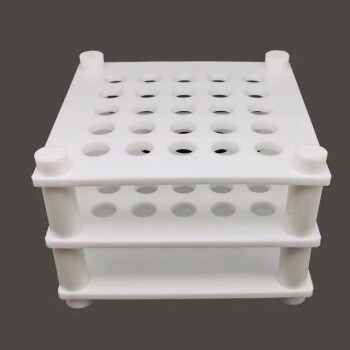
- Custom PTFE Teflon Parts Manufacturer for Centrifuge Tube Racks
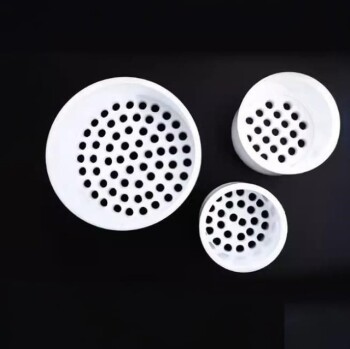
- Custom PTFE Teflon Parts Manufacturer for PTFE Mesh F4 Sieve
- Custom PTFE Teflon Parts Manufacturer Corrosion Resistant Cleaning Rack Flower Basket
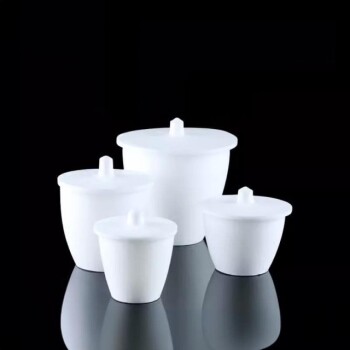
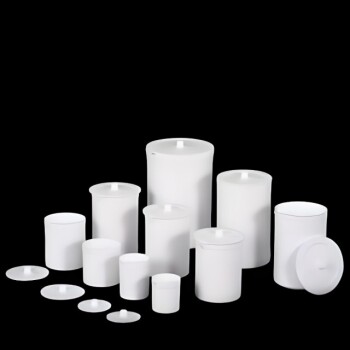
- Custom Machined and Molded PTFE Teflon Parts Manufacturer with PTFE Crucible and Lid
- Custom PTFE Teflon Parts Manufacturer for Cleaning Racks
People Also Ask
- Why is slender PTFE tubing necessary for flow control in multi-channel catalyst aging? Ensure Equal Gas Distribution
- Why are PTFE containers required for PCT leaching tests? Ensure Chemical Inertness and Analytical Precision
- Why are PTFE containers necessary for selective HF etching of MAX phases? Ensure Safe & Pure MXene Synthesis
- What role do PTFE containers play in trace metal detection? Ensure Analytical Precision in Photocatalysis Studies
- Why is a PTFE container required for acid leaching of silicon nanosheets? Ensure High Purity and Safety