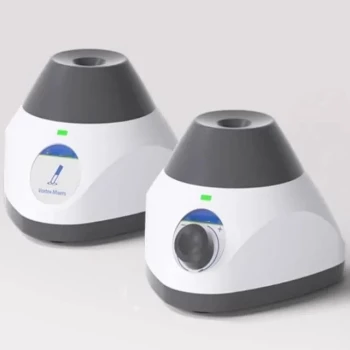
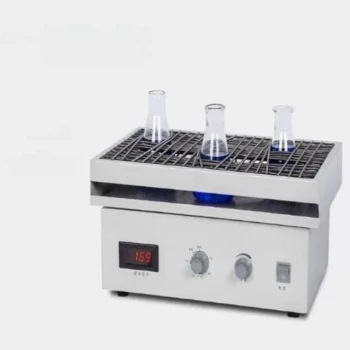
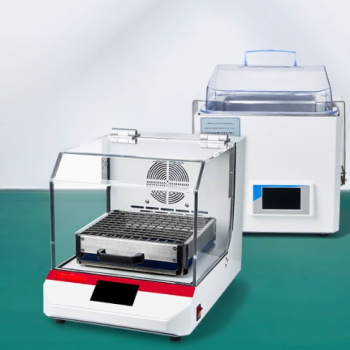
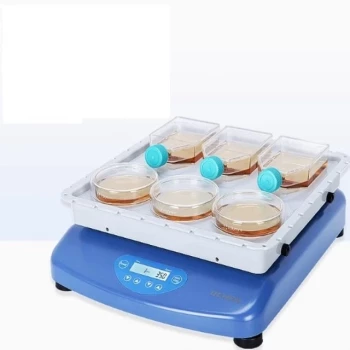
High-precision constant temperature shakers and rotary stirrers are critical for PCB degradation research because they eliminate the variables that most commonly compromise experimental data: inconsistent mixing and thermal fluctuation. By ensuring uniform contact between soil contaminants and remediation agents while maintaining strict temperature control, these devices allow researchers to isolate and measure accurate reaction kinetics.
Core Insight: In PCB remediation research, the validity of your data hinges on reproducibility. These devices provide the stable environment necessary to prove that degradation results are caused by your chemical agents, rather than random variations in temperature or mixing efficiency.
The Mechanics of Efficient Remediation
Achieving Uniform Contact
Polychlorinated Biphenyls (PCBs) are often bound tightly to soil or sediment matrices. To degrade them, you must ensure thorough and uniform contact between the contaminant and the remediation agent.
In many modern experiments, this involves mixing the soil with advanced materials like nano-bimetallic particles. Without consistent agitation, these particles can settle or clump, preventing the necessary chemical interaction.
Optimizing Mass Transfer
Degradation is not just about placing ingredients in a jar; it is a dynamic process defined by mass transfer.
High-precision stirrers create the necessary turbulence to maximize the surface area interactions between the solid contaminants and the liquid or particulate remediation agents. This efficient mass transfer is the physical foundation required to simulate accurate kinetic processes in the lab.
The Role of Thermal Stability
Ensuring Data Reliability
Chemical reaction rates are inherently sensitive to temperature. In kinetic studies, even minor fluctuations can skew calculations regarding how fast or effectively PCBs break down.
Maintaining a stable temperature throughout the entire experiment is non-negotiable for data accuracy. It ensures that the changes you observe are due to the remediation mechanism itself, not an artifact of environmental cooling or heating.
Guaranteeing Reproducibility
Scientific rigor demands that experiments be repeatable by other researchers.
By using high-precision equipment to lock in temperature, you minimize error margins. This strict control is what guarantees the reliability, accuracy, and reproducibility of the data used to evaluate overall remediation efficiency.
Common Pitfalls to Avoid
The Risk of Manual or Low-Precision Mixing
One common error is underestimating the need for mechanical consistency.
Using manual mixing or standard shakers often results in "dead zones" within the sample where no reaction occurs. This leads to false negatives regarding the efficacy of the remediation agent.
Overlooking Thermal Gradients
Standard laboratory ovens or ambient room storage often suffer from thermal gradients.
If the temperature varies across the duration of the experiment, the kinetic data becomes noisy and unreliable. High-precision devices are specifically designed to eliminate these fluctuations, ensuring every second of the reaction happens under identical thermal conditions.
Making the Right Choice for Your Research
To ensure your PCB degradation study yields publishable, defensible data, match your equipment strategy to your specific experimental goals.
- If your primary focus is Kinetic Modeling: Prioritize equipment with the highest thermal stability to ensure reaction rates are measured without temperature-induced noise.
- If your primary focus is Remediation Efficiency: Prioritize rotary stirrers that guarantee aggressive, uniform suspension of nano-particles to maximize soil-agent contact.
Precision equipment is not merely a luxury; it is the baseline requirement for transforming variable environmental samples into controlled, reproducible science.
Summary Table:
| Feature | Impact on PCB Research | Benefit to Researcher |
|---|---|---|
| High-Precision Temperature | Eliminates thermal fluctuations & noise | Ensures accurate kinetic modeling |
| Uniform Agitation | Prevents particle clumping/settling | Maximizes contact between soil & agents |
| Mass Transfer Optimization | Enhances surface area interactions | Simulates realistic remediation scenarios |
| Mechanical Consistency | Removes "dead zones" in samples | Guarantees data reproducibility |
| Automated Control | Reduces manual intervention errors | Increases overall laboratory efficiency |
Elevate Your Remediation Research with KINTEK Precision Solutions
Achieving defensible, publishable data in PCB degradation studies requires more than just chemistry—it requires absolute environmental control. KINTEK specializes in high-performance laboratory equipment designed to eliminate experimental variables.
Our extensive portfolio supports every stage of your research:
- Advanced Shakers & Homogenizers: Ensure perfect mass transfer and uniform suspension of nano-bimetallic particles.
- High-Temperature Furnaces & Reactors: Maintain strict thermal stability for sensitive kinetic modeling.
- Comprehensive Lab Tools: From rotary stirrers and crushing systems to essential consumables like PTFE products and ceramics.
Don't let inconsistent mixing or thermal gradients compromise your research integrity. Partner with KINTEK for reliable, high-precision tools tailored to your laboratory's needs.
Contact KINTEK Today to Optimize Your Lab Setup
References
- Ran Jing, Birthe V. Kjellerup. Remediation of Polychlorinated Biphenyls (PCBs) in Contaminated Soils and Sediment: State of Knowledge and Perspectives. DOI: 10.3389/fenvs.2018.00079
This article is also based on technical information from Kintek Solution Knowledge Base .
Related Products
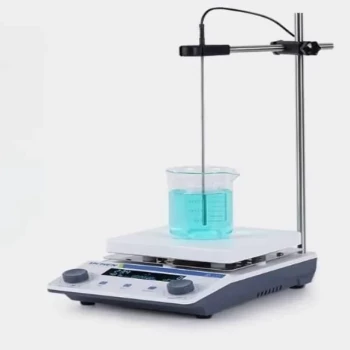
- Laboratory Small Constant Temperature Heated Magnetic Stirrer Heater and Stirrer
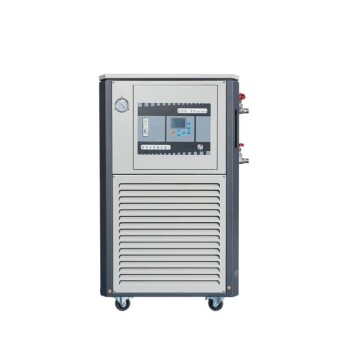
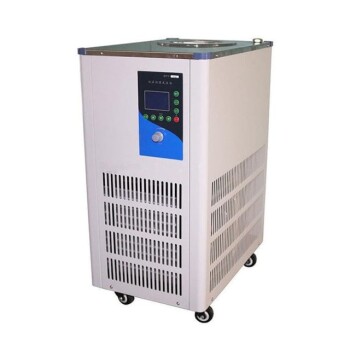
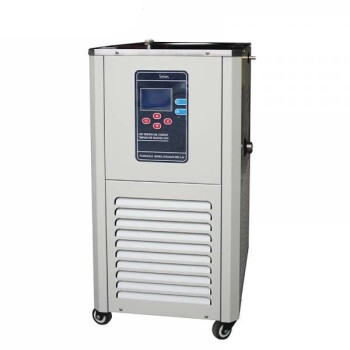
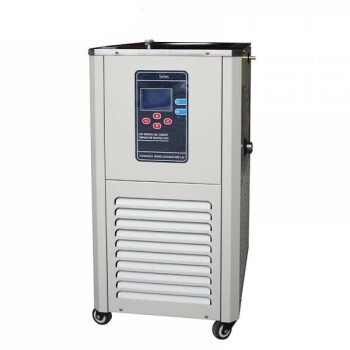
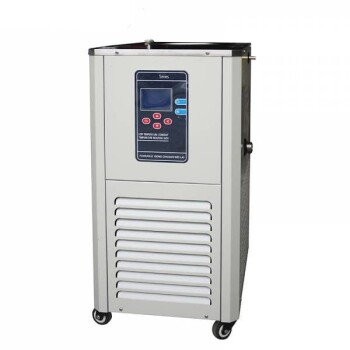
- High Temperature Constant Temperature Heating Circulator Water Bath Chiller Circulator for Reaction Bath
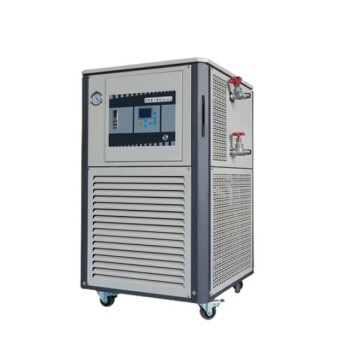
- 10L Heating Chilling Circulator Cooling Water Bath Circulator for High and Low Temperature Constant Temperature Reaction
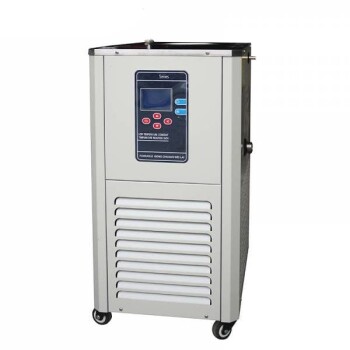
- 50L Chiller Water Bath Cooling Circulator Low Temperature Constant Temperature Reaction Bath
- 5L Heating Chilling Circulator Cooling Water Bath Circulator for High and Low Temperature Constant Temperature Reaction
People Also Ask
- What role does a magnetic stirrer with heating play in ZnO nanoparticle synthesis? Precision Control for Quality Results
- What role does a constant temperature heating magnetic stirrer play in MFC-HAp synthesis? Achieve Material Homogeneity
- What is the function of a laboratory magnetic stirrer in Ni–Cr–P electrodeposition? Optimize Ion Transport & Coating
- Why is a laboratory magnetic stirrer required for benzoic acid esters? Boost Reaction Speed & Yield with High RPM
- What role does a laboratory magnetic stirrer play in TiO2 and TiO2-Ag sol preparation? Master Chemical Kinetics