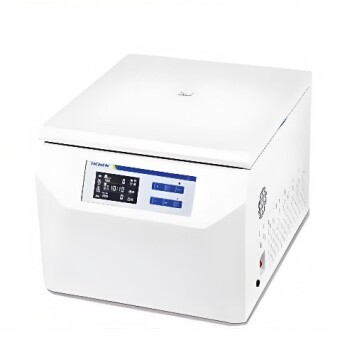
High-pressure reactors and stainless steel autoclaves are mandatory because supercritical transesterification operates at thermodynamic extremes well beyond the limits of standard glassware. Specifically, these vessels are engineered to withstand conditions such as 252°C and pressures up to 24 MPa. This robust containment is the only way to force methanol and oil—which are naturally immiscible—into a single, homogeneous supercritical phase.
The core function of this hardware is to create a closed, high-energy environment that forces reactants into a single phase, thereby eliminating the physical barriers that normally slow down chemical reactions between oil and alcohol.
The Physics of the Supercritical State
Achieving a Homogeneous System
Under standard conditions, oil and methanol do not mix well; they remain in separate phases. High-pressure reactors allow the system to reach a supercritical state where distinct liquid and gas phases disappear. In this environment, the mixture becomes a single, homogeneous fluid, ensuring that the oil and alcohol molecules are in constant, intimate contact.
Eliminating Mass Transfer Resistance
In traditional biodiesel production, the reaction rate is limited by the speed at which reactants can cross the boundary between the oil phase and the alcohol phase. By utilizing a stainless steel autoclave to reach supercritical conditions, you eliminate this mass transfer resistance entirely. This results in significantly improved conversion rates and much faster reaction speeds compared to conventional methods.
Hardware Roles in Chemical Kinetics
Preventing Solvent Loss
Methanol is a low-boiling point solvent that would rapidly evaporate at the high temperatures required for this process. A sealed, pressure-resistant structure is vital to trap the methanol within the system. This maintains a stable molar ratio between the alcohol and the oil, which is critical for driving the chemical equilibrium toward biodiesel production.
Withstanding Autogenous Pressure
When liquids are heated in a closed volume, they generate their own internal pressure, known as autogenous pressure. At temperatures exceeding 250°C, this pressure becomes immense. Stainless steel is required not just for chemical resistance, but for the structural tensile strength needed to prevent catastrophic vessel failure under these loads.
Understanding the Trade-offs
Operational Complexity vs. Reaction Speed
While these reactors enable rapid reactions without catalysts, they introduce significant safety complexities. You gain speed and purity (no catalyst removal needed), but you must manage the risks of operating at 24 MPa. The equipment is heavier, more expensive, and requires stricter safety protocols than low-pressure catalytic reactors.
Material Durability
Supercritical environments can be corrosive, particularly if impurities or free fatty acids are present. Standard steel would degrade rapidly under these conditions. Stainless steel is specifically chosen for its ability to resist leaching and maintain structural integrity during repeated high-pressure cycles.
Making the Right Choice for Your Goal
To select the appropriate reactor configuration for your biodiesel process, consider your specific operational targets:
- If your primary focus is reaction speed and efficiency: Prioritize a reactor rated for pressures above 24 MPa to ensure you can reach and maintain the supercritical state for immediate miscibility.
- If your primary focus is process consistency: Ensure the autoclave features integrated temperature and pressure monitoring to detect any fluctuations that could disrupt the homogeneous phase.
Ultimately, the high-pressure reactor is not just a container; it is the physical enabler that forces nature’s boundaries to shift, turning a two-phase mixture into a single, highly reactive fluid.
Summary Table:
| Feature | Standard Glassware | KINTEK High-Pressure Reactor/Autoclave |
|---|---|---|
| Max Operating Temp | Up to 200°C (Limited) | Exceeds 250°C (252°C+ for Supercritical) |
| Pressure Resistance | Ambient/Low Pressure | Up to 24 MPa and Beyond |
| Reactant State | Two-Phase (Immiscible) | Single Homogeneous Supercritical Phase |
| Mass Transfer | Limited Resistance | Resistance Eliminated (Instant Contact) |
| Material Strength | Low | High-Strength Stainless Steel/Alloy |
| Reaction Speed | Slow (Catalyst Dependent) | Rapid (Non-Catalytic Conversion) |
Maximize Your Biodiesel Yield with KINTEK Precision Engineering
Transitioning to supercritical transesterification requires more than just heat; it demands the safety and structural integrity of industry-leading hardware. KINTEK specializes in high-performance laboratory solutions, providing the high-temperature high-pressure reactors and autoclaves necessary to achieve the 24 MPa conditions required for supercritical phase homogeneity.
Whether you are focusing on rapid reaction speeds or consistent catalyst-free purity, our stainless steel autoclaves are designed to eliminate mass transfer resistance and withstand extreme autogenous pressures. Beyond reactors, KINTEK offers a comprehensive range of crushing and milling systems, cooling solutions, and specialized furnace technology to support your entire research workflow.
Ready to elevate your chemical kinetics? Contact our technical experts today to find the perfect reactor configuration for your laboratory needs.
References
- Jesús Andrés Tavizón-Pozos, José A. Rodrı́guez. State of Art of Alkaline Earth Metal Oxides Catalysts Used in the Transesterification of Oils for Biodiesel Production. DOI: 10.3390/en14041031
This article is also based on technical information from Kintek Solution Knowledge Base .
Related Products
- Customizable Laboratory High Temperature High Pressure Reactors for Diverse Scientific Applications
- Customizable High Pressure Reactors for Advanced Scientific and Industrial Applications
- Stainless High Pressure Autoclave Reactor Laboratory Pressure Reactor
- Mini SS High Pressure Autoclave Reactor for Laboratory Use
- High Pressure Laboratory Autoclave Reactor for Hydrothermal Synthesis
People Also Ask
- How do high-pressure and high-temperature reactors ensure the effective treatment of lignocellulosic wastewater in WAO?
- What equipment is required for high-pressure high-temperature reactions? Master Extreme Chemistry Safely
- How do you control high pressure in a reactor? A Guide to Safe & Stable Operation
- Why is argon better than nitrogen for inert atmosphere? Ensure Absolute Reactivity & Stability
- How does initial oxygen pressure affect the wet oxidation of pharmaceutical sludge? Master Your Oxidation Depth