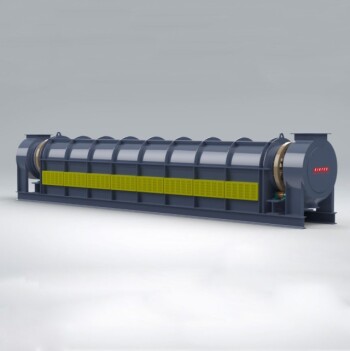
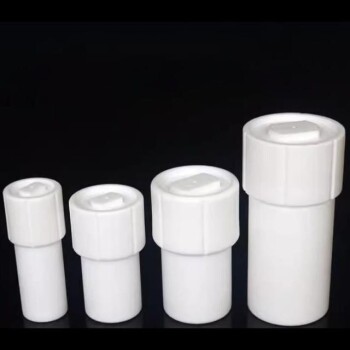
Pyrolysis reactors utilize high-temperature quartz and specific alloy steels because they must withstand extreme thermal environments ranging from 400°C to 750°C while maintaining structural integrity. Quartz offers chemical purity and transparency for precise observation, while alloy steels provide the rugged mechanical strength and pressure resistance required for industrial-scale operations.
The selection of reactor materials is dictated by the need to balance thermal stability, chemical inertness, and mechanical durability against the aggressive conditions of thermochemical decomposition. Choosing the right material ensures both process accuracy and long-term operational safety in high-heat environments.
The Critical Role of Thermal Stability
Managing Intense Thermal Loads
Pyrolysis is a thermochemical process that requires consistent heat, typically between 400°C and 750°C, to break down organic materials. At these temperatures, standard materials can warp, oxidize, or lose their structural load-bearing capacity.
Both quartz and specialized alloys are engineered to maintain their shape and function within this specific "danger zone." This stability prevents thermal fatigue, which could otherwise lead to reactor failure or hazardous leaks.
High-Temperature Quartz: Precision and Purity
Ensuring Chemical Inertness
Quartz is highly valued in laboratory and pilot-scale settings because it is chemically inert. This means it does not react with the feedstock or the resulting bio-oils and gases during the heating process.
By remaining non-reactive, quartz ensures that the chemical signature of the products is not altered by contamination. This is vital for researchers who need to analyze the exact composition of the pyrolytic vapors.
Visual Monitoring and Transparency
The transparency of quartz allows operators to observe the reaction in real-time. This visibility is critical for identifying phase changes, monitoring bed fluidization, or detecting issues like carbon buildup (coking).
Visual access helps in refining process parameters without needing to shut down or dismantle the equipment. This makes quartz the gold standard for experimental validation and process optimization.
Industrial Alloy Steels: Strength Under Pressure
Superior Mechanical Resilience
While quartz excels in purity, alloy steels are selected for their superior mechanical strength. In industrial settings, reactors often handle large volumes of feedstock that exert significant physical stress on the vessel walls.
These alloys are specifically formulated to resist creep and deformation at high temperatures. This ensures the reactor remains a "solid box" even when subjected to the weight of the material and the heat of the furnace.
Reliability in High-Pressure Environments
Many pyrolysis processes operate under significant pressure to drive specific chemical outcomes. Alloy steels provide the necessary pressure resistance to prevent vessel rupture.
The use of these steels ensures long-term operational stability. This allows industrial plants to run continuous processes for thousands of hours with minimal risk of structural degradation.
Understanding the Trade-offs
Fragility vs. Scale
Quartz, despite its thermal benefits, is inherently brittle and sensitive to mechanical shock. This fragility makes it difficult to scale up to massive industrial dimensions where physical impacts or vibrations are common.
In contrast, alloy steels are durable but can be susceptible to corrosion or catalytic effects depending on the specific metal composition. If the wrong alloy is chosen, the metal surface might inadvertently act as a catalyst, changing the reaction's outcome.
Cost and Complexity
High-temperature quartz and specialized alloys represent a significant capital investment. Quartz is expensive to manufacture in large or complex shapes, while high-grade alloys require specialized welding and fabrication techniques.
Choosing between them requires a careful analysis of whether the priority is data purity (quartz) or production volume (alloy steel).
Making the Right Choice for Your Goal
How to Apply This to Your Project
Selecting the correct material depends entirely on the scale of your operation and your requirements for product analysis.
- If your primary focus is laboratory research and data accuracy: Utilize high-temperature quartz to ensure chemical inertness and allow for visual monitoring of the reaction.
- If your primary focus is industrial throughput and durability: Invest in specific alloy steels to provide the mechanical strength and pressure resistance necessary for large-scale, continuous operation.
By aligning material properties with the specific thermal and mechanical demands of your process, you ensure both the safety of your personnel and the quality of your pyrolytic products.
Summary Table:
| Feature | High-Temperature Quartz | Specific Alloy Steels |
|---|---|---|
| Temperature Range | 400°C to 750°C+ | 400°C to 750°C+ |
| Primary Benefit | Chemical inertness & transparency | Mechanical strength & pressure resistance |
| Best Used For | Lab research & process monitoring | Industrial production & large volumes |
| Chemical Reaction | Non-reactive; prevents contamination | May have catalytic effects |
| Durability | Brittle; sensitive to shock | High resistance to creep & deformation |
Elevate Your Pyrolysis Research with KINTEK Precision
Maximize the accuracy and safety of your thermochemical processes with KINTEK’s high-performance laboratory and industrial solutions. Whether you require the chemical purity and visual transparency of high-temperature quartz for experimental validation or the rugged mechanical strength of specialized alloy steels for high-pressure industrial scale-up, we have the expertise to equip your facility.
Why partner with KINTEK?
- Comprehensive Range: From specialized CVD and vacuum furnaces to high-temperature high-pressure reactors and autoclaves.
- Unmatched Durability: Our equipment is engineered to resist thermal fatigue and deformation in the most aggressive environments.
- Tailored Solutions: We support your specific needs with a full portfolio of crushing systems, hydraulic presses, and high-purity ceramic consumables.
Don't compromise on material integrity. Contact our technical team today to find the perfect reactor solution tailored to your performance requirements!
References
- Katerine Ordoñez Agredo, Edgar Mosquera. Pirólisis del tereftalato de polietileno y poliestireno para la síntesis de nanoestructuras de carbono: una revisión bibliométrica. DOI: 10.18273/revuin.v22n2-2023003
This article is also based on technical information from Kintek Solution Knowledge Base .
Related Products
- Electric Rotary Kiln Small Rotary Furnace Biomass Pyrolysis Plant
- Electric Rotary Kiln Continuous Working Small Rotary Furnace Heating Pyrolysis Plant
- Electric Rotary Kiln Pyrolysis Furnace Plant Machine Calciner Small Rotary Kiln Rotating Furnace
- Customizable Laboratory High Temperature High Pressure Reactors for Diverse Scientific Applications
- High Pressure Laboratory Autoclave Reactor for Hydrothermal Synthesis
People Also Ask
- What is the temperature of a rotating kiln? It Depends on Your Material and Process Goal
- What are the different types of calciners? A Guide to Selecting the Right Thermal Processing Equipment
- What are the principles of a rotary kiln? Master the Mechanics of High-Temperature Processing
- How are rotary kilns heated? Direct vs. Indirect Heating Methods Explained
- Is rotary kiln a furnace? Discover the Key Differences for Industrial Processing