Ultrasonic technology is the critical mechanism required to transform raw catalyst powders and solvents into a functional, high-quality ink. These devices utilize the cavitation effect to generate high-energy shock waves and micro-jets, which provide the physical force necessary to break down stubborn particle agglomerates and ensure a uniformly dispersed mixture that manual stirring cannot achieve.
The dispersion achieved through ultrasonic treatment is not optional; it is a strict prerequisite. Without the mechanical shear force provided by cavitation, catalyst particles remain clumped, making it impossible to produce reproducible catalytic films with uniform thickness.
The Mechanics of De-Agglomeration
The Cavitation Effect
The core function of an ultrasonic cleaner or homogenizer is the generation of cavitation. This process creates microscopic bubbles that collapse rapidly, producing intense shock waves and micro-jets within the liquid.
Breaking Down Clusters
Catalyst powders naturally form tight clusters or agglomerates. The high-energy waves described above strike these agglomerates with significant force. This physically shatters the clusters, reducing the catalyst to its primary particle size for proper suspension.
Mechanical Shear Force
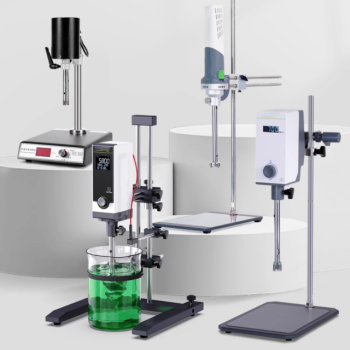
As noted in high-intensity "horn-type" homogenizers, this process applies substantial mechanical shear force. This force is significantly more powerful than magnetic stirring or vortexing, which allows it to overcome the attractive forces holding the particles together.
Ensuring Ink Quality and Stability
Achieving Uniform Dispersion
For an electrocatalyst to function correctly, the active material must be spread evenly throughout the solvent (such as isopropanol or water). Ultrasonic processing ensures a high degree of uniform dispersion, preventing the heavier catalyst particles from settling unevenly.
Optimizing Ingredient Contact
A stable ink often requires mixing the catalyst with an ionomer binder. Ultrasonic homogenization ensures full contact between the catalyst particles and the ionomer. This interaction is vital for creating a cohesive, stable ink that will adhere properly to the electrode.
The Impact on the Final Electrode
Film Thickness Uniformity
The quality of the ink directly dictates the quality of the final electrode coating. A well-dispersed ink allows for the deposition of layers with uniform thickness, avoiding the peaks and valleys caused by undispersed clumps.
Scientific Reproducibility
In electrochemical research, consistency is key. Ultrasonic dispersion ensures that every batch of ink has the same characteristics. This leads to highly reproducible catalytic layer films, allowing researchers to trust that variations in performance are due to the material, not the preparation method.
Common Pitfalls to Avoid
Insufficient Energy Density
Not all ultrasonic methods provide the same energy. A standard ultrasonic cleaning bath may provide enough energy for loose mixtures, but a horn-type homogenizer provides the direct, intense cavitation needed for stubborn iridium-based or inverse opal powders.
Over-Processing
While dispersion is necessary, it is a physical assault on the material. One must balance the need to break agglomerates with the risk of overheating the solvent or damaging the ionomer chains through excessive shear duration.
Making the Right Choice for Your Goal
Ultrasonic processing is the industry standard for ensuring your catalyst materials perform at their theoretical limits.
- If your primary focus is experimental validity: Use ultrasonic homogenization to guarantee reproducibility, ensuring that every electrode you fabricate has an identical micro-structure.
- If your primary focus is coating quality: Rely on this step to eliminate agglomerates, which is the only way to achieve a uniform film thickness free of physical defects.
The output of your electrochemical device can only be as good as the uniformity of the ink used to create it.
Summary Table:
| Feature | Ultrasonic Cleaning Bath | Horn-Type Homogenizer |
|---|---|---|
| Energy Density | Moderate | High (Direct) |
| Primary Use | General mixing & cleaning | Intensive de-agglomeration |
| Mechanism | Indirect cavitation via bath | Direct mechanical shear force |
| Suitability | Loose catalyst mixtures | Stubborn/Iridium-based powders |
| Core Benefit | Basic suspension | High-degree uniform dispersion |
Elevate your electrochemical research with KINTEK’s precision equipment. From high-intensity ultrasonic homogenizers to advanced battery research tools, we provide the technology needed to achieve perfectly dispersed electrocatalyst inks and defect-free electrode films. KINTEK specializes in laboratory equipment including high-temperature furnaces, hydraulic presses, and ultrasonic solutions tailored for your success. Contact us today to find the ideal processing solution for your lab!
References
- Ruslan M. Mensharapov, S. V. Grigoriev. Screening of Carbon-Supported Platinum Electrocatalysts Using Frumkin Adsorption Isotherms. DOI: 10.3390/inorganics11030103
This article is also based on technical information from Kintek Solution Knowledge Base .
Related Products
- High Shear Homogenizer for Pharmaceutical and Cosmetic Applications
- High Performance Lab Homogenizer for Pharma Cosmetics and Food R&D
- Lab Sterile Slapping Type Homogenizer for Tissue Mashing and Dispersing
- Laboratory High Throughput Tissue Grinding Mill Grinder
- Laboratory Disc Rotary Mixer for Efficient Sample Mixing and Homogenization
People Also Ask
- Why Use a High Shear Homogenizer for Cathode Slurries? Optimize Double-Layer Solid-State Battery Production
- What is the function of high-shear dispersion equipment in corona-resistant nanocomposites? Elevate Your Insulation
- What is the necessity of using an industrial-grade high-shear homogenizer for biomass washing? Ensure Process Efficiency
- What are the advantages of using a high-shear homogenizer for BED/GMA coatings? Achieve Superior Nano-Dispersion
- What role does a high-shear homogenizer play in ODC catalyst suspensions? Unlock Superior Electrochemical Efficiency