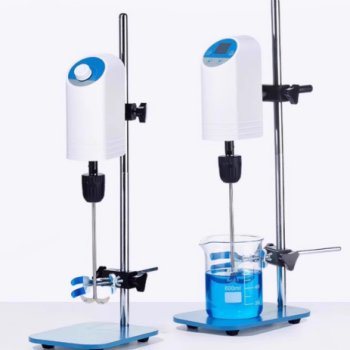
In the context of biomass processing, a high-speed rotor-stator homogenizer functions as a critical mechanical pretreatment device designed to physically dismantle tough materials. It utilizes extremely high shear rates to break down complex lignocellulosic matrices into simpler components, significantly reducing the time required compared to traditional mechanical treatments.
Core Takeaway: This device is not merely a mixer; it is a structural disruptor. By applying intense shear force, it transforms raw, complex biomass into a uniform substrate, creating the optimal physical form necessary for efficient downstream biological conversion.
The Mechanics of Biomass Disruption
Generating High Shear Forces
The primary function of the rotor-stator system is the generation of extremely high shear rates. While similar principles are used to create emulsions in other industries, in biomass processing, this mechanical energy is directed at fracturing solid structures.
Breaking Down Lignocellulose
Biomass is naturally resistant to degradation due to its complex lignocellulosic matrices. The homogenizer aggressively disrupts these matrices, effectively unlocking the structure. This breakdown is the first step in converting raw organic matter into a usable format.
Enhancing Downstream Efficiency
Improving Substrate Uniformity
Standard mechanical treatments may leave biomass uneven or clumpy. The high-speed homogenizer ensures substrate uniformity, refining the material to a consistent state. This uniformity is critical for ensuring predictable reactions in later processing stages.
Optimizing for Biological Conversion
The ultimate goal of this physical disruption is to prepare the material for biological conversion. By refining the biomass into a superior physical form, the homogenizer increases the surface area available for biological agents to act upon.
Understanding the Operational Context
Speed vs. Traditional Methods
One of the distinct advantages of this technology is time efficiency. It serves as a rapid alternative to traditional mechanical treatments, which are often slower and less effective at achieving the required level of disruption.
Mechanical Intensity
It is important to recognize that this process relies on aggressive mechanical action. The device creates a highly disruptive environment intended to refine materials, potentially down to the micrometer scale, to ensure thorough distribution and accessibility of the biomass components.
Making the Right Choice for Your Goal
To determine if a high-speed rotor-stator homogenizer fits your specific processing needs, consider your desired outcomes:
- If your primary focus is process speed: The high shear rates allow you to significantly reduce processing time compared to conventional mechanical pretreatment methods.
- If your primary focus is conversion yields: The device disrupts the structural matrix to create a uniform substrate, providing the superior physical form required for optimal biological conversion.
By leveraging high-speed shear forces, you transform raw biomass from a resistant complex solid into an optimized substrate ready for efficient processing.
Summary Table:
| Feature | Function in Biomass Processing | Benefit |
|---|---|---|
| High Shear Rates | Physically disrupts tough lignocellulosic matrices | Reduces processing time vs. traditional methods |
| Mechanical Intensity | Fractures solid organic structures at a micro-scale | Unlocks complex biomass for easier degradation |
| Substrate Uniformity | Eliminates clumps to create a consistent substrate | Ensures predictable downstream reactions |
| Surface Area Increase | Refines raw material into an optimized physical form | Enhances efficiency of biological conversion |
Maximize Your Biomass Conversion Efficiency with KINTEK
Are you looking to accelerate your research and improve substrate yields? KINTEK specializes in high-performance laboratory equipment designed for the most demanding applications. Our advanced homogenizers and shakers provide the high-intensity shear forces necessary to disrupt complex lignocellulosic structures, while our crushing and milling systems and high-pressure reactors ensure you have the right tools for every stage of material pretreatment.
From high-temperature furnaces and vacuum solutions to specialized PTFE and ceramic consumables, KINTEK provides the comprehensive support laboratory professionals need to achieve consistent, reproducible results.
Ready to upgrade your biomass processing workflow? Contact our technical experts today to find the perfect equipment solution tailored to your specific research goals.
References
- J. Rajesh Banu, Gopalakrishnan Kumar. Lignocellulosic Biomass Pretreatment for Enhanced Bioenergy Recovery: Effect of Lignocelluloses Recalcitrance and Enhancement Strategies. DOI: 10.3389/fenrg.2021.646057
This article is also based on technical information from Kintek Solution Knowledge Base .
Related Products
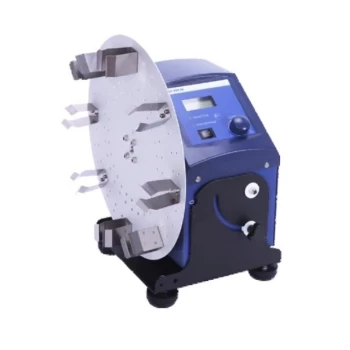
- Laboratory Disc Rotary Mixer for Efficient Sample Mixing and Homogenization
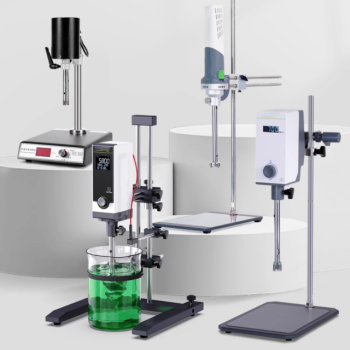
- High Shear Homogenizer for Pharmaceutical and Cosmetic Applications
- High Performance Lab Homogenizer for Pharma Cosmetics and Food R&D
- Laboratory High Throughput Tissue Grinding Mill Grinder
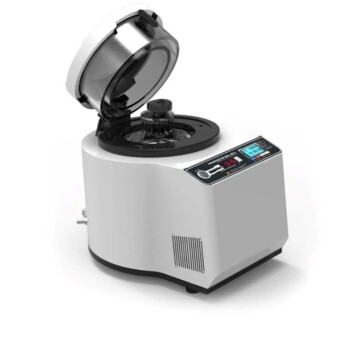
- Benchtop High Speed Small Lab Centrifuge for Serum Separation and Low Temperature Dehydration
People Also Ask
- What is a laboratory mixer used for? Choose the Right Tool for Liquids or Solids
- What is a laboratory mixer? A Guide to Achieving Perfect Sample Homogeneity
- What are laboratory mixers used for? Achieve Perfect Sample Homogeneity and Reliable Results
- How does a high-efficiency homogenizing mixer contribute to the preparation of Tobermorite and Xonotlite precursors?
- Why is precision mixing required for concrete corrosion studies? Ensure Data Integrity through Homogenization