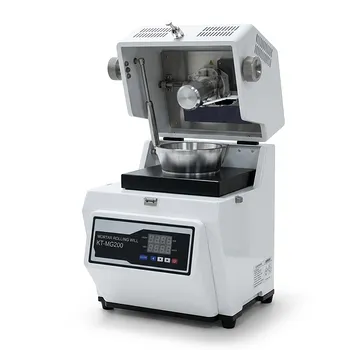
Precision mixing or homogenization is required to ensure that all components—cement, water, aggregates, and plasticizers—are distributed uniformly at a microscopic level. This uniformity is the only way to eliminate local structural weaknesses that lead to accidental cracking, which would otherwise invalidate data regarding the material's resistance to corrosion.
Core Takeaway Reliable corrosion studies require a baseline of absolute consistency within the test material. Precision mixing creates a uniform matrix that ensures any observed degradation is the result of the aggressive media (such as acid mine drainage), rather than pre-existing flaws or chemical inconsistencies in the concrete itself.
The Necessity of a Uniform Matrix
Achieving Microscopic Distribution
To evaluate concrete composites scientifically, standard mixing is insufficient. Precision equipment is necessary to blend various grades of aggregate and chemical additives like plasticizers thoroughly.
This process ensures that every cubic millimeter of the composite contains the correct ratio of ingredients. Without this microscopic uniformity, the material properties will vary significantly across the sample.
Eliminating Structural Weak Spots
A non-homogenized mixture inevitably contains local defects. These defects act as stress concentrators or weak points within the composite structure.
Precision mixing prevents these issues by eliminating local structural weaknesses. This ensures that the physical integrity of the sample is consistent before any testing begins.
Eliminating False Positives in Corrosion Data
Preventing Accidental Cracks
In corrosion studies, researchers look for cracks caused by chemical attacks. However, poor mixing can cause accidental corrosion cracks unrelated to the chemical exposure.
Homogenization ensures that cracks observed during the study are genuine indicators of corrosion susceptibility. It removes the variable of mechanical failure caused by poor constituent bonding.
Maintaining Chemical Stability
When concrete is exposed to aggressive media, such as aluminum sulfate or acidic mine drainage, the reaction occurs at the material's interface.
Precision mixing ensures this reaction interface maintains consistent chemical stability. If the mix is uneven, different parts of the surface will react at different rates, leading to skewed or non-reproducible data.
The Risks of Inadequate Homogenization
Compromised Data Integrity
If the initial mixture is not homogenized, it is impossible to isolate variables. A failure in the material could be due to the aggressive environment or simply because of a pocket of unmixed aggregate.
Inconsistent Reaction Kinetics
Without a uniform matrix, the chemical reaction between the concrete and the corrosive media becomes unpredictable. This lack of control makes it difficult to model the material's lifespan or true resistance accurately.
Making the Right Choice for Your Goal
To ensure your study produces valid, publishable results, you must prioritize the preparation phase of your samples.
- If your primary focus is Structural Integrity: Use precision mixing to eliminate pre-existing micro-cracks that could be mistaken for stress corrosion.
- If your primary focus is Chemical Resistance: Rely on homogenization to ensure the surface area exposed to aggressive media has a consistent chemical composition.
Precision mixing transforms a concrete mixture from a variable-filled aggregate into a reliable, standardized testing medium.
Summary Table:
| Feature | Standard Mixing | Precision Homogenization |
|---|---|---|
| Component Distribution | Macro-level distribution | Microscopic uniform matrix |
| Material Integrity | Potential local weak spots | Consistent structural stability |
| Crack Origin | Risk of accidental mechanical cracks | Authentic corrosion-induced cracking |
| Reaction Kinetics | Varied across sample surface | Uniform interface reaction |
| Data Reliability | Inconsistent/Skewed | High (Isolates chemical variables) |
Elevate Your Materials Research with KINTEK Precision Solutions
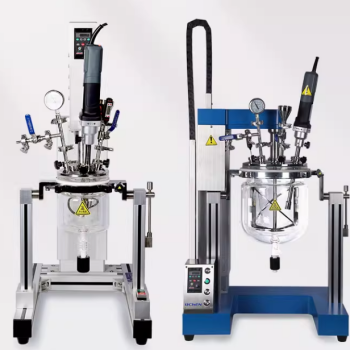
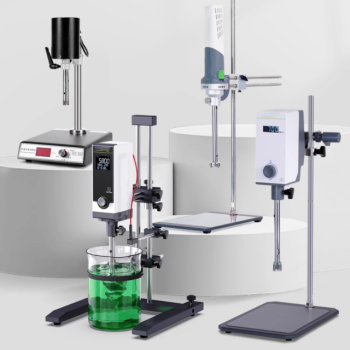
Don't let poor sample preparation compromise your data integrity. KINTEK specializes in advanced laboratory equipment designed to deliver the microscopic uniformity required for high-stakes research. From high-performance homogenizers and shakers for perfect mixtures to crushing and milling systems for aggregate preparation, we provide the tools necessary to eliminate variables in your corrosion studies.
Whether you are analyzing chemical resistance or structural longevity, our comprehensive portfolio—including high-temperature furnaces, hydraulic presses, and specialized reactors—supports every stage of your material science workflow.
Ready to standardize your testing medium? Contact KINTEK today to discover how our precision equipment can bring absolute consistency to your laboratory results.
References
- Vlasta Ondrejka Harbuľáková, Alena Luptáková. Different aggressive media influence related to selected characteristics of concrete composites investigation. DOI: 10.1007/s40095-014-0082-8
This article is also based on technical information from Kintek Solution Knowledge Base .
Related Products
- Laboratory Disc Rotary Mixer for Efficient Sample Mixing and Homogenization
- High Performance Lab Homogenizer for Pharma Cosmetics and Food R&D
- High Shear Homogenizer for Pharmaceutical and Cosmetic Applications
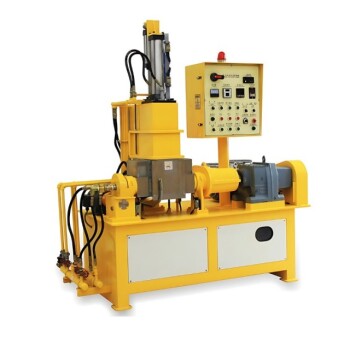
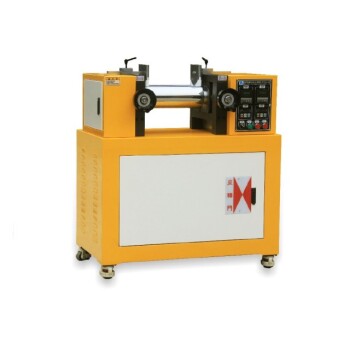
- Lab Internal Rubber Mixer Rubber Kneader Machine for Mixing and Kneading
- Lab Sterile Slapping Type Homogenizer for Tissue Mashing and Dispersing
People Also Ask
- What is a laboratory mixer used for? Choose the Right Tool for Liquids or Solids
- What is a laboratory mixer? A Guide to Achieving Perfect Sample Homogeneity
- What are laboratory mixers used for? Achieve Perfect Sample Homogeneity and Reliable Results
- How does a high-efficiency homogenizing mixer contribute to the preparation of Tobermorite and Xonotlite precursors?
- What is the purpose of a mixer? Achieve Perfect Baking Results with Less Effort