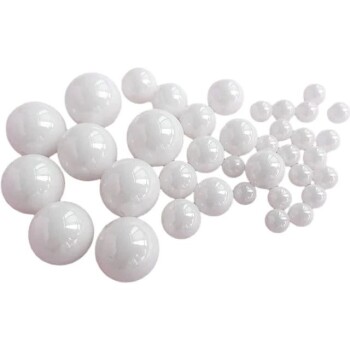
The utilization of zirconia grinding media with varying diameters is a strategic choice to balance mechanical efficiency with chemical purity. This approach leverages the extreme hardness of zirconia to prevent metallic contamination while using a mix of sizes—such as 5mm, 8mm, and 10mm—to optimize media gradation for uniform particle reduction.
By combining different diameters, you create a packing structure that targets both coarse crushing and fine milling simultaneously. This ensures the LATP powder reaches the necessary micron-level fineness without introducing performance-degrading metallic impurities.
Maximizing Grinding Efficiency Through Media Gradation
The primary reason for mixing diameters is to optimize media gradation. Using a single size of grinding ball often results in inefficient processing due to voids in contact points or insufficient kinetic energy.
The Role of Larger Media
Larger grinding balls (e.g., 10mm) possess higher mass and, consequently, higher kinetic energy.
Their primary function is to deliver powerful impact forces. This is essential for the initial breakdown of coarse, pre-sintered materials or tough agglomerates.
The Role of Smaller Media
Smaller balls (e.g., 5mm) fill the interstitial spaces between the larger media.
Their primary function provides a vastly increased number of contact points. This maximizes the friction and shear forces required to refine the powder to a uniform micron level.
Achieving Uniform Particle Distribution
A mixture of sizes ensures that the grinding energy is distributed effectively across the entire powder volume.
This prevents "dead zones" in the milling jar. The result is a tighter particle size distribution, which increases the specific surface area and enhances the sintering activity of the final electrolyte ceramic.
Preserving Material Purity with Zirconia
While the size of the media dictates efficiency, the material (zirconia) is chosen to protect the electrochemical integrity of the LATP.
Eliminating Metallic Contamination
Standard steel grinding media can introduce iron or chromium impurities due to abrasive wear.
Zirconia is chemically inert and extremely hard. This prevents the introduction of conductive metallic particles, which would be detrimental to a solid-state electrolyte.
Maintaining Ionic Conductivity
LATP (Lithium Aluminum Titanium Phosphate) is highly sensitive to impurities.
Foreign contaminants can trigger side reactions or block lithium-ion pathways. Using zirconia ensures the high purity required to maintain optimal ionic conductivity and electrochemical stability during cycling.
Wear Resistance
Zirconia offers superior wear resistance compared to softer ceramics or metals.
This durability allows for prolonged high-energy milling (mechanical alloying) without degrading the media itself. It ensures the stoichiometry of the LATP remains consistent throughout the synthesis.
Understanding the Trade-offs
While zirconia media with varying diameters offers the best balance for LATP synthesis, there are operational considerations to keep in mind.
Energy Input vs. Crystal Structure
High-energy milling with dense zirconia balls is very effective, but excessive milling can damage the crystal structure.
If the impact energy is too high for too long, the material may become amorphous rather than crystalline. You must tune the milling duration to refine the particle size without destroying the desired phase.
Contamination from Jar Materials
The benefits of zirconia balls are negated if the milling jar is made of a reactive material.
You must ensure the jar liner matches the media (zirconia). A mismatch leads to cross-contamination, as the harder zirconia balls will rapidly wear down a softer jar liner.
Optimizing Your Milling Strategy
To achieve the best results in LATP synthesis, align your media selection with your specific processing goals.
- If your primary focus is Grinding Efficiency: Utilize a specific ratio of varying diameters (e.g., 5mm, 8mm, 10mm) to maximize contact points and break down particles uniformly.
- If your primary focus is Electrochemical Performance: strictly adhere to high-quality zirconia media and jars to eliminate metallic impurities that degrade ionic conductivity.
- If your primary focus is Sintering Activity: Ensure your milling duration is sufficient to reach micron-level fineness, increasing the specific surface area for better densification.
Ultimately, the combination of zirconia’s inertness and a graded diameter mix provides the cleanest, most efficient pathway to high-performance solid-state electrolytes.
Summary Table:
| Media Size (Diameter) | Primary Function | Advantage for LATP Synthesis |
|---|---|---|
| Large (e.g., 10mm) | High Impact Force | Efficiently breaks down coarse pre-sintered agglomerates. |
| Small (e.g., 5mm) | High Contact Frequency | Increases shear forces to achieve uniform micron-level fineness. |
| Mixed Gradation | Media Packing | Eliminates dead zones and ensures tight particle size distribution. |
| Zirconia Material | Inertness & Hardness | Prevents metallic contamination to preserve ionic conductivity. |
Elevate Your Solid-State Electrolyte Research with KINTEK
Precision in particle size and material purity is critical for high-performance LATP synthesis. KINTEK specializes in advanced laboratory solutions, providing high-quality zirconia grinding media, matching jars, and high-performance crushing and milling systems designed to eliminate contamination and maximize milling efficiency.
Beyond milling, our comprehensive portfolio supports your entire workflow—from high-temperature furnaces (muffle, vacuum, tube) for sintering to hydraulic presses (pellet, isostatic) for electrolyte densification. We also offer specialized battery research tools, high-pressure reactors, and essential consumables like ceramics and crucibles.
Ready to optimize your material synthesis? Contact our technical experts today to find the perfect equipment and consumables for your laboratory's needs.
Related Products
- Precision Machined Zirconia Ceramic Ball for Engineering Advanced Fine Ceramics
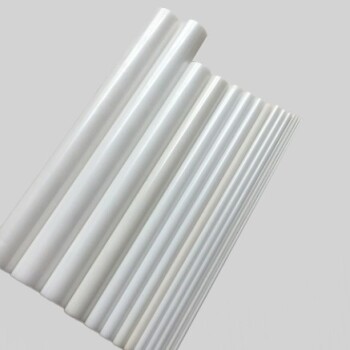
- Precision Machined Yttrium Stabilized Zirconia Ceramic Rod for Engineering Advanced Fine Ceramics
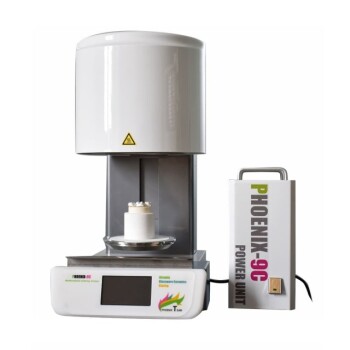
- Dental Porcelain Zirconia Sintering Ceramic Furnace Chairside with Transformer
- Dental Porcelain Zirconia Sintering Ceramic Vacuum Press Furnace
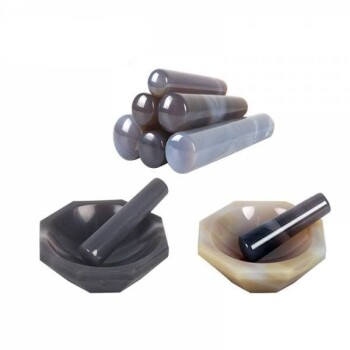
- Nature Agate Mortar and Pestle for Grinding and Mixing
People Also Ask
- What are the applications of zirconia ceramics? Unlock High-Performance Solutions for Extreme Environments
- What is the physical mechanism for selecting hard grinding media? Optimize Your ZrC-Al Matrix Composite Production
- Why are zirconia milling balls preferred for P2-type layered oxides? Ensure High Purity and Grinding Efficiency
- What is the purpose of using zirconia milling balls of different diameters? Optimize Solid Electrolyte Processing
- Why are zirconia grinding jars and balls required for solid-state electrolyte powders? Ensure High Purity & Performance