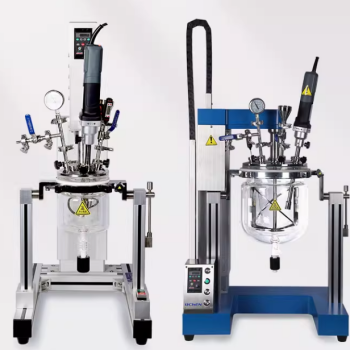
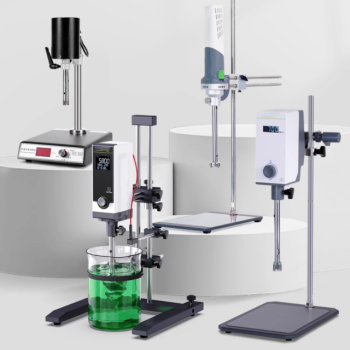
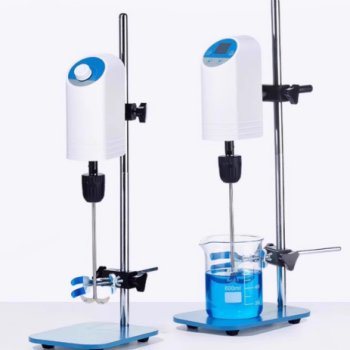
A high-power ultrasonic homogenizer is essential for this process because it generates the intense energy required to physically break the strong Van der Waals forces holding graphene oxide layers together. Simultaneously, it drives the mixing of cellulose and graphene at a molecular level, preventing particles from clumping and ensuring the creation of a uniform hybrid material.
The core value of this equipment lies in its ability to perform two critical tasks at once: exfoliating graphene into single layers via cavitation and dispersing it evenly within the cellulose matrix to prevent agglomeration.
The Mechanics of Exfoliation
Overcoming Intermolecular Bonds
Graphene oxide layers are naturally attracted to one another by Van der Waals forces. These forces are significant enough that standard mechanical stirring is often insufficient to separate the layers effectively.
The Role of Intense Cavitation
A high-power ultrasonic homogenizer overcomes these forces by inducing intense cavitation. This process creates microscopic bubbles in the solvent that form and collapse rapidly, releasing powerful shockwaves.
Achieving the Exfoliated State
This energy physically shears the graphene oxide apart. The result is a suspension where the material reaches a highly exfoliated state, existing as single or few-layered sheets within the water or organic solvent.
Ensuring Homogeneity
Mixing at the Molecular Level
The utility of the homogenizer extends beyond simple separation. It ensures that the cellulose suspension and the newly exfoliated graphene components are mixed thoroughly at a molecular level.
Preventing Agglomeration
One of the biggest challenges in hybrid preparation is the tendency for nanoparticles to re-clump, or agglomerate, during mixing. High-power ultrasound disrupts this tendency, keeping particles distinct and suspended.
Creating High-Uniformity Materials
By maintaining this dispersion, the equipment serves as a key method for producing high-uniformity hybrid materials. It guarantees that the unique properties of both the cellulose and graphene are distributed evenly throughout the final product.
Understanding the Trade-offs
The Necessity of High Power
It is critical to note that low-power ultrasonic baths often fail to achieve these results. The specific requirement here is high-power homogenization; insufficient energy input will result in incomplete exfoliation and a distinct lack of uniformity.
Equipment vs. Standard Mixing
While ultrasonic homogenization is more energy-intensive than magnetic or mechanical stirring, the trade-off is unavoidable. Standard mixing methods lack the shear force required to break Van der Waals interactions, rendering them ineffective for this specific application.
Making the Right Choice for Your Goal
To maximize the quality of your cellulose-graphene hybrid, consider your specific objectives:
- If your primary focus is material performance: Prioritize high-intensity power settings to ensure the graphene is fully exfoliated into single layers, maximizing surface area.
- If your primary focus is suspension stability: Ensure the duration of the ultrasonic treatment is sufficient to achieve molecular-level mixing, which is the primary defense against agglomeration.
The use of high-power ultrasound is not merely an option for this process; it is the fundamental driver of material quality and uniformity.
Summary Table:
| Feature | High-Power Ultrasonic Homogenizer | Standard Mechanical Stirring |
|---|---|---|
| Primary Mechanism | Acoustic Cavitation & Micro-shockwaves | Mechanical Shear / Impeller Flow |
| Graphene Exfoliation | High: Breaks Van der Waals forces easily | Low: Insufficient for layer separation |
| Dispersion Level | Molecular-level uniformity | Macro-level mixing only |
| Agglomeration Risk | Minimum: High energy prevents re-clumping | High: Particles tend to re-aggregate |
| Material Quality | Single or few-layered sheets | Incomplete exfoliation/Bulk particles |
Elevate Your Nanomaterial Research with KINTEK
Precise exfoliation and stable dispersion are the foundations of high-performance cellulose-graphene hybrids. KINTEK specializes in advanced laboratory solutions designed for the most demanding applications. Whether you need high-power ultrasonic homogenizers for molecular mixing, high-temperature furnaces for material carbonization, or high-pressure reactors for advanced synthesis, our equipment ensures consistent, repeatable results.
Our value to you:
- Unmatched Precision: High-intensity power settings for complete graphene exfoliation.
- Comprehensive Range: From crushing and milling systems to centrifuges and ULT freezers, we support your entire workflow.
- Expert Support: Our team helps you select the right tools for your specific material performance goals.
Ready to transform your material quality? Contact KINTEK today to find the perfect homogenization solution for your lab!
References
- Ghazaleh Ramezani, Ion Stiharu. Novel In-Situ Synthesis Techniques for Cellulose-Graphene Hybrids: Enhancing Electrical Conductivity for Energy Storage Applications. DOI: 10.21926/rpm.2501004
This article is also based on technical information from Kintek Solution Knowledge Base .
Related Products
- High Performance Lab Homogenizer for Pharma Cosmetics and Food R&D
- High Shear Homogenizer for Pharmaceutical and Cosmetic Applications
- Laboratory High Throughput Tissue Grinding Mill Grinder
- Lab Sterile Slapping Type Homogenizer for Tissue Mashing and Dispersing
- High Performance Laboratory Stirrers for Diverse Applications
People Also Ask
- Why is a high-performance homogenizer essential for Fe3O4@C9 anode slurries? Boost Battery Performance & Stability.
- What is the primary function of high-performance homogenizers for SAPO-34 MMMs? Ensure Superior Gas Separation Efficiency
- How do lab stirrers & homogenizers ensure uniform distribution? Optimize Your Complex Multiphase Chemical Mixing
- What role does a laboratory homogenizer play in radioactive cesium detection? Ensure Accuracy in Wildlife Sampling
- How does a laboratory automatic masticator or homogenizer facilitate the processing of biofilm samples? Optimize Accuracy