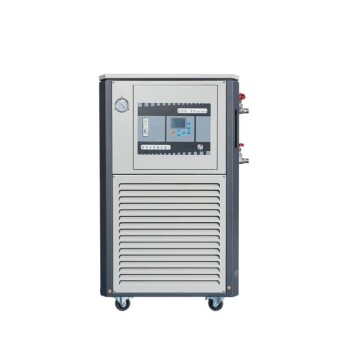
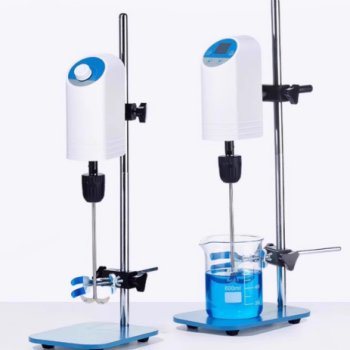
The oxidative efficiency of manganese dioxide (MnO2) nanoparticles is fundamentally determined by their crystal form and pore structure. A high-precision constant temperature stirring reactor is required to establish a uniform thermodynamic environment and shear field. This precise control ensures consistent nucleation and precursor growth, resulting in the stabilized, high-surface-area particles necessary for effective degradation.
The oxidative capacity of MnO2 is directly linked to particle uniformity. Precision reactors eliminate variables in the precipitation process, enhancing the degradation rate of recalcitrant environmental contaminants.
The Critical Role of Thermodynamic Control
Ensuring Uniform Nucleation
In nanoparticle synthesis, temperature fluctuations can lead to erratic crystallization. A high-precision reactor maintains a constant thermodynamic environment, which is essential for synchronizing the start of the nucleation process.
Regulating Crystal Growth
Once nucleation begins, the rate at which crystals grow defines their final structure. Stable temperatures prevent rapid, uncontrolled growth spikes that result in irregular pore structures. This stability allows for the formation of specific crystal forms optimized for oxidation.
The Importance of the Shear Field
Creating a Uniform Shear Field
Stirring is not merely about mixing ingredients; it creates a specific shear field within the fluid. A high-precision reactor provides a consistent shear force that prevents agglomeration during the delicate precipitation phase.
Enhancing Precursor Interaction
The mechanical action ensures that chemical precursors come into contact with uniform frequency and intensity. This facilitates controlled growth of the nanoparticle precursors, leading to a tighter particle size distribution.
Impact on Oxidative Performance
Maximizing Surface Area
The combination of thermal stability and consistent shear results in smaller, more uniform particles. These smaller particles possess a higher surface area-to-volume ratio, which is the primary driver of chemical reactivity.
Degradation of Contaminants
High-quality MnO2 particles are specifically synthesized to target environmental pollutants, such as endocrine disruptors. The enhanced oxidative degradation rate is a direct result of the optimized pore structure achieved through precise reactor control.
Understanding the Trade-offs
Complexity vs. Reproducibility
While high-precision reactors ensure data reliability and reproducibility, they introduce operational complexity. Users must calibrate these systems meticulously, as even minor deviations in programmed settings can alter the mass transfer efficiency.
Cost and Scalability
High-precision equipment represents a significant investment compared to standard laboratory glassware. However, reliance on lower-precision methods often leads to inconsistent batches that fail to simulate accurate kinetic processes.
Making the Right Choice for Your Goal
To maximize the effectiveness of your MnO2 synthesis, align your equipment choice with your specific research objectives.
- If your primary focus is Maximum Reactivity: Prioritize a reactor with tight shear control to generate the smallest possible particle size and highest surface area.
- If your primary focus is Experimental Reproducibility: Rely on the reactor's thermal precision to ensure that kinetic data regarding remediation efficiency is consistent across multiple trials.
Precision in synthesis is the only path to predictability in performance.
Summary Table:
| Parameter | Influence on MnO2 Synthesis | Impact on Performance |
|---|---|---|
| Temperature Control | Ensures uniform nucleation and stable crystal growth | Optimizes specific crystal forms and pore structure |
| Shear Field/Stirring | Prevents nanoparticle agglomeration | Ensures higher surface area and tighter size distribution |
| Thermodynamic Environment | Synchronizes precursor interaction | Increases reproducibility of kinetic degradation data |
| Mass Transfer | Enhances chemical precursor contact frequency | Maximizes reactivity against environmental contaminants |
Elevate Your Nanomaterial Synthesis with KINTEK
Precision in the lab translates to predictability in the field. KINTEK specializes in providing advanced laboratory equipment designed for the rigorous demands of chemical synthesis and environmental research.
Whether you are synthesizing high-surface-area catalysts or conducting complex degradation studies, our portfolio delivers the precision you need:
- High-Temperature High-Pressure Reactors & Autoclaves for controlled nanoparticle growth.
- Precision Stirring & Homogenizers to maintain uniform shear fields.
- Crucibles & Ceramics and essential consumables for high-purity processing.
Don't let equipment variability compromise your research results. Contact KINTEK today to find the perfect reactor solution for your laboratory and ensure consistent, high-performance material outcomes.
References
- Zhengqing Cai, Zhang Lin. Remediation of soil and groundwater contaminated with organic chemicals using stabilized nanoparticles: Lessons from the past two decades. DOI: 10.1007/s11783-020-1263-8
This article is also based on technical information from Kintek Solution Knowledge Base .
Related Products
- Laboratory Small Constant Temperature Heated Magnetic Stirrer Heater and Stirrer
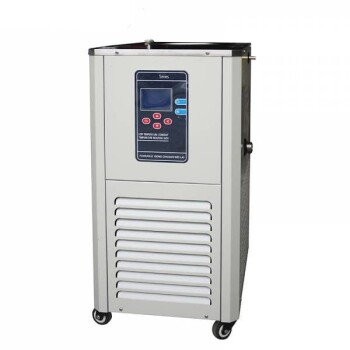
- 5L Chilling Circulator Cooling Water Bath Circulator for Low Temperature Constant Temperature Reaction Bath
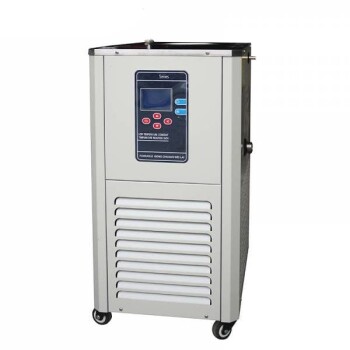
- High Temperature Constant Temperature Heating Circulator Water Bath Chiller Circulator for Reaction Bath
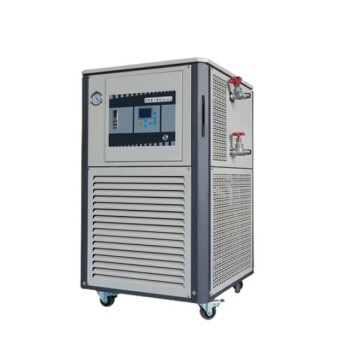
- 50L Chiller Water Bath Cooling Circulator Low Temperature Constant Temperature Reaction Bath
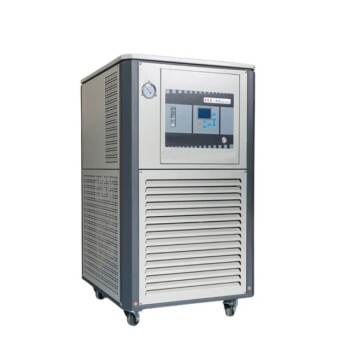
- 30L Chiller Water Bath Cooling Circulator Low Temperature Constant Temperature Reaction Bath
People Also Ask
- What role does a magnetic stirrer with heating play in ZnO nanoparticle synthesis? Precision Control for Quality Results
- What role does a constant temperature heating magnetic stirrer play in MFC-HAp synthesis? Achieve Material Homogeneity
- What is the function of a laboratory magnetic stirrer in Ni–Cr–P electrodeposition? Optimize Ion Transport & Coating
- Why is a laboratory magnetic stirrer required for benzoic acid esters? Boost Reaction Speed & Yield with High RPM
- What role does a laboratory magnetic stirrer play in TiO2 and TiO2-Ag sol preparation? Master Chemical Kinetics