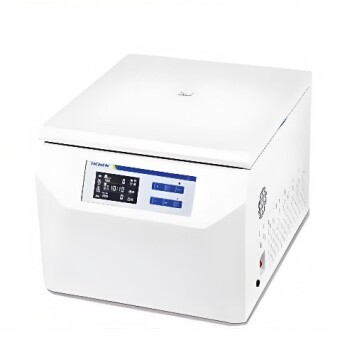
A high-pressure reactor is the only instrument capable of maintaining the specific thermodynamic conditions required to sustain supercritical fluids. By replicating these extreme environments, essential for advanced power generation and carbon capture, the reactor allows researchers to observe unique oxide-water interactions and accelerated dissolution rates that simply do not occur at conventional atmospheric pressures.
These reactors are indispensable because they bridge the gap between theoretical modeling and real-world application. They provide a controlled environment to induce stress-enhanced corrosion and accelerated material degradation, ensuring that safety assessments for next-generation energy systems are based on accurate physical data.
Replicating Critical Thermodynamic Conditions
Achieving Supercritical States
To study corrosion in environments like Supercritical Water Reactors (SWCR), you must maintain conditions far beyond standard boiling points. High-pressure autoclaves integrate precise heating and pressure controls to sustain temperatures up to 450°C and pressures around 25 MPa. This creates a closed environment where water exists as a supercritical fluid, possessing properties of both a liquid and a gas.
Realistic Fluid Dynamics
The primary value of these reactors lies in their ability to provide a realistic fluid dynamics setting. In this state, the interaction between oxide surfaces and water molecules changes fundamentally compared to standard steam or liquid water. This allows for the accurate simulation of how materials will behave inside actual power plant infrastructure.
Mechanisms of Material Degradation
Accelerated Dissolution
Standard testing cannot replicate the rate at which materials degrade under supercritical conditions. High-pressure reactors enable the observation of accelerated dissolution, where the aggressive nature of the supercritical fluid strips away protective oxide layers much faster than predicted by low-pressure models.
Stress-Enhanced Corrosion
Pressure does more than just change the fluid's state; it acts as a mechanical stressor. The reactor facilitates stress-enhanced corrosion phenomena, allowing researchers to see how physical pressure interacts with chemical corrosion to weaken the material structure.
Pitting and Crack Initiation
Beyond general surface corrosion, these reactors allow for the study of localized failure modes. Researchers can observe specific defects such as pitting depth and the initiation of cracks in alloys like 12Cr steel. This data is vital for predicting the long-term service reliability of stainless steel materials in deep-sea or subterranean applications.
Understanding the Trade-offs
Operational Complexity
While essential for accuracy, high-pressure reactors introduce significant operational challenges. The equipment requires rigorous safety protocols and precise calibration, as managing pressures up to 25 MPa at high temperatures presents inherent risks not found in standard atmospheric testing.
Equipment Degradation
The aggressive environment designed to test samples also attacks the test equipment itself. The internal components of the autoclave are subject to the same accelerated wear and corrosion, necessitating frequent maintenance and high-grade materials for the reactor vessel to prevent measurement errors or containment failure.
Making the Right Choice for Your Research
A high-pressure reactor is not merely a testing vessel; it is a simulation of the harsh reality your materials will face.
- If your primary focus is predicting service life: You need this reactor to measure crack initiation and pitting depth under realistic mechanical stress.
- If your primary focus is chemical stability: You must use this equipment to observe the accelerated dissolution of oxide layers that only occurs in supercritical fluid dynamics.
By accurately reproducing these hostile environments, you transform theoretical material limits into proven engineering reliability.
Summary Table:
| Feature | Supercritical Water (SCW) | Supercritical CO2 (sCO2) | Reactor Role |
|---|---|---|---|
| Temp/Pressure | Up to 450°C / 25 MPa | Varies by application | Maintains precise thermodynamic states |
| Fluid Behavior | Liquid/Gas hybrid | Low viscosity, high density | Enables realistic fluid dynamics |
| Corrosion Mode | Accelerated dissolution | Stress-enhanced corrosion | Simulates real-world infrastructure |
| Material Risk | Oxide layer stripping | Pitting & crack initiation | Provides data for safety assessments |
Elevate Your Material Research with KINTEK Precision
Don't let theoretical models limit your engineering reliability. KINTEK specializes in advanced laboratory solutions, offering industry-leading high-temperature high-pressure reactors and autoclaves designed to withstand the most aggressive supercritical environments. Whether you are testing 12Cr steel for power generation or assessing carbon capture materials, our equipment provides the stability and precision needed for critical safety assessments.
Our Comprehensive Portfolio Includes:
- Thermal Systems: Muffle, tube, rotary, and vacuum furnaces.
- Pressure Solutions: Pellet, hot, and isostatic hydraulic presses.
- Processing Tools: Crushing, milling, and sieving equipment.
- Lab Essentials: PTFE products, ceramics, and high-purity crucibles.
Contact KINTEK today to discuss your specific testing requirements and discover how our high-pressure systems can transform your material degradation studies into proven results!
References
- Levi C. Felix, Boris I. Yakobson. Ab Initio Molecular Dynamics Insights into Stress Corrosion Cracking and Dissolution of Metal Oxides. DOI: 10.3390/ma18030538
This article is also based on technical information from Kintek Solution Knowledge Base .
Related Products
- Customizable Laboratory High Temperature High Pressure Reactors for Diverse Scientific Applications
- Customizable High Pressure Reactors for Advanced Scientific and Industrial Applications
- Stainless High Pressure Autoclave Reactor Laboratory Pressure Reactor
- Mini SS High Pressure Autoclave Reactor for Laboratory Use
- High Pressure Laboratory Autoclave Reactor for Hydrothermal Synthesis
People Also Ask
- How do high-pressure and high-temperature reactors ensure the effective treatment of lignocellulosic wastewater in WAO?
- What equipment is required for high-pressure high-temperature reactions? Master Extreme Chemistry Safely
- How do you control high pressure in a reactor? A Guide to Safe & Stable Operation
- How does initial oxygen pressure affect the wet oxidation of pharmaceutical sludge? Master Your Oxidation Depth
- Why is argon better than nitrogen for inert atmosphere? Ensure Absolute Reactivity & Stability