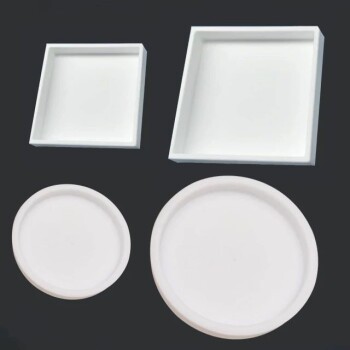
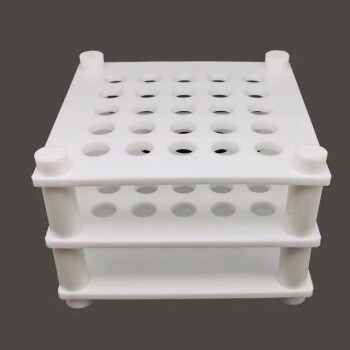
The selection of a high-pressure reactor with a polytetrafluoroethylene (PTFE) liner is a strategic decision driven by the need for extreme chemical resistance. This specific setup is required to withstand the high-temperature potassium hydroxide solutions used in the etching process without degrading. By preventing corrosion, the liner ensures the chemical environment remains pure, allowing for the successful fabrication of nanobrushes on chemically strengthened glass.
Core Takeaway Achieving precise nanostructure growth requires a strictly controlled, chemically inert environment. The PTFE liner provides an essential barrier against aggressive alkaline corrosion, while the high-pressure reactor maintains the thermal and pressure stability necessary to grow regular, defect-free nanobrushes.
Mastering the Chemical Environment
Defending Against Alkaline Corrosion
The primary reason for selecting a PTFE liner is its exceptional resistance to strong alkalis. The preparation process involves etching with potassium hydroxide solutions at elevated temperatures.
Standard reaction vessels would likely suffer significant corrosion under these harsh conditions. PTFE remains chemically inert, protecting the structural integrity of the reactor.
Ensuring Absolute Purity
The quality of a nanostructure is directly linked to the purity of the reaction medium. Any corrosion of the vessel walls would release impurities into the solution.
The PTFE liner prevents this contamination completely. This ensures that the "induced growth" on the glass substrate is driven solely by the intended chemical reactants, preventing defects.
Creating Optimal Growth Conditions
Stability at Elevated Temperatures
The formation of regular nanobrushes requires a precise thermal environment. The process dictates a constant temperature of 95°C.
The high-pressure reactor is designed to hold this temperature steadily. This thermal consistency is critical for uniform reaction rates across the entire glass surface.
The Role of the Sealed System
Beyond temperature, the sealing structure of the high-pressure reactor creates a closed, stable environment. This setup maintains pressure stability and prevents the loss of volatile components or the ingress of external contaminants.
It is this combination—the inert liner plus the sealed reactor—that enables the precise induced growth of regular nanobrush structures.
Operational Considerations and Constraints
Material Specificity vs. Flexibility
While PTFE is ideal for this specific alkaline application, it is a specialized choice. Its selection confirms that the process is highly sensitive to chemical interactions; a generic liner would likely result in process failure.
The Rigidity of Batch Processing
Using a sealed high-pressure reactor inherently creates a "black box" environment. Once the reactor is sealed and heated to 95°C, the process cannot be easily adjusted in real-time.
This requires the initial parameters to be calculated perfectly. The system trades flexibility for the high stability required to achieve structural regularity.
Making the Right Choice for Your Goal
When designing fabrication processes for sensitive nanostructures, your equipment choice dictates your outcome.
- If your primary focus is Structural Regularity: Prioritize a sealed high-pressure system to ensure the pressure and thermal stability required for uniform growth.
- If your primary focus is Chemical Purity: Ensure your vessel liner (like PTFE) is chemically inert specifically against the etchant (such as KOH) to prevent impurity-induced defects.
Success in this process is defined by the ability to maintain a chemically aggressive environment without compromising the purity of the final product.
Summary Table:
| Feature | Benefit for Nanobrush Fabrication |
|---|---|
| PTFE Liner | Exceptional resistance to KOH; prevents vessel corrosion and impurity release. |
| High-Pressure Design | Maintains a sealed, stable environment for consistent thermal and pressure control. |
| Chemical Inertness | Ensures high-purity induced growth for regular, defect-free structures. |
| 95°C Stability | Provides the precise thermal environment required for uniform reaction rates. |
Elevate Your Material Research with KINTEK
Precision in nanostructure growth starts with the right equipment. KINTEK specializes in high-performance laboratory solutions designed to withstand the most aggressive chemical environments. Our high-temperature high-pressure reactors and autoclaves, equipped with custom PTFE liners, provide the absolute purity and thermal stability necessary for successful nanobrush fabrication and complex chemical synthesis.
From crushing and milling systems to advanced electrolytic cells and furnace technology, we support researchers in achieving defect-free results every time. Contact KINTEK today to discuss how our specialized reactors and laboratory consumables can enhance your research efficiency and material quality!
References
- Yuan Xie, Mingwu Wang. Relationship between mechano-bactericidal activity and nanoblades density on chemically strengthened glass. DOI: 10.1515/ntrev-2022-0008
This article is also based on technical information from Kintek Solution Knowledge Base .
Related Products
- Custom PTFE Teflon Parts Manufacturer for Hydrothermal Synthesis Reactor Polytetrafluoroethylene Carbon Paper and Carbon Cloth Nano-growth
- Custom PTFE Teflon Parts Manufacturer for Reagent Wide Mouth Fine Mouth Sample High Temperature Bottles
- Stainless High Pressure Autoclave Reactor Laboratory Pressure Reactor
- Customizable High Pressure Reactors for Advanced Scientific and Industrial Applications
- Custom PTFE Teflon Parts Manufacturer for Microwave Digestion Tank
People Also Ask
- What is the function of a PTFE reactor in MXene etching? Ensure Safe, High-Purity MAX Phase Conversion
- Why is a PTFE reactor required for titanium-based nano-ceramic coating solutions? Ensure Chemical Inertness & Purity
- Why must a Polytetrafluoroethylene (PTFE) reactor be used for Ti3C2TX MXene etching? Ensure Safety and Purity
- Why are PTFE reactors preferred for silver phosphate glass testing? Ensure Purity and Kinetic Accuracy
- What are the advantages of using polytetrafluoroethylene (PTFE) liners in hydrothermal synthesis reactors? High Purity