A sacrificial pure copper element is included in crucible assemblies to act as a chemical scavenger and a thermal stabilizer. By melting at high temperatures, the copper reacts preferentially with residual oxygen to prevent sample oxidation and provides a liquid medium that ensures uniform heat distribution around the inner crucible.
Including pure copper in high-temperature experiments creates a controlled microenvironment. It solves the dual challenge of chemical purity and thermal gradients, which are critical for the successful solidification of complex materials like high-entropy alloys.
The Mechanics of Oxygen Scavenging
Preferential Chemical Reactivity
In high-temperature environments, trace amounts of oxygen can lead to the unwanted oxidation of sensitive alloy components. Because pure copper has a high affinity for oxygen at these temperatures, it reacts with residual gases before they can reach the primary sample.
Creating a Controlled Microenvironment
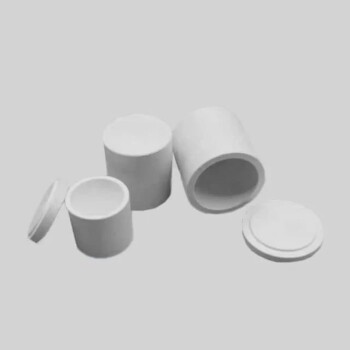
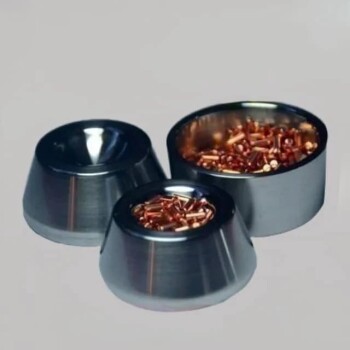
The copper is typically placed in an outer crucible, surrounding the inner container where the actual experiment takes place. This positioning allows the copper to act as a sacrificial barrier, effectively scrubbing the immediate atmosphere of oxygen and protecting the integrity of the high-entropy alloy (HEA).
Maintaining Sample Purity
For alloys containing reactive elements like aluminum or chromium, even "inert" furnace atmospheres can contain enough oxygen to cause surface scaling or internal oxidation. The copper getter ensures that the solidification process occurs in a significantly more reduced environment than the furnace chamber alone could provide.
Enhancing Thermal Uniformity
Fluidity and Heat Conduction
Once the temperature exceeds the melting point of copper (approximately 1085°C), it transitions into a liquid state. This molten copper possesses high fluidity and superior thermal conductivity compared to the surrounding gases or ceramic crucible walls.
Eliminating Thermal Gradients
The liquid copper acts as a thermal bath that circulates heat evenly around the inner crucible. This homogenization of heat conduction is vital during slow cooling, as it prevents localized "cold spots" that could lead to irregular grain growth or structural defects in the alloy.
Supporting Stable Solidification
Consistent temperature distribution is a prerequisite for stable solidification. By providing a thermally uniform environment, the molten copper allows the high-entropy alloy to crystallize at a steady, predictable rate, which is essential for achieving the desired phase distribution.
Understanding the Trade-offs
Risk of Vapor Phase Contamination
While the copper is physically separated by an inner crucible, high temperatures can cause a small amount of copper to enter the vapor phase. If the inner crucible is not adequately sealed, trace amounts of copper could potentially contaminate the primary sample.
Material Compatibility and Leakage
Molten copper is highly mobile and can be chemically aggressive toward certain crucible materials. It is critical to select an outer crucible material that can withstand the molten copper without degrading or leaking, which would compromise the furnace heating elements.
How to Apply This to Your Project
Optimizing Your Experimental Setup
To ensure the best results from your slow cooling experiments, consider the specific requirements of your alloy and equipment.
- If your primary focus is maximum chemical purity: Ensure the inner crucible is tightly lidded or sealed to prevent any cross-contamination from the sacrificial copper vapor.
- If your primary focus is structural uniformity: Use a larger volume of copper to ensure the inner crucible is fully submerged in the molten "thermal bath" for optimal heat distribution.
- If your primary focus is experimental safety: Verify that your outer crucible is rated for molten metal containment and that its melting point is significantly higher than that of copper.
By effectively managing the chemical and thermal environment, the use of a copper getter ensures the production of high-quality, defect-free alloy samples.
Summary Table:
| Role of Copper | Primary Mechanism | Impact on Experiment |
|---|---|---|
| Oxygen Scavenger | Preferential chemical reactivity with residual gases | Prevents oxidation of sensitive alloy components |
| Thermal Stabilizer | Transitions to liquid state (1085°C) to form a thermal bath | Eliminates thermal gradients and localized cold spots |
| Solidification Aid | High thermal conductivity and fluidity | Ensures uniform grain growth and stable phase distribution |
Elevate Your Material Research with KINTEK Precision
Achieving the perfect microenvironment for high-entropy alloys requires more than just a sacrificial getter—it demands high-performance equipment. KINTEK specializes in advanced laboratory solutions, offering a comprehensive range of high-temperature furnaces (muffle, vacuum, and atmosphere), precision ceramic crucibles, and high-purity consumables designed to withstand rigorous thermal cycles.
Whether you need reliable crushing and milling systems for sample preparation or specialized vacuum CVD systems for material synthesis, KINTEK provides the tools that ensure purity and thermal stability.
Ready to optimize your heat treatment and solidification results? Contact KINTEK today to explore our tailored equipment solutions for your next breakthrough.
References
- Artashes Ter-Isahakyan, T. John Balk. Evaluation of Equiatomic CrMnFeCoNiCu System and Subsequent Derivation of a Non-Equiatomic MnFeCoNiCu Alloy. DOI: 10.3390/ma16062455
This article is also based on technical information from Kintek Solution Knowledge Base .
Related Products
- Electron Beam Evaporation Coating Oxygen-Free Copper Crucible and Evaporation Boat
- High Purity Pure Graphite Crucible for Electron Beam Evaporation
- High Purity Pure Graphite Crucible for Evaporation
- Engineering Advanced Fine Ceramics Alumina Al2O3 Crucible With Lid Cylindrical Laboratory Crucible
- Evaporation Crucible for Organic Matter
People Also Ask
- What is the container that holds the metal source material called in e-beam evaporation? Ensure Purity and Quality in Your Thin-Film Deposition
- What is e-beam evaporation? Achieve High-Purity Thin Film Deposition for Your Lab
- What is the voltage of e-beam evaporation? Achieve Precise Thin-Film Deposition
- What is the current of e-beam evaporation? A Guide to High-Purity Thin Film Deposition
- What are the applications of e-beam evaporation? Achieve High-Purity Coatings for Optics & Electronics