The requirement for a Teflon-lined high-pressure autoclave in the synthesis of $\text{Fe}_7\text{S}_8$ nanoparticles is driven by the need for a subcritical solvothermal environment. This specific setup allows the reaction to exceed the solvent’s boiling point, generating autogenous pressure that lowers the reaction's activation energy and enables the precise chelation of iron ions with glycerol to form uniform precursors.
A Teflon-lined autoclave acts as a specialized chemical reactor that combines physical force (high pressure) with chemical protection (Teflon inertness). This combination is essential for reducing the energy barriers required to assemble complex iron-sulfide microstructures while maintaining high phase purity.
Creating the Solvothermal Environment
Overcoming Thermodynamic Barriers
The primary function of the high-pressure autoclave is to facilitate a solvothermal reaction by maintaining solvents in a liquid state well above their normal boiling points.
This environment creates subcritical conditions, where the internal pressure significantly reduces the reaction's activation energy.
By lowering this energy barrier, the system allows for the rapid and efficient coordination of iron ions, which would otherwise be sluggish or impossible at atmospheric pressure.
Facilitating Precursor Assembly
The synthesis of $\text{Fe}_7\text{S}_8$ typically involves the initial growth of Fe-glycerate precursors.
Under high-pressure conditions, the solubility and diffusion rates of the metal salts increase, promoting uniform particle nucleation throughout the solvent.
This controlled environment enables the directional growth of solid nanospheres, ensuring the resulting nanoparticles have the specific microstructures and faceted surfaces required for their application.
The Critical Role of the Teflon Liner
Ensuring Chemical Purity
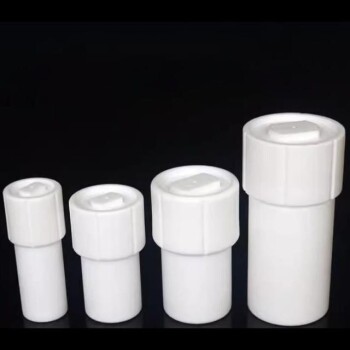
The Teflon (PTFE) liner provides exceptional chemical inertness, acting as a barrier between the reaction medium and the stainless steel autoclave body.
In the synthesis of iron-based nanomaterials, any leakage of chromium, nickel, or iron from the vessel walls would cause metal ion contamination.
The liner ensures that the chemical components remain pure, which is vital for obtaining nanoparticles with a high phase purity and consistent magnetic or catalytic properties.
Corrosion Resistance and Safety
Many solvothermal processes involve aggressive reducing agents or acidic/alkaline precursors that would quickly corrode a standard metallic vessel.
The Teflon liner protects the structural integrity of the stainless steel outer shell from these corrosive environments, especially at temperatures reaching 150°C to 200°C.
This protection is not just a matter of purity; it is a safety requirement, as corrosion can weaken the autoclave and lead to failure under high internal pressure.
Understanding the Trade-offs and Limitations
Temperature Constraints
While Teflon is highly inert, it has a clear thermal ceiling, typically around 220°C to 250°C.
Exceeding these temperatures can cause the liner to soften or deform, potentially leading to a "pinch" where the liner becomes stuck in the autoclave or, worse, releases toxic vapors.
For reactions requiring temperatures above 250°C, researchers must transition to more expensive PPL (para-polyphenol) liners or specialized gold/platinum-lined vessels.
Pressure Risks and Filling Ratios
The internal pressure is autogenous, meaning it is generated by the expansion of the heated solvent.
If the autoclave is overfilled (exceeding the recommended 60-80% capacity), the lack of headspace can lead to a catastrophic pressure spike as the liquid expands.
Conversely, under-filling may not generate sufficient pressure to trigger the necessary chelation and assembly of the $\text{Fe}_7\text{S}_8$ precursors.
Applying This to Your Synthesis Goals
Strategic Implementation
- If your primary focus is phase purity: Ensure the Teflon liner is pristine and free of scratches, as deep gouges can harbor contaminants from previous reactions.
- If your primary focus is morphology control: Strictly monitor the temperature ramp-up rate, as the pressure-driven nucleation of Fe-glycerate is highly sensitive to the speed at which subcritical conditions are reached.
- If your primary focus is equipment longevity: Always allow the autoclave to cool naturally to room temperature before opening to prevent thermal shock to the Teflon liner.
By mastering the pressure-temperature relationship within the autoclave, you can precisely tune the nucleation and growth of $\text{Fe}_7\text{S}_8$ to achieve superior material performance.
Summary Table:
| Key Requirement | Role in Fe7S8 Synthesis | Technical Benefit |
|---|---|---|
| High Pressure | Maintains subcritical solvothermal conditions | Lowers activation energy for precursor chelation |
| Teflon (PTFE) Liner | Provides chemical inertness and corrosion resistance | Prevents metal ion contamination; ensures phase purity |
| Autogenous Heating | Facilitates Fe-glycerate precursor assembly | Enables uniform nucleation and directional growth |
| Safety Controls | Manages filling ratios (60-80%) and thermal ceilings | Prevents catastrophic pressure spikes and liner deformation |
Elevate Your Nanoparticle Synthesis with KINTEK
Precision is paramount when synthesizing complex iron-sulfide microstructures like Fe7S8. KINTEK specializes in providing high-performance high-temperature high-pressure reactors and autoclaves designed to maintain the rigorous subcritical conditions your research demands.
Our equipment ensures exceptional chemical purity with high-grade Teflon liners, protecting your samples from contamination and your laboratory from corrosive wear. Beyond reactors, KINTEK offers a comprehensive range of laboratory equipment to support your entire workflow:
- Thermal Processing: Muffle, tube, vacuum, and CVD/PECVD furnaces.
- Sample Preparation: Crushing and milling systems, hydraulic presses, and sieving equipment.
- Electrochemistry & Cooling: Electrolytic cells, electrodes, ULT freezers, and freeze dryers.
Ready to achieve superior material performance? Contact our technical experts today to find the perfect autoclave configuration for your synthesis goals!
References
- Xiaoyu Wang, Guang Li. Spherical Fe<sub>7</sub>S<sub>8</sub>@rGO nanoflowers as electrodes with high electrocatalytic performance in dye-sensitized solar cells. DOI: 10.1039/d3ra02457a
This article is also based on technical information from Kintek Solution Knowledge Base .
Related Products
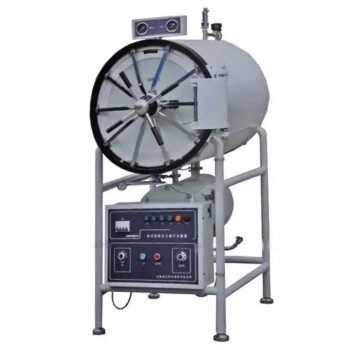
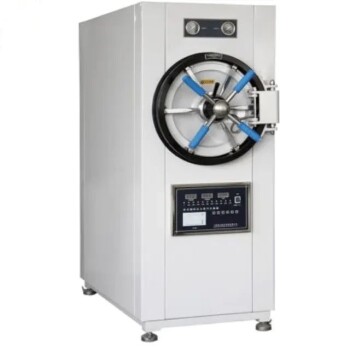
- Laboratory High Pressure Horizontal Autoclave Steam Sterilizer for Lab Use
- Stainless High Pressure Autoclave Reactor Laboratory Pressure Reactor
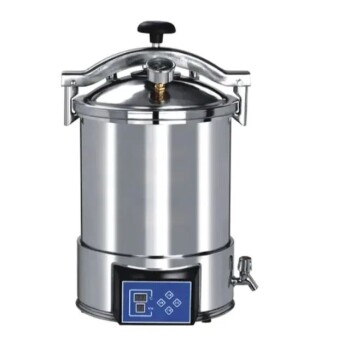
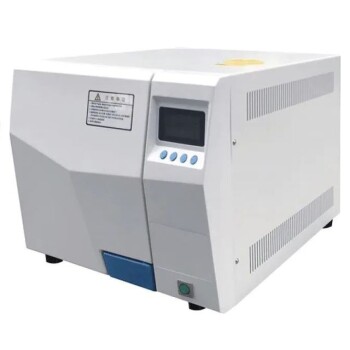
- Desktop Fast High Pressure Laboratory Autoclave Sterilizer 16L 24L for Lab Use
- High Pressure Laboratory Autoclave Reactor for Hydrothermal Synthesis
- Laboratory High Pressure Steam Sterilizer Vertical Autoclave for Lab Department
People Also Ask
- Why is a laboratory high-pressure autoclave sterilizer necessary? Ensure Accuracy in Antibacterial Research
- What is the role of a laboratory high-pressure autoclave in the conversion of furfural to piperidine? Optimize Yields
- What is the primary function of a laboratory autoclave in the pre-treatment of medical plastic waste for liquid fuel?
- What is an autoclave laboratory equipment? The Ultimate Guide to Steam Sterilization
- What is a laboratory autoclave? A Guide to Sterilization with Pressurized Steam