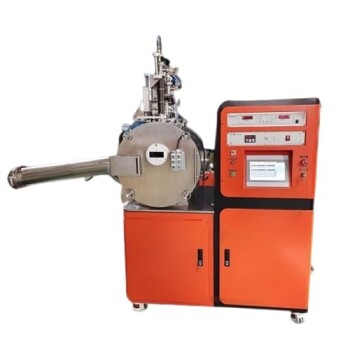
A vacuum and atmosphere exchange system is a non-negotiable requirement for the successful amination of furan compounds. These systems perform the critical function of thoroughly evacuating air from the reactor vessel before the reaction begins, replacing it with an inert gas. This specific control is the only way to safeguard the chemical process against the detrimental effects of oxygen.
The rigorous exclusion of oxygen is essential to maintain the activity of sensitive organometallic catalysts and prevent the furan ring from degrading. Without a vacuum and inert gas exchange, oxidative side reactions will compromise both the purity and color of your amine intermediates.
Critical Functions of Atmosphere Control
Preventing Oxidative Degradation
Furan compounds, particularly those derived from Hydroxymethylfurfural (HMF), are highly sensitive to their environment. When combined with ammonia or organic amines, the mixture becomes prone to oxidative side reactions.
Eliminating Discoloration risks
Oxygen exposure does not just reduce yield; it attacks the quality of the product. The oxidation of the furan ring leads to significant discoloration, which ruins the aesthetic and chemical grade of the final material.
Ensuring High-Purity Intermediates
To achieve a high-purity product, you must eliminate contaminants at the source. A vacuum system ensures that air—the primary source of contamination—is completely removed before the chemistry begins.
Preserving Catalyst Efficiency
Protecting Homogeneous Organometallic Catalysts
Reductive amination reactions frequently rely on homogeneous organometallic catalysts. These specialized catalysts are notoriously sensitive and can lose their activity rapidly if exposed to reactive elements in the air.
Maintaining Reaction Activity
Operating under strict nitrogen or argon protection is vital for catalyst health. This inert environment prevents catalyst deactivation, ensuring the reaction proceeds at the intended rate and efficiency.
Understanding the Trade-offs
Complexity vs. Reliability
integrating a vacuum and gas exchange system adds mechanical complexity to your reactor design. It requires precise seals, reliable pumps, and inert gas lines, which increases the initial setup effort.
The Cost of Simplicity
However, simplifying the reactor by removing this system is rarely a viable option. The trade-off for a simpler setup is a high risk of catalyst failure and product degradation, leading to wasted batches and lost time.
Making the Right Choice for Your Process
If you are designing a reactor or optimizing a protocol for furan amination, prioritize the system capabilities based on your specific risks:
- If your primary focus is catalyst longevity: Prioritize a system with high-grade inert gas (Nitrogen/Argon) lines to strictly maintain catalyst activity during the reaction.
- If your primary focus is product aesthetics: Ensure your vacuum cycle is robust enough to fully evacuate oxygen traces to prevent furan ring discoloration.
Control the atmosphere, and you control the quality of your final amine product.
Summary Table:
| Feature | Impact on Furan Amination | Benefit to Process |
|---|---|---|
| Oxygen Removal | Prevents oxidative side reactions | Maintains product color and chemical grade |
| Inert Gas Exchange | Protects organometallic catalysts | Ensures reaction activity and catalyst longevity |
| Vacuum Evacuation | Eliminates atmospheric contaminants | Guarantees high-purity amine intermediates |
| Atmosphere Control | Stabilizes HMF-derived compounds | Reduces degradation and batch failure risks |
Elevate Your Chemical Synthesis with KINTEK Precision
Don't let oxidative degradation or catalyst failure compromise your furan amination results. KINTEK specializes in advanced laboratory solutions designed for high-stakes research. Whether you need high-performance high-temperature high-pressure reactors and autoclaves with integrated atmosphere control, or essential vacuum and cooling solutions, our equipment ensures the rigorous exclusion of oxygen your process demands.
From PTFE products and ceramics to sophisticated crushing, milling, and hydraulic press systems, KINTEK provides the comprehensive tools necessary for superior material purity and yield. Let our experts help you configure the perfect reactor setup for your specific amination protocols.
Ready to optimize your lab's performance? Contact KINTEK today for a customized consultation!
References
- Rosa Padilla, Martin Nielsen. Homogeneous Catalyzed Valorization of Furanics: A Sustainable Bridge to Fuels and Chemicals. DOI: 10.3390/catal11111371
This article is also based on technical information from Kintek Solution Knowledge Base .
Related Products
- Customizable High Pressure Reactors for Advanced Scientific and Industrial Applications
- Stainless High Pressure Autoclave Reactor Laboratory Pressure Reactor
- Vacuum Induction Melting Spinning System Arc Melting Furnace
- Mini SS High Pressure Autoclave Reactor for Laboratory Use
- Visual High-Pressure Reactor for In-Situ Observation
People Also Ask
- What is the function of high-pressure reactors in the synthesis of MFI-type zeolites? Master Dry Gel Conversion.
- Graphene Fiber Synthesis: Key High-Pressure Reactor Processing Conditions Explained
- What is the primary function of a high-pressure reactor in NiMoO4 preparation? Optimize Hydrothermal Catalyst Synthesis
- What reactor is used for high pressure reactions? Select the Right Autoclave for Your Lab
- What are the hazards of high pressure reactors? A Guide to Managing Explosive Risks