Within 8 hours on working days, 24 hours on holidays
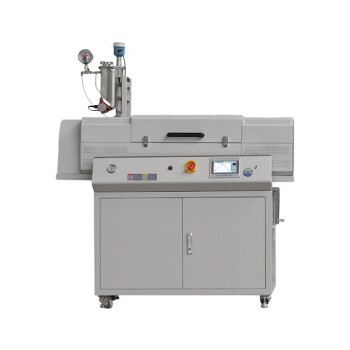
rotary furnace
Rotary furnaces are considered to be the latest technology for high-temperature processing of powdered materials. They offer several advantages over other types of equipment, such as increased throughput and energy efficiency. The rotating drum design ensures that the materials inside are heated evenly and thoroughly, which can be beneficial for processes that require specific temperature and time conditions.
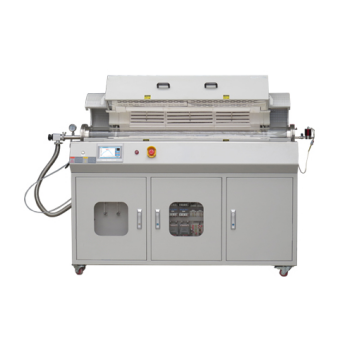
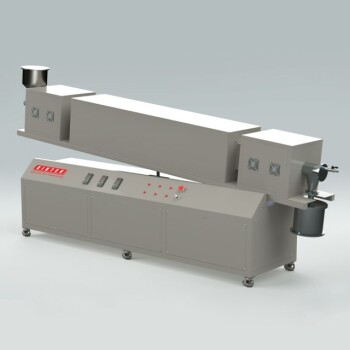
There are different designs of rotary furnace, simple tube designs and advanced designs, that can be used for different materials and processes. Some advanced designs include features such as quench systems, multiple heating zones, and advanced control systems to ensure optimal process conditions and product quality.
We have the best Rotary Furnace solutions for your unique applications. Our Rotary & Tilting furnaces offer superior uniformity in drying and coating applications. KINTEK furnaces utilize multi-zone heating options, alumna fiber for refractory linings, temperature controllers, and are ideal for materials production, drying and aging, and oxidation processes. Our Rotary Tube Furnaces use silicon carbide or molydisilicide heating elements for sustained temperatures up to 1700 degrees Celsius, with customized rotation speeds, fully programmable operation, and processing in air, oxygen, and inert atmospheres. Trust us to provide the highest quality Rotary Furnace solutions for your needs.
About Rotary furnace
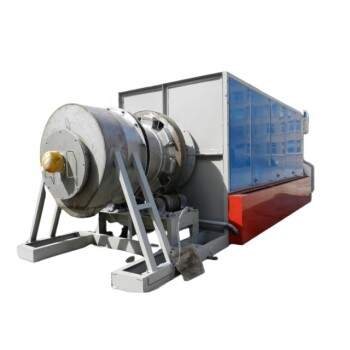
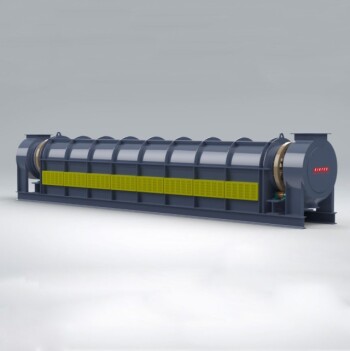
Rotary furnace is a cylindrical-shaped equipment that rotates around its axis while performing heat treatment. The tilting angle is set to allow the materials inside to be passed from one end of the barrel to the other during the rotation. The rotation of the drum also helps in mixing or stirring the materials inside, which can be beneficial for some processes that require homogeneous heating.
The heat treatment is performed by passing hot gases through the chamber, which can be set to pass in the opposite or same direction of the rotation depending on the process requirements. The rotary furnace can be used for a wide range of heat treatment processes such as smelting, calcining, roasting, thermal treatment and many more, and the design can be adapted to suit the specific process and materials being treated.
The furnace body is typically made of steel plate and welded to form the cylindrical shape, the length of which can vary depending on the application. The furnace lining is made of refractory materials, which insulates the steel body from the high temperatures inside the furnace and also provides protection against corrosion. The drive gear rotates the furnace and can be replaced with driven rollers. Some rotary furnace have variable speed drive which allows to control the rotation speed. The internal heat source can be gas or electric and can be driven by conduction, convection or radiation, depending on the process requirements. These components work together to provide a reliable and efficient heat treatment process in industrial settings.
APPLICATIONS OF ROTARY FURNACE
Rotary furnaces are versatile equipment and can be used for a wide range of heat treatment applications. Some of the common applications include:
Oxidation: This process is used to reduce the number of electrons in a sample.
Calcination: It is the process of thermal decomposition of a material. Calcination is commonly used in metallurgy, ceramics, and chemical processing to remove impurities, change the crystal structure of the material, or to cause chemical reactions.
Smelting: The process of extracting a metal from its ore by heating the ore in a rotary furnace.
Roasting: This process is used to change the properties of the material, usually to remove impurities or to change the crystal structure.
Thermal treatment: This process is used to alter the microstructure of a material by heating and cooling it in a controlled manner.
Other applications: Rotary furnace also used in recycling industry, where it is used to recover metals from scraps, and in waste management, where it is used to burn off hazardous waste.
Advantages of Rotary Furnace
Allows for heating and mixing of materials in a controlled atmosphere
Provides excellent temperature uniformity
Can be equipped with additional features to optimize processing conditions
Highly versatile tool for a wide range of physicochemical processing applications
Offers precise control over temperature, gas composition, and other processing conditions
Continuous movement of sample ensures entire surface area is exposed, improving gas diffusion and reducing gas consumption
Improves product homogeneity
Useful for thermal processing, material synthesis, and sample preparation
Suitable for a variety of research and development applications, including material science and geology
Can be used for gaseous reduction of ores, synthesis of catalysts and pigments, calcination of oil shale, and doping ceramics with rare earth metals
Our Rotary Furnace offers a range of advantages in terms of price and customisation. These furnaces are built with high-quality silicon carbide or molydisilicide heating elements, which can sustain operating temperatures up to 1700 degrees Celsius. They can be customised with single or multiple zones, as well as customised rotation speeds and gradients. Additionally, our furnaces offer fully programmable operation with fully integrated control panels. We provide custom design services to cater to your specific requirements.
FAQ
What Types Of Materials Can Be Processed In A Rotary Furnace?
Rotary furnaces can process a wide range of materials, including ores, minerals, metals, chemicals, and waste materials. They are commonly used for processes such as calcination, drying, roasting, and thermal decomposition. For example, rotary furnaces are utilized in the cement industry for clinker production, in the metallurgical industry for smelting and refining operations, and in the chemical industry for the production of catalysts or chemical reactions requiring heat treatment. The versatility of rotary furnaces allows them to handle different material forms, such as powders, granules, and bulk solids, making them suitable for various applications across multiple industries.
What Are The Rotary Furnace Types?
The rotary furnace types include rotary and tilting furnaces which have the ability to rotate and tilt, allowing for uniformity in drying and coating applications. KINTEK furnaces increase efficiency by offering multi-zone heating options, utilizing alumina fiber for refractory linings, and using temperature controllers. These furnaces are suitable for continuous processing and batch operations. Additionally, they can be opened up to use different tubes or reactors. The galvanized coating covered epoxy painted structure provides a longer lifetime and aesthetics. Overall, the rotary and tilting furnaces are popular for materials production, drying, aging, and oxidation processes.
What Are The Advantages Of Rotor Furnace?
Rotary tube furnaces offer several advantages over static processes. The continuous movement of the sample ensures that the entire surface area is exposed to the atmosphere during processing which improves gas diffusion, reduces gas consumption and increases heat treatment efficiency. Additionally, the material is continuously passed through a hot furnace that is maintaining a consistent temperature profile, improving product homogeneity. Rotary furnaces also offer significant advantages of throughput and energy efficiency over other forms of continuous, high temperature equipment, making them the latest technology for high-temperature processing of powdered materials.
What Is The Efficiency Of A Rotary Furnace?
Rotary tube furnaces are highly efficient in transferring heat over a short period of time while continuously running batches of materials. They also minimize material handling, making them ideal for powder processing. KINTEK offers custom-designed rotary tube furnaces that can be built to specific requirements for maximum temperature control, workspace size, residence time, tube rotation rate, tube inclination angle, temperature profile, atmosphere flow rate, powder bed depth, and feed rate. When choosing a tube for the furnace, key considerations include rotational speed, amount of material, tube diameter, suspended length, and tube thickness. The choice of tube material should also be based on potential applications.
Can A Rotary Furnace Be Used For Continuous Production?
Yes, rotary furnaces can be used for continuous production depending on the specific application and process requirements. Continuous operation is achieved by feeding materials into the furnace at a controlled rate while maintaining a steady rotation speed. This allows for a continuous flow of processed materials out of the furnace. Rotary furnaces are often utilized in industries requiring continuous thermal treatment, such as cement production or metallurgical processes. However, it is important to ensure proper design, sizing, and integration of auxiliary equipment, such as feed systems and discharge mechanisms, to enable continuous operation effectively. Additionally, proper monitoring and control systems should be in place to maintain consistent process parameters and product quality throughout the continuous production cycle.
How Can The Performance Of A Rotary Furnace Be Optimized?
The performance of a rotary furnace can be optimized through various means. Proper selection and control of process parameters, such as temperature, rotation speed, and residence time, are critical for achieving the desired results. Optimization can be achieved by adjusting these parameters based on the specific materials and process requirements. Regular maintenance, including cleaning, lubrication, and inspection of the furnace components, is essential to ensure optimal performance and prevent unexpected failures. Implementing advanced control systems and automation can enhance process efficiency, accuracy, and repeatability. Additionally, monitoring and analyzing process data, such as temperature profiles and energy consumption, can help identify opportunities for improvement and optimize energy efficiency. Collaboration with furnace manufacturers or process experts can provide valuable insights and recommendations for optimizing the performance of a rotary furnace.
REQUEST A QUOTE
Our professional team will reply to you within one business day. Please feel free to contact us!