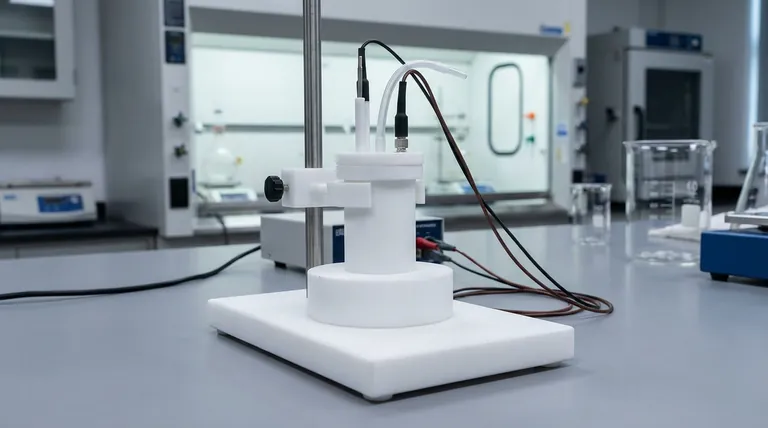
The Invisible Variable
In the laboratory, we often obsess over the chemistry. We meticulously calculate molarities, polish electrodes, and calibrate potentials. We focus on what is happening inside the beaker.
But we often neglect the physics happening outside of it.
Stability is the currency of reproducible science. If your setup vibrates, shifts, or tips, your data is compromised long before the reaction reaches equilibrium. The interface between the electrode and the solution is delicate; it requires absolute stillness.
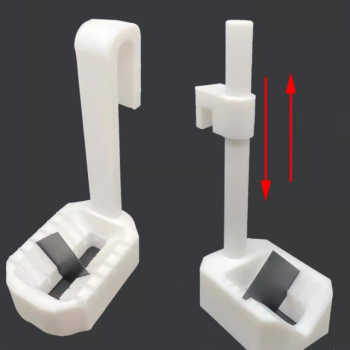
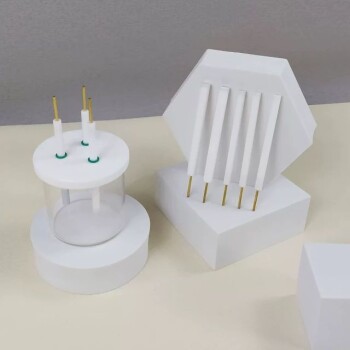
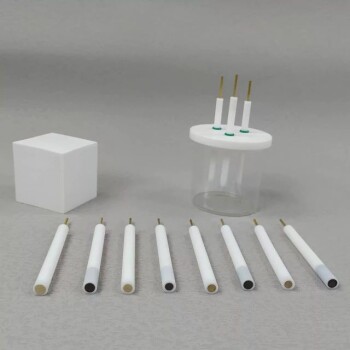
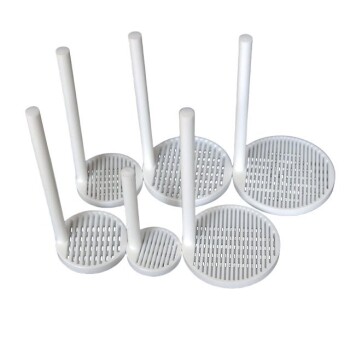
The PTFE electrode stand is not just a holder. It is the anchor of your experiment. Adjusting it correctly is not a housekeeping task—it is an engineering necessity.
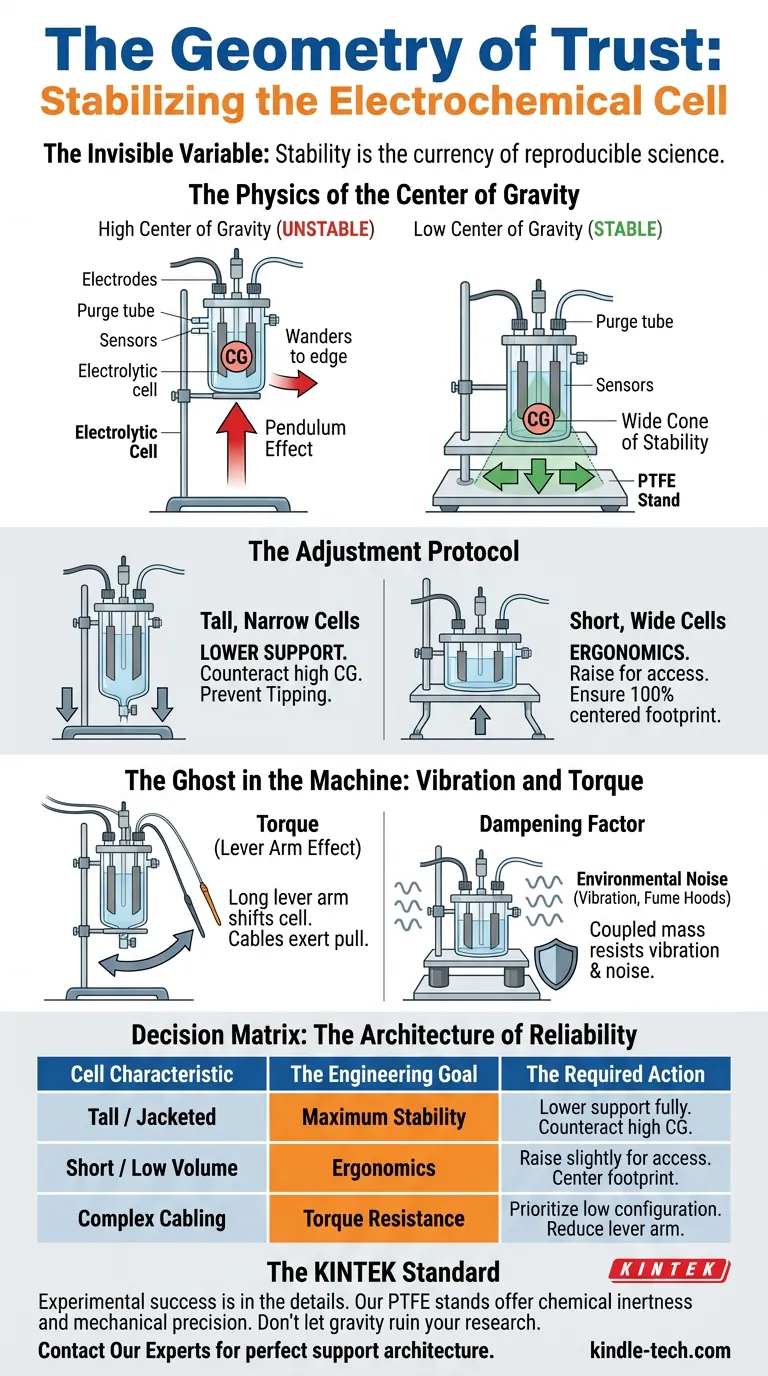
The Physics of the Center of Gravity
The primary enemy of the electrolytic cell is gravity.
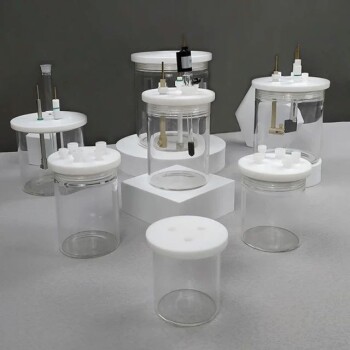
Most electrochemical cells are top-heavy. They are laden with electrodes, purge tubes, and sensors protruding from the top. When placed on a stand, this assembly creates a high center of gravity.
If the center of gravity sits too high or wanders to the edge of the base, the system becomes a pendulum. It waits for a nudge—a passing researcher, a bumped table—to introduce chaos.
The Adjustment Protocol
To defeat gravity, you must lower it.
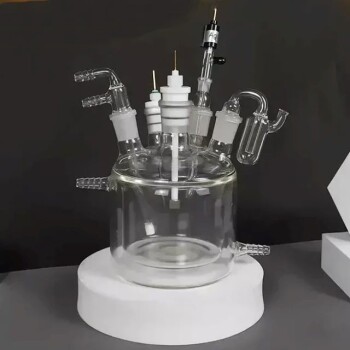
The relationship between the PTFE stand and the electrolytic cell is strictly geometric. The combined center of gravity must be positioned low and directly over the center of the stand’s base.
- For Tall, Narrow Cells: The support structure must be lowered. By bringing the cell's mass closer to the benchtop, you widen the effective cone of stability.
- For Short, Wide Cells: Stability is inherent, so the focus shifts to ergonomics. The height should be set to allow easy manipulation of connections without forcing the researcher to reach awkwardly.
The Ghost in the Machine: Vibration and Torque
A setup that "looks" stable can still destroy data.
A professional setup anticipates invisible forces. In electrochemical impedance spectroscopy (EIS), for example, the signal is sensitive to micro-variations at the interface. Physical vibration is noise.
The Tether Effect
Cables are not weightless. The wires connecting your potentiostat to the electrodes exert constant, subtle pulling forces (torque).
If the stand is too high, the lever arm is long. A slight pull on a cable translates into a significant shift in the cell. If the stand is low, the system resists this torque.
The Dampening Factor
Your building vibrates. Fume hoods hum. Centrifuges spin.
A properly adjusted PTFE stand acts as a dampener. By maximizing the contact area between the cell base and the stand, and lowering the profile, you couple the cell more tightly to the rigid mass of the stand, reducing the transmission of environmental noise.
Decision Matrix: The Architecture of Reliability
Your adjustment strategy depends entirely on the vessel geometry and the experimental constraints.
Use this guide to determine your setup philosophy:
| Cell Characteristic | The Engineering Goal | The Required Action |
|---|---|---|
| Tall / Jacketed | Maximum Stability | Lower the support fully. Counteract the high center of gravity to prevent tipping. |
| Short / Low Volume | Ergonomics | Raise slightly for access, ensuring the footprint is 100% centered on the plate. |
| Complex Cabling | Torque Resistance | Prioritize a low configuration. Reduce the "lever arm" so wires cannot pull the cell askew. |
The KINTEK Standard
Experimental success is rarely about one big breakthrough. It is usually the result of a thousand small details managed perfectly.
The equipment you choose is the foundation of those details. At KINTEK, we provide lab equipment and consumables designed with the engineer's mindset. Our PTFE stands offer the chemical inertness you need for harsh electrolytes and the mechanical precision you need for reliable physics.
Don't let gravity be the variable that ruins your research.
Contact Our Experts to discuss the perfect support architecture for your specific electrochemical applications.
Visual Guide
Related Products
- PTFE Electrolytic Cell Electrochemical Cell Corrosion-Resistant Sealed and Non-Sealed
- Platinum Sheet Electrode for Battery Lab Applications
- Platinum Sheet Electrode for Laboratory and Industrial Applications
- Custom PTFE Wafer Holders for Lab and Semiconductor Processing
- Custom PTFE Teflon Parts Manufacturer for Non-Standard Insulator Customization
Related Articles
- Electrolytic Batteries A Solution to the Growing Energy Demands
- The Art of Resistance: Why Your Electrolytic Cell Needs Breathing Room
- The Architecture of Invisibility: Deconstructing the "All-Quartz" Cell
- The Architecture of Certainty: Mastering Control in Multifunctional Electrolytic Cells
- The Silent Partner: Why Material Choice in Electrochemistry is a Matter of Trust