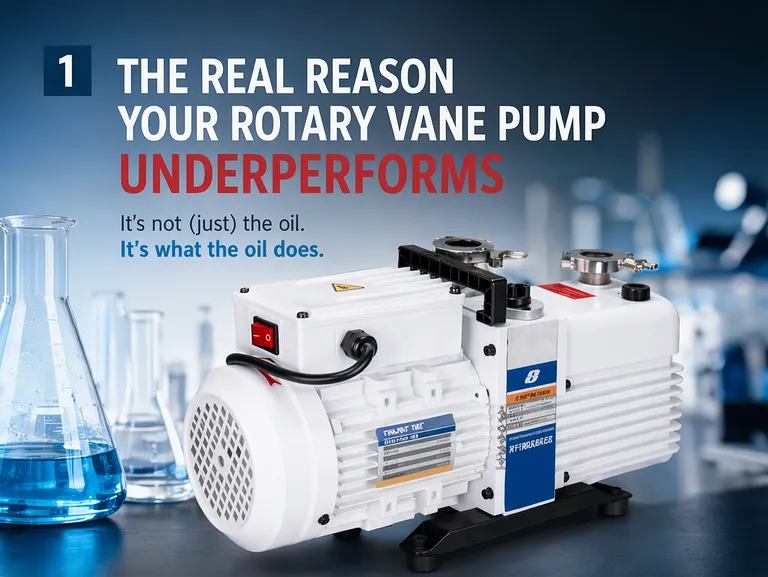
You’ve checked every fitting. You’ve sealed every connection. Yet, your rotary vane pump still won’t pull down to the vacuum level you need. Or worse, it seized up in the middle of a critical process, bringing your entire project to a screeching halt.
If this sounds painfully familiar, you're not alone. This scenario plays out in laboratories every day, triggering a frustrating and costly cycle of troubleshooting.
The Vicious Cycle: Chasing Leaks and Blaming the Wrong Culprit
When a vacuum pump underperforms, the immediate suspect is usually a leak somewhere in the system. The team spends hours, sometimes days, hunting down phantom leaks, replacing seals, and tightening connections, only to find the problem persists.
The next step is often to blame the pump itself. "It's old," someone might say. Or, "This model just isn't reliable." The most common misconception, however, revolves around the oil. Because oil vapor can be a contaminant, many labs view it as a necessary evil—or a problem to be eliminated. This leads to two critical mistakes:
- Switching to a "Dry" Pump: Believing that "oil-free" automatically means "better," labs invest in a dry pump without understanding the significant performance trade-offs.
- Neglecting Oil's True Role: They treat the oil as a simple lubricant, failing to realize it's a fundamental part of the pump's mechanism.
These missteps don't just waste time; they have serious consequences. A single failed freeze-drying run can mean the loss of irreplaceable samples. Inconsistent vacuum for a distillation process can ruin an entire batch of product. The cost isn't just in lost materials and delayed projects—it's in the erosion of confidence in your lab's own equipment.
But what if the problem isn't a leak, and the oil isn't the villain? What if the key to a reliable vacuum lies in understanding what that oil is actually doing?
The Unseen Hero: Oil is the Hardest-Working Component in Your Pump
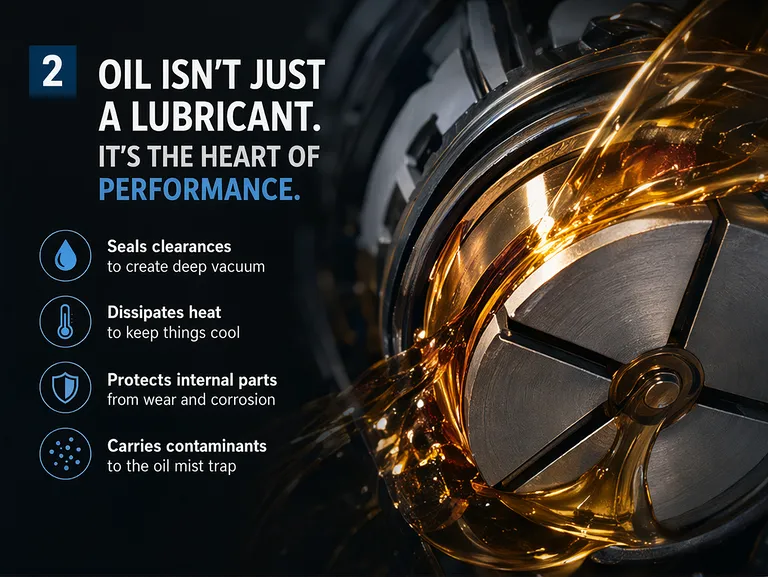
Here is the fundamental truth that changes everything: In an oil-sealed rotary vane pump, the oil is not just a lubricant. It is a dynamic, multi-functional component that actively enables the vacuum process.
Imagine a spinning rotor with sliding vanes inside a chamber. To create a vacuum, this mechanism must trap pockets of air and force them out. This simple action is impossible without oil performing three critical jobs simultaneously.
1. It’s a Liquid Gasket That Creates the Vacuum
The primary reason your pump can achieve a deep vacuum is because oil forms a perfect, dynamic seal. It fills the microscopic gaps between the tips of the fast-moving vanes and the chamber wall.
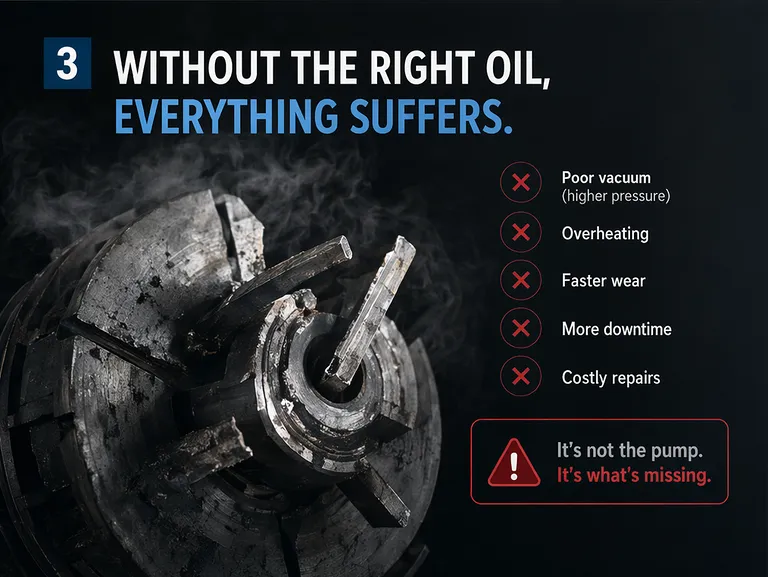
- Without this oil seal: The pump couldn't effectively isolate the pockets of air. Gas would constantly leak from the high-pressure side back to the low-pressure side. Your pump wouldn't be a pump; it would just be a fan, incapable of reaching the vacuum levels your work depends on.
2. It’s a Liquid Cooling System That Prevents Meltdown
The act of compressing a gas generates an immense amount of heat right at the heart of your pump. If this heat isn't removed, the pump's internal temperature will skyrocket, leading to component seizure and catastrophic failure. The circulating oil is the pump's built-in cooling system. It absorbs this intense thermal energy and carries it away to the pump casing to be dissipated.
- Without this cooling function: The pump would literally cook itself to death, often in a matter of minutes.
3. It’s a Guardian That Prevents Wear and Tear
Finally, the oil performs the function most people recognize: lubrication. It creates an ultra-thin film that prevents direct metal-to-metal contact between the rapidly sliding vanes and the stator wall. It also captures tiny particles and contaminants from the process gas, carrying them away to be filtered out.
- Without this protective film: The friction would cause devastating wear, drastically shortening the pump's operational life from years to mere hours.
This is why the "solutions" of chasing leaks or blaming the pump's age so often fail. The problem is rarely a single faulty part; it's a misunderstanding of the system's core design.
Choosing Your Tool: The Real Decision Isn’t “Oil vs. No Oil”
Once you understand that oil is a functional component, the choice between a lubricated ("oil-sealed") pump and an unlubricated ("dry") pump becomes much clearer. The question is no longer, "How do I get rid of oil?" but rather, "Which mechanism is right for my application?"
-
Oil-Sealed Pumps are designed to harness the power of oil. They are robust workhorses that can achieve deeper vacuums and offer a longer service life precisely because the oil performs the sealing, cooling, and protection so effectively. They are the standard for the vast majority of lab and industrial applications.
-
Dry Pumps are a specialized solution. They use self-lubricating materials (like graphite) for the vanes to eliminate oil contamination. However, this comes at a cost: they typically cannot achieve the same deep vacuum levels, they run hotter, and they experience more wear. They are necessary only for ultra-clean applications like mass spectrometry or semiconductor manufacturing, where even trace hydrocarbons are unacceptable.
Choosing the right pump is not about picking a brand off a shelf. It’s about matching the fundamental technology to your specific requirements for vacuum depth, process cleanliness, and equipment longevity. This requires a partner who understands the physics, not just the part numbers.
From Troubleshooting to Breakthroughs: The Power of a Reliable Vacuum
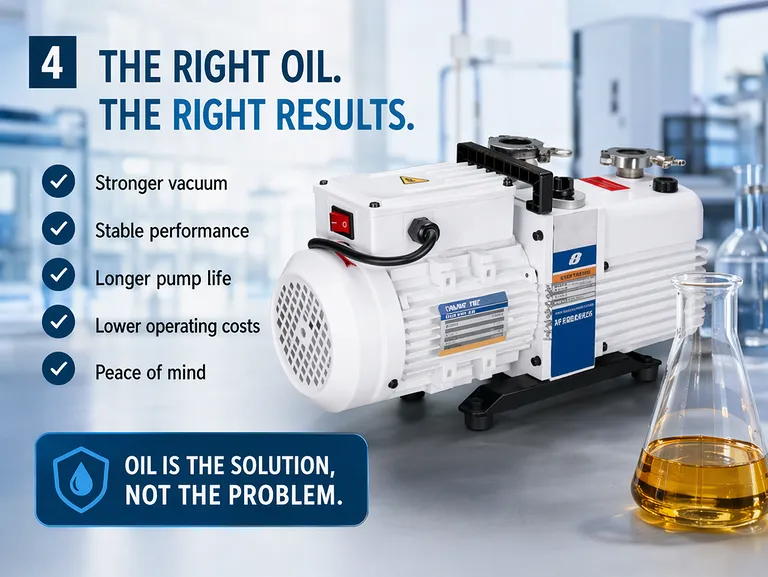
When you stop fighting your equipment and start using the right tool for the job, everything changes. The hours once spent troubleshooting are now spent analyzing results. The anxiety over equipment failure is replaced by the confidence to run long, complex experiments.
By choosing the correct vacuum technology for your needs, you unlock new potential:
- Achieve more consistent results in vacuum-dependent processes like degassing, distillation, and freeze-drying.
- Extend the life of your equipment, reducing capital expenditures and costly downtime.
- Accelerate your research and development, knowing your foundational equipment is solid and reliable.
Ultimately, it allows you to focus on your real job: the science.
Your lab's success depends on reliable tools. Solving your vacuum problems starts with understanding the principles behind them. If you're tired of the cycle of guesswork and frustration, our team is here to provide clarity and guide you to the right solution for your unique challenges. Let's discuss your project and ensure your equipment is an asset, not an obstacle. Contact Our Experts
Related Products
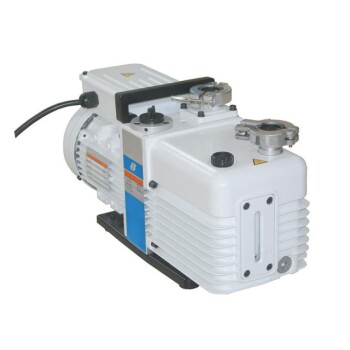
- Laboratory Rotary Vane Vacuum Pump for Lab Use
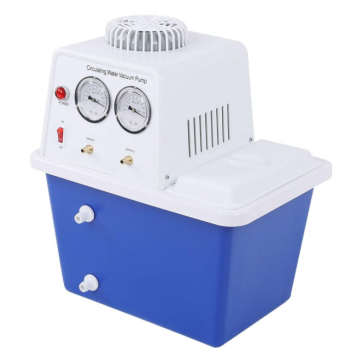
- Circulating Water Vacuum Pump for Laboratory and Industrial Use
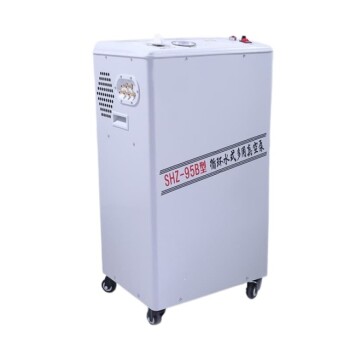
- Laboratory Vertical Water Circulating Vacuum Pump for Lab Use
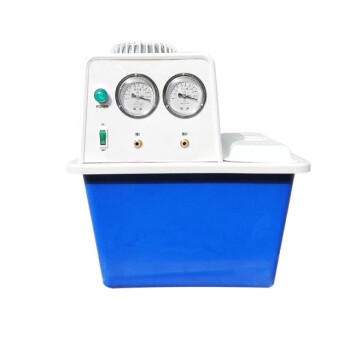
- Laboratory Benchtop Water Circulating Vacuum Pump for Lab Use
- Rotary Tube Furnace Split Multi Heating Zone Rotating Tube Furnace
Related Articles
- Why Your Vacuum System Fails: The Hidden Problem with Rotary Pumps and How to Solve It
- Comprehensive Guide to Rotary Vane Vacuum Pumps
- How to Choose Laboratory Vacuum Pumps for Maximum Efficiency and Cost Savings
- Choosing the Right Laboratory Vacuum Pump
- Risk-Proof Your Lab: How to Choose a Vacuum Pump That Avoids Costly Failures