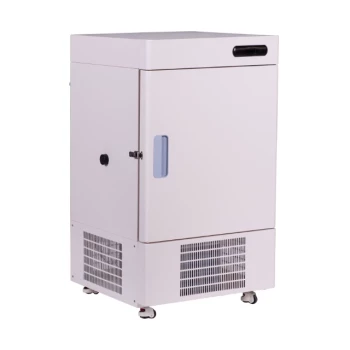
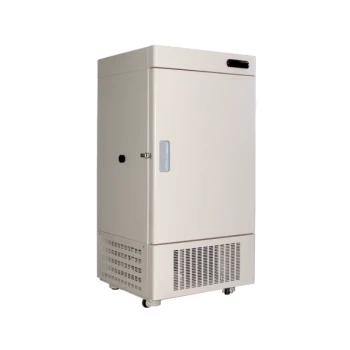
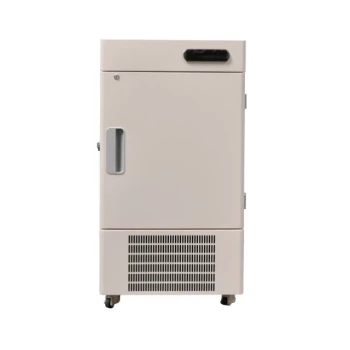
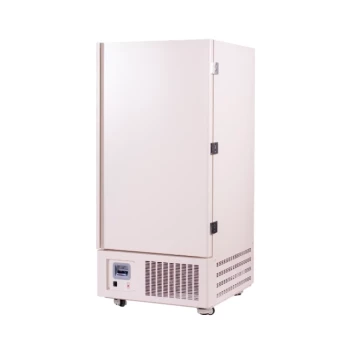
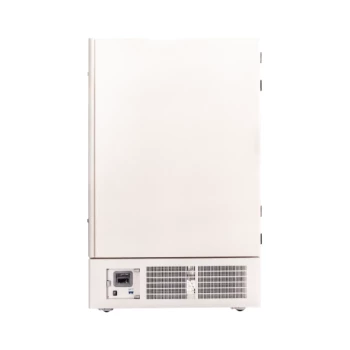
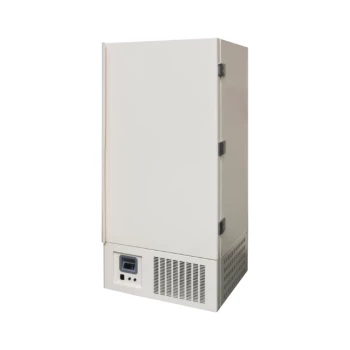
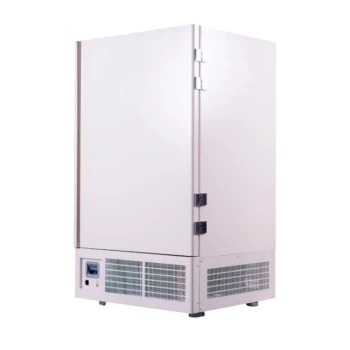
An ultra-low temperature (ULT) freezer serves as a critical preservation tool designed to maintain the pristine condition of oxide single-crystal samples and sensitive chemical reagents. Its specific purpose prior to interface experiments is to lock the sample's surface in its original prepared state by strictly controlling the thermal environment.
The ULT freezer acts as a stasis chamber that inhibits surface atom diffusion and prevents unintended molecular adsorption. This ensures the physical and chemical properties of the oxide remain chemically pure and physically stable for atomic-level experiments.
Preserving Surface Integrity
Stopping Atomic Diffusion
Oxide surfaces that have undergone specific treatments or precise facet cutting are often thermodynamically unstable. Atoms on these surfaces have a natural tendency to diffuse or rearrange themselves to lower their energy state.
The ULT freezer operates at extremely low temperatures to drastically reduce this kinetic activity. By removing thermal energy, it effectively inhibits surface atom diffusion, keeping the atomic structure fixed in its intended configuration.
Blocking Molecular Adsorption
Prepared oxide surfaces are highly reactive and prone to interacting with their environment. If left exposed, they attract unintended molecules from the atmosphere.
The ultra-low temperature environment acts as a barrier against this contamination. It prevents foreign molecules from adsorbing onto the surface, ensuring the chemical composition remains unaltered.
Ensuring Experimental Validity
Protecting Precise Facet Cuts
Samples are often cut to expose specific crystal facets for experimentation. The validity of wetting and hydroxylation data depends entirely on the geometry of these cuts remaining constant.
The freezer preserves these specific physical structures. It ensures that the facet geometry present during the experiment is identical to the geometry created during preparation.
Baseline for Atomic-Level Dissolution
To understand how an oxide interacts with water (hydroxylation and dissolution), the starting variable must be controlled.
By maintaining the "original state" of the sample, the freezer guarantees that any observed changes during the experiment are due to the experimental conditions (e.g., water interaction), not prior degradation.
Understanding the Operational Necessity
The Instability of "Fresh" Surfaces
It is critical to recognize that surface treatments are temporary states. Without the intervention of ultra-low temperatures, the unique properties of a treated oxide surface will degrade.
The Cost of Ambient Exposure
Reliability in atomic-level experiments allows for zero margin of error regarding sample history. Omitting the use of a ULT freezer introduces uncontrolled variables—such as surface reconstruction or contamination—that render subsequent data regarding surface wetting or hydroxylation unreliable.
Making the Right Choice for Your Experiment
If your primary focus is structural accuracy:
- Rely on the ULT freezer to inhibit surface atom diffusion, ensuring your precise facet cuts do not reorganize before the experiment begins.
If your primary focus is chemical purity:
- Use the freezer to prevent unintended molecular adsorption, ensuring the surface chemistry interacting with water is exactly what you prepared, without environmental interference.
The ULT freezer is not merely storage; it is an active preservation measure that guarantees the sample you prepared is the sample you analyze.
Summary Table:
| Feature | Purpose in Oxide Experiments | Impact on Data Validity |
|---|---|---|
| Thermal Control | Inhibits surface atom diffusion | Maintains precise facet geometry and crystal structure |
| Molecular Blocking | Prevents unintended adsorption | Ensures chemical purity of the sample surface |
| Stasis Chamber | Locks sample in 'fresh' state | Eliminates variables from ambient storage degradation |
| Structural Locking | Protects thermodynamically unstable surfaces | Guarantees changes are due to experiment, not preparation storage |
Secure the Integrity of Your Atomic-Level Research with KINTEK
Precision in oxide/water interface wetting and surface hydroxylation demands zero margin for error. KINTEK specializes in advanced laboratory solutions, providing high-performance ultra-low temperature (ULT) freezers, cold traps, and freeze dryers designed to lock your samples in their pristine, prepared state.
From high-temperature furnaces and CVD systems for sample synthesis to our specialized cooling solutions for preservation, KINTEK supports every stage of your material science workflow. Don't let ambient exposure compromise your data—ensure your oxides and chemical reagents remain chemically pure and physically stable.
Ready to elevate your lab's precision? Contact KINTEK today to explore our comprehensive range of ULT freezers and laboratory equipment tailored for the most demanding research environments.
References
- Levi C. Felix, Boris I. Yakobson. Ab Initio Molecular Dynamics Insights into Stress Corrosion Cracking and Dissolution of Metal Oxides. DOI: 10.3390/ma18030538
This article is also based on technical information from Kintek Solution Knowledge Base .
Related Products
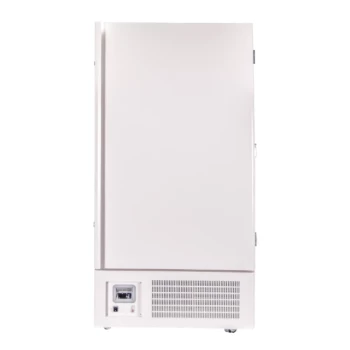
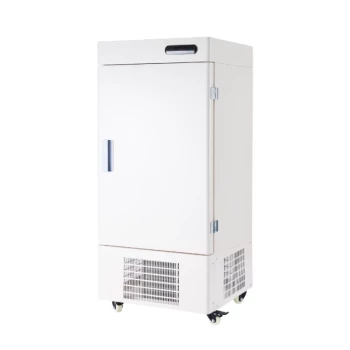
- 108L Vertical Ultra Low Temperature ULT Freezer
- 308L Precision Ultra Low Temperature Freezer for Laboratory Applications
- 208L Advanced Precision Laboratory Ultra Low Temperature Freezer for Cold Storage
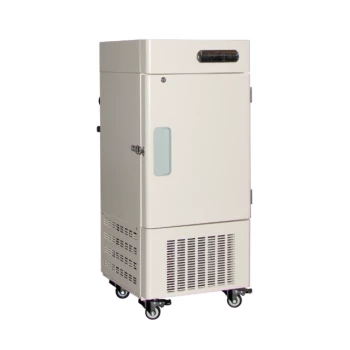
- 58L Precision Laboratory Ultra Low Temperature Upright Freezer for Critical Sample Storage
- 408L Advanced Vertical Laboratory Ultra Low Temperature Freezer for Critical Research Material Preservation
People Also Ask
- What are the common applications of ultra-low temperature freezers? Preserve Your Most Valuable Samples
- What are the different types of ultra-low temperature freezers available? Choose the Right ULT Freezer for Your Lab
- What are some key features of ultra-low temperature freezers? Essential Guide to Reliable Sample Storage
- Have other labs successfully stored samples at -70°C? Proven Long-Term Preservation for Biological Materials
- What features should be considered when choosing an ultra low temperature freezer? Secure Your Samples with Precision