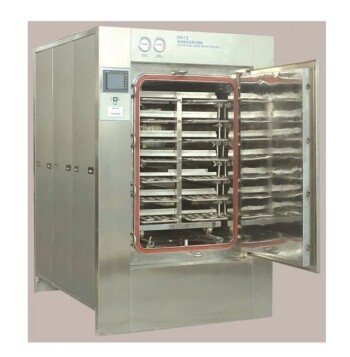
Stainless steel high-pressure autoclaves facilitate the synthesis of MXene and metal sulfide nanocomposites by generating a sealed, high-temperature, and high-pressure environment known as hydrothermal or solvothermal conditions. By heating solvents within this confined vessel, internal pressure rises significantly above atmospheric levels, which dramatically increases the solubility of metal salt precursors and sulfur sources. This unique environment forces these dissolved precursors to nucleate and grow directly onto the MXene surface, ensuring high crystallinity and a strong chemical bond between the materials.
Core Takeaway: The autoclave is not merely a heating vessel; it is a thermodynamic tool that alters solvent properties to promote heterogeneous growth. This ensures metal sulfides (like CdS or MoS2) form a uniform, tightly bonded coating on MXene sheets, which is critical for maximizing charge transfer efficiency in the final application.
The Thermodynamic Mechanism
Creating the Hydrothermal Environment
The fundamental function of the autoclave is to permit heating beyond the normal boiling point of a solvent. When the sealed vessel is heated, the solvent expands but cannot escape, causing the internal pressure to rise drastically.
Enhancing Precursor Solubility
Under these super-atmospheric conditions, the properties of the solvent change. The high pressure and temperature significantly promote the dissolution of the metal salt precursors and sulfur sources used to create the sulfides.
This ensures that the reactants are fully available in the solution, preventing precipitation of unreacted materials and ensuring a stoichiometric reaction.
Controlling Nanocomposite Growth
Facilitating Heterogeneous Nucleation
In open-air synthesis, particles often form randomly in the liquid (homogeneous nucleation). However, the high-energy environment of the autoclave encourages heterogeneous growth.
This means the metal sulfides are thermodynamically driven to nucleate and grow on the surface of the MXene sheets rather than forming isolated particles in the solution.
Ensuring Uniform Distribution
Because the nucleation sites are distributed across the MXene framework, the resulting metal sulfide nanostructures (such as CdS, ZnS, or MoS2) achieve a uniform distribution.
This prevents the agglomeration of particles, which is a common failure point in nanocomposite synthesis that reduces active surface area.
Impact on Material Performance
Achieving High Crystallinity
The sustained heat and pressure provide the necessary energy for atoms to arrange themselves in highly ordered structures. This results in high crystallinity of the metal sulfides.
High crystallinity is essential for reducing defects that can trap electrons and hinder performance.
Optimizing Interfacial Bonding
The autoclave environment forces a tight integration between the two materials. It facilitates the formation of stable interfacial contacts and heterojunctions.
This tight bonding is the primary driver for enhanced charge transfer efficiency, allowing electrons to move freely between the sulfide and the highly conductive MXene framework.
Understanding the Trade-offs
Batch Processing Limitations
While autoclaves produce superior quality materials, they are inherently batch-process devices. This limits the volume of material you can produce at one time compared to continuous flow methods, potentially creating a bottleneck for industrial scaling.
Parameter Sensitivity
The environment inside an autoclave is a "black box" during the reaction. Small deviations in temperature or filling volume can drastically alter the internal pressure, leading to inconsistent morphology if protocols are not strictly standardized.
Material Stability Risks
While the sealed environment protects against external contaminants, the high reactivity can sometimes degrade the MXene sheets if the temperature is too high or the reaction time is too long. Precise control is required to prevent oxidation or structural collapse of the MXene substrate.
Making the Right Choice for Your Goal
To maximize the effectiveness of this synthesis method, align your parameters with your specific objectives:
- If your primary focus is electronic conductivity: Prioritize higher pressure conditions to maximize the "tight bonding" and interfacial contact between the sulfide and MXene.
- If your primary focus is photocatalytic activity: Focus on controlling the precursor concentration to ensure a uniform distribution of discrete nanostructures rather than a thick, continuous coating.
- If your primary focus is structural stability: Use the minimum effective temperature to preserve the MXene framework while still achieving sufficient sulfide crystallinity.
Ultimately, the autoclave provides the kinetic energy required to transform loose chemical precursors into a unified, high-performance heterostructure.
Summary Table:
| Mechanism | Function in Synthesis | Impact on Nanocomposite |
|---|---|---|
| Hydrothermal Environment | Heats solvent beyond boiling point under pressure | Increases precursor solubility and reaction kinetics |
| Heterogeneous Nucleation | Drives growth directly onto MXene surfaces | Ensures uniform coating and prevents particle agglomeration |
| High-Pressure Conditions | Forces tight interfacial bonding | Maximizes charge transfer efficiency and heterojunction stability |
| Sustained Thermal Energy | Facilitates atomic arrangement | Produces high crystallinity with minimal structural defects |
Elevate Your Material Science Research with KINTEK
Precision in synthesis begins with reliable thermal control. KINTEK specializes in high-performance laboratory equipment, offering a premium range of high-temperature high-pressure reactors and autoclaves designed specifically for hydrothermal and solvothermal synthesis.
Whether you are developing MXene-based nanocomposites, engineering metal sulfides, or exploring advanced battery research, our solutions provide the stability and safety required for high-energy reactions. From muffle and vacuum furnaces to crushing systems and hydraulic presses, KINTEK provides the comprehensive tools your lab needs to achieve superior material crystallinity and uniform distribution.
Ready to optimize your synthesis protocols? Contact our laboratory specialists today to find the perfect autoclave or high-pressure system for your specific application.
References
- Asieh Akhoondi, Panneerselvam Sathishkumar. Recent advances in hydrogen production using MXenes-based metal sulfide photocatalysts. DOI: 10.53063/synsint.2022.21106
This article is also based on technical information from Kintek Solution Knowledge Base .
Related Products
- Stainless High Pressure Autoclave Reactor Laboratory Pressure Reactor
- Mini SS High Pressure Autoclave Reactor for Laboratory Use
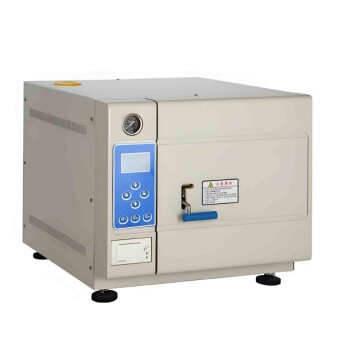
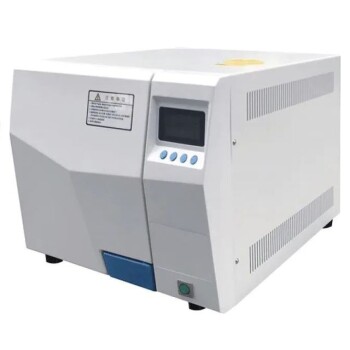
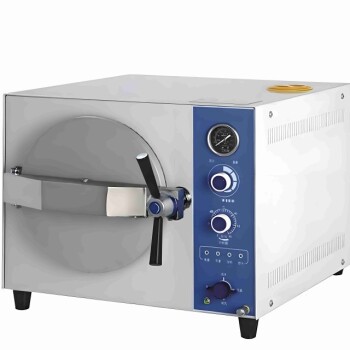
- Desktop Fast High Pressure Laboratory Autoclave Sterilizer 16L 24L for Lab Use
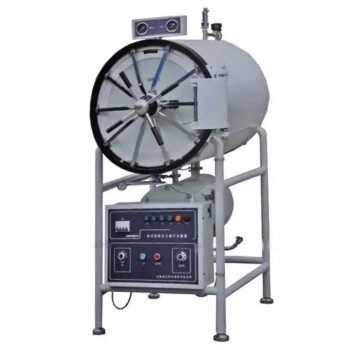
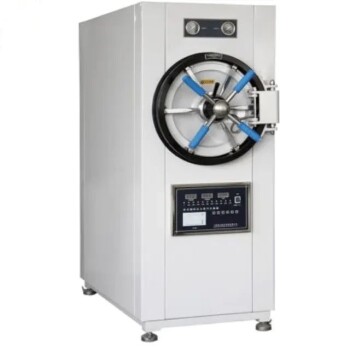
- Laboratory High Pressure Horizontal Autoclave Steam Sterilizer for Lab Use
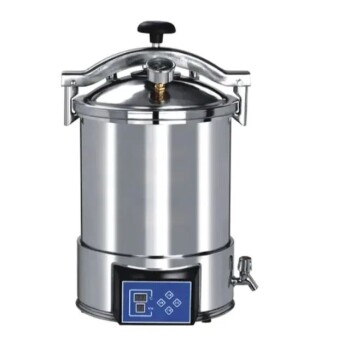
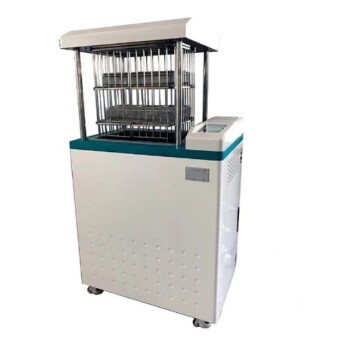
- Portable High Pressure Laboratory Autoclave Steam Sterilizer for Lab Use
People Also Ask
- Why is a laboratory high-pressure reactor used in the hydrothermal synthesis of hydroxyapatite catalysts?
- Why is a laboratory high-pressure reactor necessary for synthesizing fly ash-based zeolite? Achieve Pure Crystallization
- What role does a laboratory high-pressure reactor play in the leaching process of spent cathode materials? Optimize Recovery
- What conditions do laboratory high-pressure reactors provide for HTC? Optimize Your Biochar Production Processes
- How are high-pressure reactors used to prepare metaphosphate electrocatalysts? Master In-Situ Precursor Growth