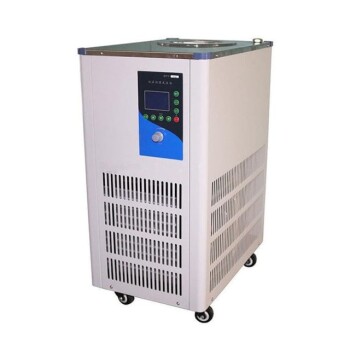
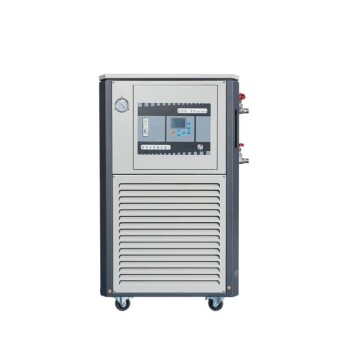
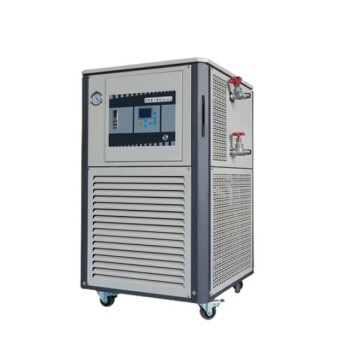
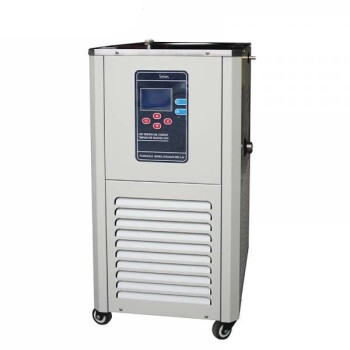
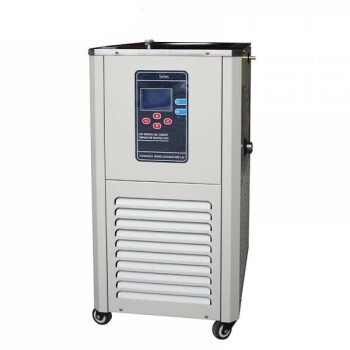
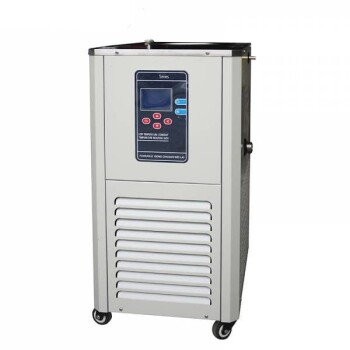
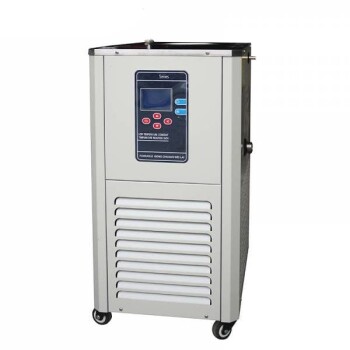
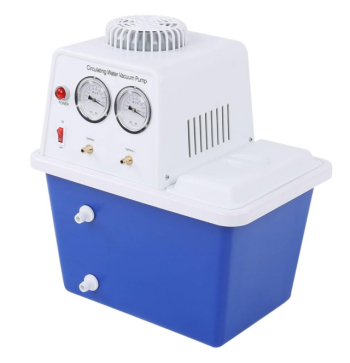
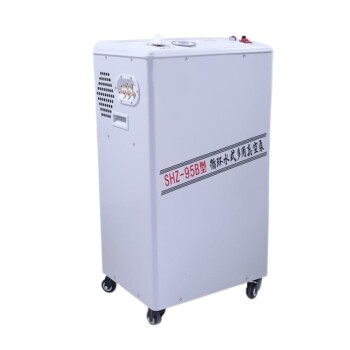
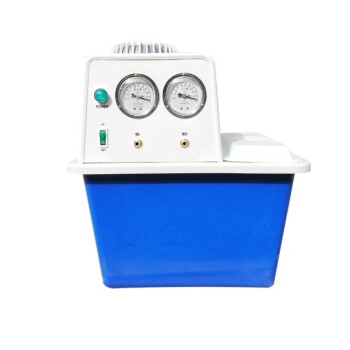
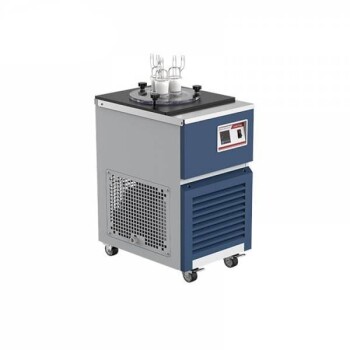
A cooling circulation system is the primary defense against data distortion in cavitation experiments. It actively removes the significant heat generated by high-frequency mechanical vibrations and the violent collapse of cavitation bubbles. By locking the test medium at a constant temperature (typically 22°C), the system prevents the alteration of critical liquid properties, ensuring that experimental results reflect material behavior rather than environmental instability.
The intense energy released during ultrasonic cavitation naturally heats the test liquid, which alters its viscosity and vapor pressure. A cooling circulation system neutralizes this thermal drift, ensuring consistent cavitation intensity throughout the entire duration of the test.
The Physics of Thermal Control
Combating Heat Generation
Ultrasonic horns operate at extremely high frequencies to induce cavitation. This mechanical process converts a significant portion of input power into waste heat. Additionally, the physics of bubble collapse releases energy directly into the fluid, causing rapid temperature spikes if left unchecked.
Stabilizing Liquid Properties
Temperature is not merely an environmental variable; it dictates the physical state of the test medium. As the liquid heats up, its viscosity decreases and its vapor pressure increases. These changes fundamentally alter how cavitation bubbles form, grow, and collapse.
Regulating Cavitation Intensity
The erosive power of a cavitation bubble depends heavily on the surrounding vapor pressure. If the liquid becomes too hot, higher vapor pressure "cushions" the bubble collapse. This reduces the impact force on the target material, leading to artificially low erosion rates that do not reflect the material's true resistance.
Ensuring Long-Term Experimental Integrity
Preventing Thermal Runaway
Cavitation erosion tests often require long exposure times to generate measurable mass loss. For example, a standard testing cycle may last 165 minutes. Without active heat removal via cooling coils, the liquid temperature would rise continuously, potentially reaching boiling points and ruining the experiment.
Maintaining a Consistent Baseline
To compare different materials fairly, the "attack" force of the cavitation must remain constant from the first minute to the last. By holding the temperature at a steady 22°C, the cooling system ensures the liquid's physical properties do not drift. This guarantees that any observed mass loss is due to material failure, not a change in the testing environment.
Common Pitfalls to Avoid
Underestimating Heat Load
A common error is assuming passive cooling (ambient air) is sufficient for high-power ultrasonic setups. The heat generation rate often exceeds natural dissipation, leading to a "sawtooth" temperature profile that skews results.
Inconsistent Temperature Monitoring
If the cooling system allows temperature to fluctuate significantly around the set point, the data will exhibit high variance. Precise thermal regulation is required to keep physical properties—and therefore erosion intensity—within a tight, reproducible tolerance.
Making the Right Choice for Your Goal
To ensure your cavitation erosion data is valid and reproducible, apply the following principles:
- If your primary focus is Data Accuracy: Ensure your cooling system has the capacity to maintain the test medium strictly at 22°C to lock in viscosity and vapor pressure values.
- If your primary focus is Long-Duration Testing: utilize a robust circulation system capable of handling continuous heat rejection for cycles exceeding 165 minutes without thermal saturation.
The cooling system is not just an accessory; it is the control mechanism that validates the physics of your entire experimental setup.
Summary Table:
| Factor Affected | Impact of Heat (No Cooling) | Benefit of Cooling System |
|---|---|---|
| Liquid Viscosity | Decreases, altering bubble formation dynamics | Remains constant for uniform erosion patterns |
| Vapor Pressure | Increases, "cushioning" bubble collapse impact | Stabilized to maintain maximum erosive force |
| Data Accuracy | Thermal drift leads to inconsistent mass loss | Ensures results reflect material failure, not heat |
| Test Duration | Risk of thermal runaway in long cycles | Enables continuous testing (165+ mins) safely |
Maximize Experimental Accuracy with KINTEK Thermal Solutions
Don't let thermal drift compromise your cavitation erosion data. KINTEK specializes in high-precision laboratory equipment designed to maintain the rigorous standards of material science and battery research. Our advanced cooling solutions, including recirculating chillers, ULT freezers, and cold traps, provide the stable thermal environment necessary to lock in liquid properties like viscosity and vapor pressure during high-power ultrasonic testing.
From specialized high-temperature furnaces to precise crushing and milling systems, KINTEK offers a comprehensive portfolio to support your most demanding laboratory workflows. Ensure your results are valid, reproducible, and reflective of true material performance.
Ready to optimize your experimental setup? Contact KINTEK today to find the perfect cooling system for your lab!
References
- Daniela Cosma, Corneliu Marius Crăciunescu. Ultrasonic Cavitation Erosion Behavior of GX40CrNiSi25-20 Cast Stainless Steel through Yb-YAG Surface Remelting. DOI: 10.3390/ma17174180
This article is also based on technical information from Kintek Solution Knowledge Base .
Related Products
- 100L Chilling Circulator Cooling Water Circulator for Low Temperature Constant Temperature Reaction Bath Water Bath Cooling
- 20L Heating Chilling Circulator Cooling Water Bath Circulator for High and Low Temperature Constant Temperature Reaction
- 10L Heating Chilling Circulator Cooling Water Bath Circulator for High and Low Temperature Constant Temperature Reaction
- 100L Heating Chilling Circulator Cooling Water Bath Circulator for High and Low Temperature Constant Temperature Reaction
- 20L Chiller Water Bath Cooling Circulator Low Temperature Constant Temperature Reaction Bath
People Also Ask
- What function does a circulating cooling chiller perform during the gas adsorption isotherm testing of nanoporous carbon?
- Why is a circulating water chiller required for Prussian Blue nanoparticles? Ensure Stability & Batch Reproducibility
- What is the purpose of a cooling circulation water bath system in electrochemical experiments? Enhance Lab Precision
- How does a constant temperature circulator support the leaching reaction of gold scrap? Optimize Gold Recovery Results
- How do constant temperature circulators impact weight-loss immersion tests? Ensure Precision in Corrosion Analysis