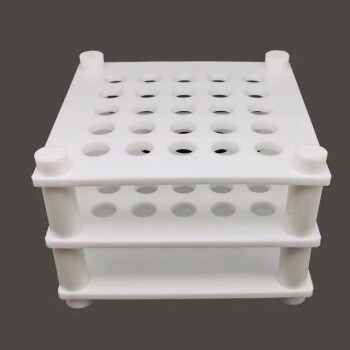
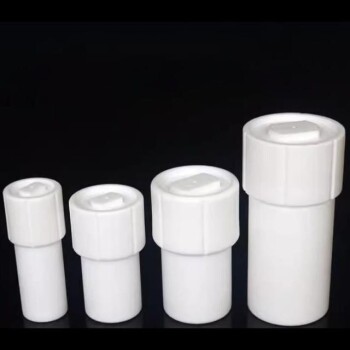
High-pressure hydrothermal synthesis is the definitive method for engineering high-performance manganese dioxide (MnO2) catalysts. By sealing the reaction mixture in a vessel, the autoclave allows temperatures to exceed the boiling point of water (e.g., 125°C), generating high internal pressure that forces precursors to crystallize into specific, highly active nanostructures. The PTFE liner is essential to this process, acting as a chemically inert barrier that withstands the strong oxidants required for synthesis, ensuring the final catalyst remains pure and effective.
Core Takeaway The hydrothermal autoclave acts as a "phase-engineering" chamber. It utilizes heat-generated pressure to dictate the precise shape and crystal structure of MnO2 (such as uniform nanorods), while the PTFE liner guarantees chemical purity by preventing the reaction vessel from contaminating the catalyst.
The Role of the Reaction Environment
Creating Super-Atmospheric Conditions
In a standard open beaker, water boils at 100°C, limiting the energy available for chemical reactions.
A sealed autoclave traps the steam generated during heating. This allows the solvent to reach temperatures well above its boiling point—specifically 125°C for beta-MnO2 synthesis—while simultaneously building substantial internal pressure.
Driving Crystal Transformation
The pressure generated within the autoclave is not merely a byproduct; it is a driving force for nucleation.
This environment forces dissolved precursors to undergo specific chemical transformations that would be impossible at atmospheric pressure. It promotes the reorganization of atoms into precise crystalline structures, such as beta-MnO2.
Engineering Morphology for Activity
Catalytic performance depends heavily on surface area.
The hydrothermal environment facilitates the growth of uniform nanorod configurations. These high-aspect-ratio structures maximize the active surface area available for the oxygen reduction reaction, which is critical for applications like BOD (Biochemical Oxygen Demand) sensors.
The Critical Function of the PTFE Liner
Resisting Chemical Attack
Synthesizing MnO2 often requires the use of strong oxidants or acidic/alkaline precursor solutions.
A standard stainless steel reactor shell would corrode under these harsh conditions. The PTFE (polytetrafluoroethylene) liner provides an inert shield, allowing the reaction to proceed without damaging the structural integrity of the autoclave.
Ensuring Catalyst Purity
Corrosion does more than damage equipment; it destroys synthesis results.
If the steel vessel interacts with the solution, foreign metal ions can leach into the mixture. The PTFE liner prevents this contamination, ensuring the final MnO2 product maintains high purity. This is vital, as impurities can severely degrade the electrochemical performance of the cathode.
Understanding the Trade-offs
While the PTFE-lined autoclave is the gold standard for synthesizing high-quality MnO2 nanostructures, it has inherent limitations.
Thermal Limits of PTFE
While excellent for chemical resistance, PTFE has a thermal ceiling.
It typically softens or deforms at temperatures approaching 250°C. If your synthesis requires extremely high temperatures (e.g., above 200°C for certain ceramic phases), a PPL (polyphenylene) liner is required instead of PTFE.
Scalability Challenges
Hydrothermal synthesis is inherently a batch process.
The requirement for sealed, high-pressure vessels makes it difficult to produce these catalysts continuously or in massive quantities compared to simple precipitation methods. You trade scalability for superior crystal quality and uniformity.
Making the Right Choice for Your Goal
To maximize the effectiveness of your MnO2 synthesis, align your process parameters with your specific catalytic needs:
- If your primary focus is Sensor Sensitivity: Prioritize the purity provided by the PTFE liner to prevent metal ion contamination that introduces noise or reduces the oxygen reduction rate.
- If your primary focus is Catalytic Efficiency: Focus on the pressure and temperature control (e.g., maintaining exactly 125°C) to ensure the formation of uniform nanorods with the highest possible surface area.
- If your primary focus is Durability: Utilize the pressure environment to drive in-situ growth on support carriers (like carbon nanotubes), ensuring a strong physical bond that survives charge-discharge cycles.
The autoclave is not just a container; it is an active tool that shapes the microscopic architecture of your catalyst to define its macroscopic performance.
Summary Table:
| Feature | Function in MnO2 Synthesis | Benefit for Cathode Catalysts |
|---|---|---|
| High-Pressure Environment | Drives precursor nucleation and crystallization | Creates specific, high-activity crystalline structures (e.g., beta-MnO2) |
| Super-Atmospheric Heat | Enables reaction temperatures up to 125°C+ | Accelerates growth of high-aspect-ratio nanorods for max surface area |
| PTFE Liner | Provides a chemically inert reaction shield | Prevents metal ion leaching and ensures high catalyst purity |
| Pressure Sealed Vessel | Facilitates in-situ growth on carbon supports | Enhances physical bonding for better charge-discharge durability |
Elevate Your Material Research with KINTEK Precision
From high-performance MnO2 catalysts to advanced ceramic phases, KINTEK provides the specialized tools your lab needs for superior material engineering. Our comprehensive range of high-temperature high-pressure reactors and autoclaves, available with PTFE or PPL liners, ensures chemical purity and precise morphology control for battery research and electrochemical applications.
Beyond synthesis, we support your entire workflow with:
- Crushing, milling, and sieving systems for precursor preparation.
- Hydraulic presses (pellet, hot, isostatic) for electrode fabrication.
- Advanced heating solutions, including muffle, vacuum, and CVD furnaces.
- Essential laboratory consumables like high-purity ceramics and crucibles.
Ready to optimize your catalyst synthesis? Contact KINTEK today to find the perfect equipment solution for your research goals!
References
- Shailesh Kharkwal, How Yong Ng. Development and Long-Term Stability of a Novel Microbial Fuel Cell BOD Sensor with MnO2 Catalyst. DOI: 10.3390/ijms18020276
This article is also based on technical information from Kintek Solution Knowledge Base .
Related Products
- High Pressure Laboratory Autoclave Reactor for Hydrothermal Synthesis
- Stainless High Pressure Autoclave Reactor Laboratory Pressure Reactor
- Portable High Pressure Laboratory Autoclave Steam Sterilizer for Lab Use
- Desktop Fast High Pressure Laboratory Autoclave Sterilizer 16L 24L for Lab Use
- Laboratory High Pressure Horizontal Autoclave Steam Sterilizer for Lab Use
People Also Ask
- What role does a high-pressure reactor (autoclave) play in the synthesis of NiCuFe-LDH? Master Hydrothermal Growth
- What Role Does a High-Pressure Reactor or Autoclave Play in HA Catalyst Synthesis? Achieve High Surface Area Materials
- What equipment is required for hydrothermal synthesis of Ga0.25Zn4.67S5.08? Optimize Your Semiconductor Production
- What is the function of a high-pressure reactor in the hydrothermal synthesis of boehmite? Expert Process Insights
- What role does an autoclave play in the synthesis of MnO2 nanofibers? Mastering Hydrothermal Growth