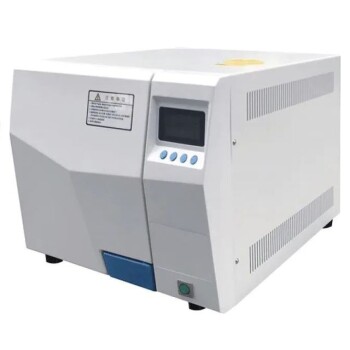
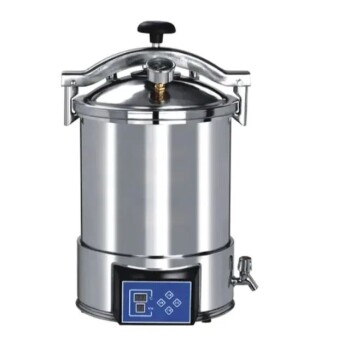
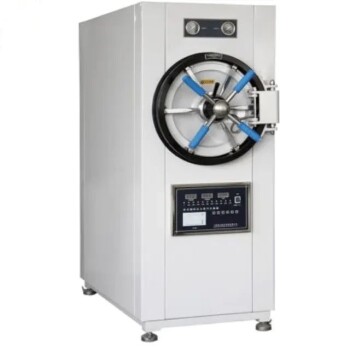
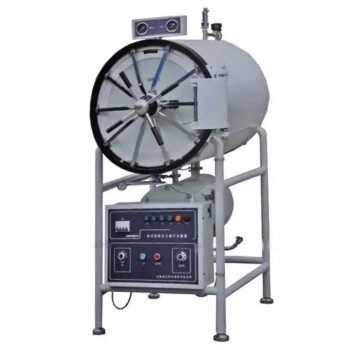
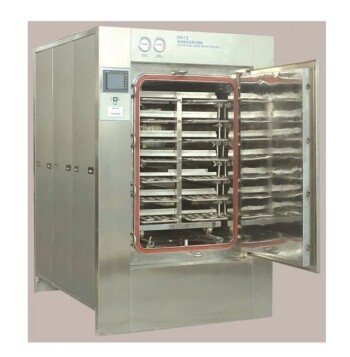
Laboratory autoclaves act as the critical foundation for long-cycle fermentation by establishing a baseline of absolute sterility. By utilizing high-pressure steam at 121 °C, the autoclave thoroughly sterilizes the entire membrane bioreactor system—including ceramic membranes, vessels, and connecting pipelines—before the process begins. This rigorous initial step is the primary defense against contamination failures in experiments designed to run for extended periods.
Core Takeaway In continuous processes running for months, even microscopic biological contaminants can reproduce and overtake the desired strain. The autoclave eliminates this "amplification effect" by ensuring the system starts from a state of total purity, guaranteeing stable, pure-strain fermentation.
The Mechanics of Total System Sterilization
High-Temperature Steam Penetration
The autoclave functions by subjecting equipment to high-pressure steam at 121 °C. This temperature is sufficient to denature proteins and destroy microbial life that standard cleaning might miss.
Comprehensive Coverage
Sterility cannot be limited to the main vessel alone. The autoclave treats the entire assembly, including the ceramic membranes used for filtration, the reactor vessels, and the complex network of pipelines.
Elimination of Dead Zones
Fluid pipelines and valve connections often harbor pockets of bacteria. High-pressure steam forces its way into these hard-to-reach areas, ensuring no part of the infrastructure introduces a contaminant into the sterile broth.
Why Long-Cycle Processes are Vulnerable
The Risk of Amplification
A fermentation process running for several months faces unique risks compared to short-batch runs. A minor contamination event that might be negligible in a 24-hour run can become catastrophic over weeks.
Protecting the Pure Strain
Over time, competing microbes can outgrow and displace the intended production strain. The autoclave ensures the initial sterility required to maintain a pure culture, preventing the costly loss of months of work due to biological drift.
Understanding Operational Trade-offs
Material Compatibility
While autoclaving is effective, it requires robust materials. The reference specifically highlights ceramic membranes, which are favored because they can withstand the thermal shock and pressure of 121 °C steam without degrading.
System Size Constraints
Autoclaving an "entire system" implies the bioreactor setup must be compact enough to fit inside the autoclave chamber. This limits the scale of the reactor vessels that can be sterilized using this specific method.
Securing Process Integrity
To maximize the success rate of your continuous fermentation projects:
- If your primary focus is Process Stability: Prioritize rigorous pre-run autoclaving to eliminate the risk of contaminant amplification over long durations.
- If your primary focus is Equipment Selection: Ensure all wetted parts, particularly filtration membranes, are rated for high-pressure steam (e.g., ceramic rather than sensitive polymers).
Total sterility at hour zero is the only way to guarantee process validity at month three.
Summary Table:
| Feature | Benefit in Long-Cycle Fermentation |
|---|---|
| Sterilization Method | High-pressure steam at 121°C for total protein denaturation |
| Coverage Area | Vessels, ceramic membranes, and connecting pipelines |
| Contamination Control | Eliminates microbial amplification risks over months of operation |
| Material Resilience | Supports robust components like ceramic membranes and reactors |
| Process Integrity | Ensures pure-strain stability from hour zero to project completion |
Maximize Your Fermentation Success with KINTEK
Don't let months of research be compromised by microscopic contaminants. KINTEK specializes in providing the high-performance laboratory equipment and consumables essential for advanced biotechnology. Whether you need high-temperature high-pressure reactors and autoclaves to guarantee total sterility, or specialized ceramic membranes and crucibles that withstand rigorous thermal cycles, our solutions are engineered for precision and durability.
From battery research tools and high-temperature furnaces to homogenizers and cooling solutions, we empower your lab with the tools needed for continuous process stability.
Secure your pure-strain results today—Contact KINTEK for a consultation and explore our comprehensive range of sterilization and bioreactor solutions.
References
- Victor Hugo Cavero-Olguin, Rajni Hatti‐Kaul. Membrane-based continuous fermentation with cell recycling for propionic acid production from glycerol by Acidipropionibacterium acidipropionici. DOI: 10.1186/s12934-023-02049-7
This article is also based on technical information from Kintek Solution Knowledge Base .
Related Products
- Desktop Fast Laboratory Autoclave Sterilizer 20L 24L for Lab Use
- Desktop Fast High Pressure Laboratory Autoclave Sterilizer 16L 24L for Lab Use
- Portable High Pressure Laboratory Autoclave Steam Sterilizer for Lab Use
- Portable Digital Display Automatic Laboratory Sterilizer Lab Autoclave for Sterilization Pressure
- Desktop Fast Laboratory Autoclave Sterilizer 35L 50L 90L for Lab Use
People Also Ask
- What are the two types of autoclave used in the laboratory? Gravity vs. Pre-Vacuum Explained
- What is a laboratory autoclave? A Guide to Sterilization with Pressurized Steam
- What precautions should be taken during autoclave in laboratory? A Complete Safety Guide to Prevent Burns and Explosions
- What extreme conditions does a laboratory autoclave simulate? Testing Wear Resistance of Nuclear Fuel Cladding
- What role does a laboratory autoclave play in HEA corrosion research? Key to Validating Advanced Reactor Materials