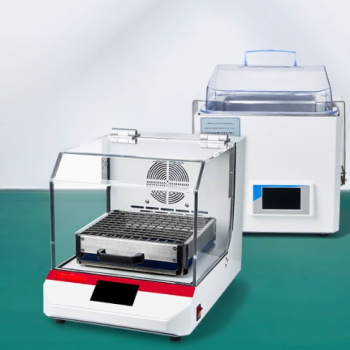
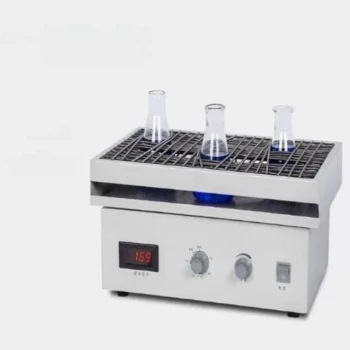
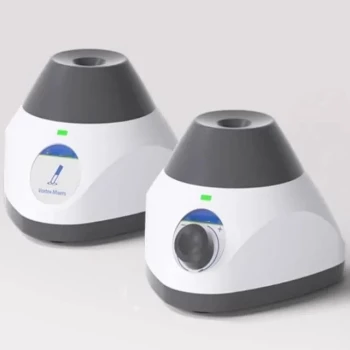
The use of an incubator shaker is a critical factor in maximizing the yield of reducing sugars during the enzymatic hydrolysis of Pennisetum alopecuroides. This equipment optimizes the reaction by maintaining a precise temperature (e.g., 50°C) while simultaneously providing constant mechanical oscillation (e.g., 150 rpm) to ensure the enzyme and substrate remain in active contact.
The incubator shaker enhances efficiency by eliminating mass transfer limitations and preventing substrate sedimentation. This mechanical agitation ensures that cellulase enzymes maintain continuous, uniform contact with the substrate, directly leading to a higher release efficiency of reducing sugars.
The Mechanisms Behind Increased Yield
Eliminating Mass Transfer Limitations
In a static environment, the movement of enzymes toward the substrate is limited by diffusion. Continuous vibration provided by the shaker removes these barriers.
By actively mixing the solution, the shaker eliminates mass transfer resistance within the reaction system. This allows enzyme molecules to move freely and access the substrate more effectively.
Preventing Substrate Sedimentation
Pennisetum alopecuroides is a solid substrate that will naturally settle to the bottom of the reaction vessel if left undisturbed. Sedimentation reduces the surface area available for enzymatic attack.
The mechanical oscillation (e.g., 150 rpm) keeps the solids suspended in the liquid. This exposes the substrate to the enzymes from all angles, rather than just the top layer of a sediment pile.
Exposing New Reaction Sites
As the reaction progresses, the interaction between the enzyme and substrate must remain dynamic. Constant agitation ensures that enzymes are not stuck on depleted areas of the biomass.
This kinetic mixing allows enzyme molecules to constantly contact new reaction sites. This continuous renewal of contact points is essential for maximizing the hydrolysis efficiency.
The Role of Environmental Control
Precision Thermal Regulation
Enzymatic hydrolysis is highly sensitive to temperature fluctuations. The incubator shaker provides a stable thermal environment, typically maintained at 50°C.
This stability ensures that the cellulase remains at its optimal operating temperature throughout the process. Without this control, enzyme activity would drop, significantly lowering the yield of reducing sugars.
Uniform Enzyme Distribution
Mechanical oscillation ensures the uniform distribution of cellulase throughout the mixture.
Without this homogenization, localized "hot spots" or "dead zones" could form where enzyme concentration is either too high or too low. Uniformity ensures every part of the substrate receives equal enzymatic attention.
Understanding the Operational Variables
The Necessity of Kinetic Mixing
While temperature control is passive, kinetic mixing is the active driver of yield in this process.
The references suggest that specific agitation speeds (e.g., 150 rpm or up to 200 rpm) are required to achieve thorough contact. If the RPM is too low to suspend the solids, mass transfer resistance returns, and yield will drop.
The Impact of Stability
The effectiveness of the process relies on the constancy of the vibration.
Intermittent mixing is less effective than continuous oscillation. The goal is to maintain a steady state where mass transfer limitations are permanently suppressed for the duration of the hydrolysis.
Optimizing Your Hydrolysis Protocol
To achieve the highest possible yield of reducing sugars from Pennisetum alopecuroides, you must tune your equipment to address specific physical constraints.
- If your primary focus is maximizing reaction rate: Ensure your RPM is high enough (e.g., 150–200 rpm) to fully suspend the substrate, thereby eliminating mass transfer resistance.
- If your primary focus is process consistency: Verify that the incubator maintains a strict 50°C thermal environment to prevent fluctuations in enzyme activity.
By synchronizing thermal stability with mechanical agitation, you transform the reaction environment from a static mixture into a dynamic, high-efficiency system.
Summary Table:
| Factor | Role in Enzymatic Hydrolysis | Impact on Reducing Sugar Yield |
|---|---|---|
| Mechanical Oscillation | Prevents substrate sedimentation & eliminates mass transfer resistance | Increases enzyme-substrate contact and reaction sites |
| Thermal Regulation | Maintains stable optimal temperature (e.g., 50°C) | Ensures peak cellulase activity and process stability |
| Kinetic Mixing | Uniformly distributes enzymes throughout the mixture | Prevents localized dead zones and ensures consistent hydrolysis |
| Constant Vibration | Maintains dynamic movement of molecules | Accelerates reaction rates by suppressing diffusion barriers |
Maximize Your Research Efficiency with KINTEK
Ready to achieve superior yields in your enzymatic hydrolysis and biomass research? KINTEK specializes in high-precision laboratory equipment designed for the most demanding applications. From advanced incubator shakers and homogenizers to our comprehensive range of high-temperature furnaces, hydraulic presses, and specialized reactors, we provide the tools you need for consistent, reproducible results.
Whether you are optimizing Pennisetum alopecuroides processing or developing new battery technologies, our expert team is here to support your laboratory's success.
Contact KINTEK today to find the perfect solution for your lab!
References
- Shangyuan Tang, Xiyu Cheng. Enhanced Enzymatic Hydrolysis of Pennisetum alopecuroides by Dilute Acid, Alkaline and Ferric Chloride Pretreatments. DOI: 10.3390/molecules24091715
This article is also based on technical information from Kintek Solution Knowledge Base .
Related Products
- Shaking Incubators for Diverse Laboratory Applications
- Laboratory Vibratory Sieve Shaker Machine for Dry and Wet Three-Dimensional Sieving
- Laboratory Test Sieves and Vibratory Sieve Shaker Machine
- Vibratory Sieve Shaker Machine Dry Three-Dimensional Vibrating Sieve
- Laboratory Wet Three-Dimensional Vibratory Sieve Shaker Machine
People Also Ask
- What physical conditions does a shaking incubator provide for bioethanol fermentation? Optimize Yeast Productivity
- Why is the mechanical agitation provided by a shaking incubator necessary for the enzymatic hydrolysis of biomass?
- What critical reaction conditions does a shaking incubator provide? Optimize Cassava Cellulose Enzymatic Hydrolysis
- What are the primary functions of a shaking incubator? Optimize Biomass Fenton Pretreatment Efficiency
- What function does a laboratory shaking incubator serve for halophilic archaea? Optimize Your Seed Cultivation Today