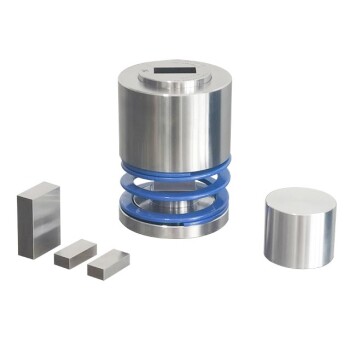
A high-pressure reactor serves as the critical vessel for facilitating the in-situ growth of secondary nanostructures on photocatalytic membranes. Specifically, it is used to synthesize materials such as Metal-Organic Frameworks (MOFs) or semiconductor nanoparticles directly onto the surface of nanofibers using hydrothermal or solvothermal methods.
Core Takeaway: By creating a controlled high-pressure and high-temperature environment, these reactors accelerate reaction rates to ensure active substances are uniformly distributed and securely bonded to the membrane surface, overcoming the limitations of superficial coating techniques.
The Mechanics of In-Situ Modification
Creating the Reaction Environment
The reactor is designed to sustain high-pressure and high-temperature conditions.
This extreme environment is necessary to drive chemical reactions that might otherwise be too slow or thermodynamically unfavorable at standard ambient conditions.
Target Nanostructures
The primary goal is the growth of secondary nanostructures on a primary substrate.
According to standard protocols, this often involves growing Metal-Organic Frameworks (MOFs) or semiconductor nanoparticles directly onto the surface of nanofibers.
Key Performance Advantages
Accelerated Reaction Rates
The elevated pressure and temperature within the reactor significantly increase the kinetics of the chemical reaction.
This acceleration ensures that the synthesis process is efficient, reducing the time required to modify the membrane compared to conventional methods.
Secure Material Loading
One of the most critical advantages of this method is the structural integrity of the final product.
The reactor environment ensures that the active substances (the nanostructures) are "securely loaded" onto the fibers, implying a stronger bond than simple physical deposition.
Uniform Distribution
Achieving a homogenous coating is essential for consistent photocatalytic performance.
The hydrothermal or solvothermal process facilitates the uniform distribution of nanoparticles across the fiber surfaces, preventing agglomeration that could reduce active surface area.
Understanding the Trade-offs
Process Complexity
While effective, utilizing a high-pressure reactor introduces a layer of operational complexity.
Operators must manage specific pressure and temperature parameters to ensure the growth occurs as intended without degrading the underlying nanofiber structure.
Material Compatibility
Not all membrane materials can withstand the harsh internal environment of the reactor.
The high temperatures and pressures required for the "in-situ growth" might compromise mechanically weaker fibers, requiring careful selection of the substrate material.
Making the Right Choice for Your Goal
When deciding whether to utilize a high-pressure reactor for membrane modification, consider your specific performance requirements:
- If your primary focus is mechanical stability: This method is ideal because it ensures active substances are securely loaded onto the fiber, reducing detachment during operation.
- If your primary focus is catalytic efficiency: The reactor promotes uniform distribution, which maximizes the exposed surface area of the active nanostructures.
In summary, the high-pressure reactor is the definitive tool for transforming passive nanofibers into robust, high-performance photocatalytic composites through deep, structural integration.
Summary Table:
| Feature | Hydrothermal/Solvothermal Method | Conventional Coating Methods |
|---|---|---|
| Bonding Strength | High (In-situ growth/Secure loading) | Low (Superficial/Physical deposition) |
| Uniformity | Homogenous distribution | Prone to agglomeration |
| Reaction Kinetics | Accelerated by high pressure/temp | Slower at ambient conditions |
| Structural Integrity | Robust composite formation | Higher risk of material detachment |
| Primary Goal | Growth of MOFs & semiconductor NPs | Surface-level additive application |
Elevate Your Membrane Research with KINTEK Precision
Are you looking to achieve superior in-situ growth and structural integrity in your photocatalytic materials? KINTEK specializes in high-performance laboratory equipment designed for the most demanding chemical environments. From our robust high-temperature high-pressure reactors and autoclaves to our precision crushing and milling systems, we provide the tools you need to ensure uniform nanoparticle distribution and secure material loading.
Whether you are developing next-generation Metal-Organic Frameworks or high-efficiency semiconductor nanofibers, KINTEK offers a comprehensive range of hydrothermal reactors, muffle furnaces, and specialized consumables like PTFE and ceramics to support your breakthrough research.
Ready to transform your laboratory efficiency? Contact us today to find the perfect reactor for your application!
References
- He Lv, Deng‐Guang Yu. Recent Combinations of Electrospinning with Photocatalytic Technology for Treating Polluted Water. DOI: 10.3390/catal13040758
This article is also based on technical information from Kintek Solution Knowledge Base .
Related Products
- Customizable Laboratory High Temperature High Pressure Reactors for Diverse Scientific Applications
- Customizable High Pressure Reactors for Advanced Scientific and Industrial Applications
- Stainless High Pressure Autoclave Reactor Laboratory Pressure Reactor
- Visual High-Pressure Reactor for In-Situ Observation
- Mini SS High Pressure Autoclave Reactor for Laboratory Use
People Also Ask
- How do high-pressure and high-temperature reactors ensure the effective treatment of lignocellulosic wastewater in WAO?
- What equipment is required for high-pressure high-temperature reactions? Master Extreme Chemistry Safely
- How do you control high pressure in a reactor? A Guide to Safe & Stable Operation
- How does initial oxygen pressure affect the wet oxidation of pharmaceutical sludge? Master Your Oxidation Depth
- Why is argon better than nitrogen for inert atmosphere? Ensure Absolute Reactivity & Stability