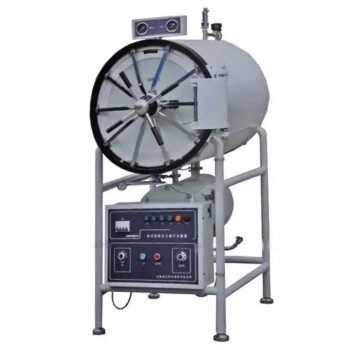
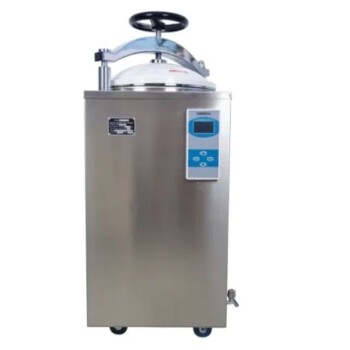
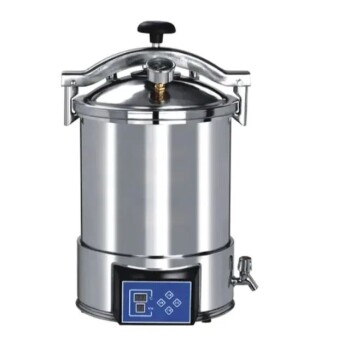
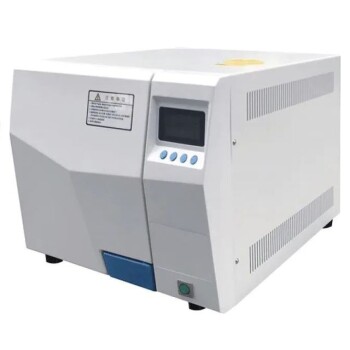
A laboratory-grade high-pressure stainless steel autoclave functions as a precision reactor that maintains a stable hydrogen atmosphere and constant thermal environment for the selective hydrogenation of 3-nitrostyrene (3-NS). By integrating high-pressure regulation with aggressive stirring, it allows researchers to isolate catalytic performance from external physical variables, ensuring that the observed selectivity between the nitro and vinyl groups is a result of the catalyst itself.
The autoclave provides the controlled high-pressure environment necessary to verify a catalyst's ability to selectively reduce functional groups while eliminating mass transfer limitations. It serves as a bridge between fundamental lab research and industrial-scale chemical production.
The Critical Role of Environmental Control
Precision Pressure and Atmosphere
The autoclave creates a pure hydrogen atmosphere, typically maintained at specific levels such as 3 bar or higher. This sealed environment is vital for 3-NS testing, as even minor fluctuations in hydrogen concentration can shift the reaction's selectivity between the nitro group and the vinyl group.
Thermal Stability and Safety
Selective hydrogenation is often exothermic, meaning it releases heat that could lead to runaway reactions or poor selectivity. The stainless steel construction and integrated temperature control systems manage these thermal loads, keeping the reaction at a constant temperature to ensure reproducible data.
Optimizing Reaction Kinetics
Eliminating Mass Transfer Barriers
The use of a magnetic stirring system within the autoclave is critical for ensuring that hydrogen gas is thoroughly dissolved into the liquid phase. By maximizing the contact between the 3-NS substrate, the dissolved hydrogen, and the solid catalyst, the system eliminates "mass transfer limitations."
Evaluating Catalyst Stability
Because 3-NS is a bulky molecule, the autoclave environment is used to test how two-dimensional (2D) material catalysts hold up over time. Researchers can monitor the catalyst's stability and "confinement effects," which determine if the catalyst can effectively "sieve" molecules to achieve the desired product.
Understanding the Trade-offs
Batch vs. Continuous Limitations
Most laboratory autoclaves operate as batch reactors, which can lead to variations in product concentration over the course of the run. While excellent for initial catalyst screening, batch results may not perfectly translate to the steady-state conditions of industrial continuous-flow reactors.
Scalability and Heat Dissipation
While stainless steel is robust, the surface-area-to-volume ratio in a small lab autoclave is much higher than in industrial vessels. This difference means that heat dissipation profiles in the lab may mask potential thermal management issues that would appear during larger-scale production.
Applying This to Your Research Goals
Making the Right Choice for Your Goal
To get the most out of high-pressure testing, your approach should align with your specific research or production objectives.
- If your primary focus is catalyst screening: Use the autoclave to precisely control pressure and stirring speeds to ensure that the "activity" you measure is purely chemical and not limited by how fast you mix the solution.
- If your primary focus is industrial simulation: Utilize the autoclave's ability to reach several megapascals to mimic the high-stress environments of factory production, verifying the "mechanical and chemical durability" of your catalyst.
- If your primary focus is molecular selectivity: Focus on the "confinement effect" by testing bulky substrates like 3-NS to see if your catalyst design provides the necessary shape-selective advantages.
By mastering the controlled environment of the high-pressure autoclave, you can transform 3-nitrostyrene testing from a simple reaction into a definitive assessment of catalytic potential.
Summary Table:
| Key Feature | Role in 3-NS Testing | Research Benefit |
|---|---|---|
| Hydrogen Atmosphere | Maintains stable 3+ bar $H_2$ levels | Ensures selectivity between nitro and vinyl groups |
| Thermal Management | Controls exothermic reaction heat | Prevents runaway reactions and ensures data reproducibility |
| Magnetic Stirring | Maximizes gas-liquid-solid contact | Eliminates mass transfer barriers for accurate kinetics |
| SS Construction | Provides high-pressure durability | Safely evaluates catalyst stability and confinement effects |
Elevate Your Catalytic Research with KINTEK Precision
Are you looking to isolate true catalytic performance in your selective hydrogenation trials? KINTEK specializes in high-performance laboratory equipment designed for the most demanding chemical environments. Our advanced high-temperature high-pressure reactors and autoclaves provide the stability and control required for complex 3-NS testing and molecular sieving research.
Whether you are performing initial catalyst screening or simulating industrial-scale stress, KINTEK offers a comprehensive range of solutions—from crushing and milling systems for catalyst preparation to PTFE-lined vessels and specialized crucibles.
Maximize your lab's efficiency and data accuracy today. Contact our technical experts now to find the perfect high-pressure system tailored to your research goals!
References
- Joshua M. Little, Po‐Yen Chen. Noble Metal Ion‐Directed Assembly of 2D Materials for Heterostructured Catalysts and Metallic Micro‐Texturing. DOI: 10.1002/adfm.202215222
This article is also based on technical information from Kintek Solution Knowledge Base .
Related Products
- Stainless High Pressure Autoclave Reactor Laboratory Pressure Reactor
- Mini SS High Pressure Autoclave Reactor for Laboratory Use
- Desktop Fast High Pressure Laboratory Autoclave Sterilizer 16L 24L for Lab Use
- Laboratory High Pressure Horizontal Autoclave Steam Sterilizer for Lab Use
- Portable High Pressure Laboratory Autoclave Steam Sterilizer for Lab Use
People Also Ask
- Why is a laboratory high-pressure reactor necessary for synthesizing fly ash-based zeolite? Achieve Pure Crystallization
- Why is a laboratory high-pressure reactor used in the hydrothermal synthesis of hydroxyapatite catalysts?
- What role does a laboratory high-pressure reactor play in the leaching process of spent cathode materials? Optimize Recovery
- What conditions do laboratory high-pressure reactors provide for HTC? Optimize Your Biochar Production Processes
- How are high-pressure reactors used to prepare metaphosphate electrocatalysts? Master In-Situ Precursor Growth