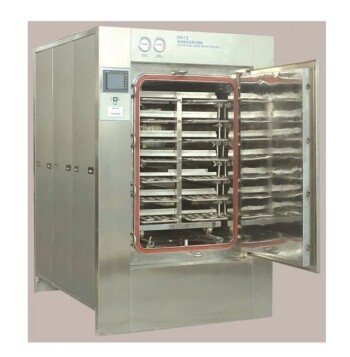
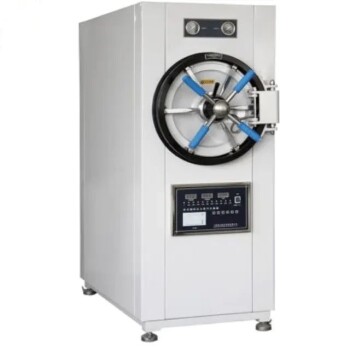
Steam sterilizers, also known as autoclaves, are critical safety instruments used extensively across healthcare, research, and industrial manufacturing sectors. Their primary function is to eliminate pathogenic threats by sterilizing surgical equipment, laboratory culture media, pharmaceutical packaging, and even canned food products.
Core Takeaway: By leveraging high-pressure steam to induce protein coagulation in microorganisms, autoclaves provide a fast, non-toxic, and dependable method for sterilization that is essential for maintaining safety standards in medical, scientific, and industrial environments.
Primary Sectors and Applications
The versatility of steam sterilization allows it to serve distinct purposes depending on the specific industry. While the mechanism remains the same, the application varies from patient safety to consumer product preservation.
Healthcare and Hospitals
In medical settings, sterility is non-negotiable for infection control. Hospitals utilize steam sterilizers to process surgical equipment, ensuring instruments are safe for reuse in operating rooms.
Additionally, healthcare facilities use these devices to decontaminate medical waste before disposal. In these environments, you will frequently hear the device referred to as a "sterilizer" rather than an "autoclave."
Biomedical and Microbiological Laboratories
Research facilities rely on these units to maintain experimental integrity and biological safety. A primary application in labs is the sterilization of culture media, ensuring that nutrient-rich substances used to grow bacteria are free of outside contaminants.
Laboratories also use autoclaves to decontaminate biohazardous waste prior to disposal. In these research settings, the term "autoclave" is the standard nomenclature.
The Pharmaceutical Industry
Pharmaceutical manufacturers use steam sterilization to ensure the safety of drug delivery systems. The primary application here involves sterilizing packaging materials.
This ensures that containers, vials, and other packaging elements introduce no biological contaminants to the sterile drugs they will eventually hold.
The Food Industry
In food processing, steam sterilization is vital for shelf stability and safety. It is extensively used for sterilizing canned food.
This process kills bacteria that could cause spoilage or foodborne illness, allowing canned goods to be stored safely at room temperature for long periods.
The Mechanism Behind the Application
Understanding why these industries choose steam is just as important as knowing where it is used.
Protein Coagulation
Steam is effective because moisture significantly aids in the destruction of microbes. The heat and moisture work together to cause the coagulation of proteins within microorganisms.
Complete Elimination
This coagulation process permanently disables the microbe's biological functions. It is effective enough to kill microorganisms regardless of whether they are in a vegetative state or a more resistant spore state.
Understanding the Trade-offs
While steam sterilization is dependable, fast, and inexpensive, it is not a universal solution. You must understand its physical limitations to determine if it suits your specific application.
Moisture Sensitivity
The process relies entirely on moisture. Therefore, it cannot be used for oils or powders, as steam cannot penetrate these substances effectively to ensure sterility.
Heat Tolerance
The load must be moisture-resistant and capable of withstanding high heat. Materials that degrade under high temperature or humidity are not suitable for this method.
Making the Right Choice for Your Goal
Depending on your specific industry, your interaction with steam sterilization will differ.
- If your primary focus is Healthcare or Pharma: You require a "sterilizer" to ensure strict compliance for surgical tools or packaging materials to prevent infection and contamination.
- If your primary focus is Laboratory Research: You need an "autoclave" to prepare culture media for experiments or to safely neutralize biohazardous waste before it leaves the facility.
- If your primary focus is Food Production: You will utilize steam sterilization to process canned goods, prioritizing shelf-stability and the elimination of foodborne pathogens.
Steam sterilization remains the gold standard for any application requiring a non-toxic, deep-penetrating method to neutralize biological threats.
Summary Table:
| Industry | Primary Application | Key Items Sterilized |
|---|---|---|
| Healthcare | Infection control & waste management | Surgical tools, medical waste |
| Research/Lab | Experimental integrity & biosafety | Culture media, biohazardous waste |
| Pharmaceutical | Drug delivery safety | Vials, packaging materials |
| Food Industry | Shelf-stability & safety | Canned goods, food packaging |
Elevate Your Sterilization Standards with KINTEK
Ensure the highest levels of safety and precision in your facility with KINTEK’s advanced steam sterilizers and autoclaves. Whether you are managing a high-volume hospital, a specialized microbiology lab, or a pharmaceutical production line, our equipment is designed to meet rigorous sterilization protocols.
Beyond sterilization, KINTEK specializes in a comprehensive range of high-temperature furnaces, high-pressure reactors, and lab equipment tailored for research and industry. Contact us today to discuss your specific application needs and discover how our reliable solutions can optimize your workflow and protect your results.
Related Products
- Laboratory Sterilizer Lab Autoclave Vertical Pressure Steam Sterilizer for Liquid Crystal Display Automatic Type
- Laboratory Sterilizer Lab Autoclave Pulsating Vacuum Desktop Steam Sterilizer
- Laboratory High Pressure Steam Sterilizer Vertical Autoclave for Lab Department
- Laboratory Sterilizer Lab Autoclave Herbal Powder Sterilization Machine for Plant
- Portable High Pressure Laboratory Autoclave Steam Sterilizer for Lab Use
People Also Ask
- What is the primary function of a laboratory sterilization autoclave? Master the Physics of Wet Heat Sterilization
- What is a laboratory autoclave? A Guide to Sterilization with Pressurized Steam
- What precautions should be taken during autoclave in laboratory? A Complete Safety Guide to Prevent Burns and Explosions
- What extreme conditions does a laboratory autoclave simulate? Testing Wear Resistance of Nuclear Fuel Cladding
- What role does a laboratory autoclave play in HEA corrosion research? Key to Validating Advanced Reactor Materials