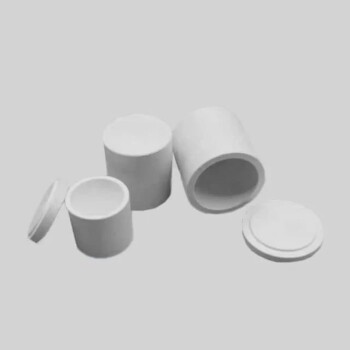
The double-crucible system is a specialized experimental configuration designed to provide extreme thermal stability and environmental protection. By nesting a sample-laden inner crucible within a lidded outer crucible, researchers create a multi-layered thermal shield that minimizes heat loss and eliminates temperature gradients. This setup is essential for achieving the ultra-slow cooling rates—often as low as 4 °C/h over several days—required to reach true thermodynamic equilibrium in high-entropy alloys (HEAs).
A double-crucible system acts as a high-precision thermal buffer, ensuring that the sluggish diffusion processes in high-entropy alloys are given sufficient time to complete under a perfectly uniform temperature field. It is the definitive method for researchers needing to distinguish between metastable phases and true equilibrium states.
The Challenge of HEA Microstructure Exploration
Overcoming Sluggish Diffusion
High-entropy alloys are characterized by complex atomic arrangements that often lead to sluggish diffusion rates. Because atoms move slowly through the lattice, standard cooling rates often "freeze" the alloy in a metastable state that does not represent its lowest energy configuration.
Reaching Thermodynamic Equilibrium
To observe the equilibrium state microstructure, the alloy must be cooled at a rate slow enough for atomic redistribution to occur fully. The double-crucible system facilitates this by enabling stable, controlled cooling over periods exceeding 72 hours, which is difficult to maintain in simpler configurations.
Key Advantages of the Double-Crucible Configuration
Enhanced Thermal Uniformity and Shielding
The primary advantage is the creation of a multi-layered thermal shielding space. This gap between the two crucibles acts as a buffer, smoothing out any fluctuations from the furnace heating elements and ensuring the sample resides in a highly uniform thermal field.
Environmental Isolation and Oxidation Prevention
At the high temperatures required for HEA synthesis, even trace amounts of oxygen can cause significant surface or internal oxidation. The lidded outer crucible, often used in conjunction with secondary protective coverings, effectively blocks residual oxygen from reaching the sample, maintaining the chemical integrity of the alloy throughout the long cooling cycle.
Minimizing Thermal Gradients
In a single-crucible setup, the side facing the furnace wall may be hotter than the side facing the door, creating a thermal gradient. The double-crucible design forces heat to distribute evenly through the secondary containment layer, ensuring that the entire sample undergoes phase transformations at the exact same rate.
Understanding the Trade-offs
Increased Thermal Inertia
Because the double-crucible system adds significant mass to the furnace, it increases thermal inertia. This means the system responds more slowly to programmed temperature changes, which is beneficial for slow cooling but makes rapid temperature adjustments nearly impossible.
Increased Setup Complexity
Utilizing this system requires more precise furnace loading and high-quality crucible materials that can withstand prolonged exposure to heat without reacting with one another. It also limits the sample volume compared to a single-crucible setup, as a portion of the furnace's "sweet spot" is occupied by the outer shielding layer.
How to Apply This to Your Research
Making the Right Choice for Your Goal
- If your primary focus is phase stability studies: Utilize the double-crucible system to ensure your results represent thermodynamic equilibrium rather than kinetic artifacts.
- If your primary focus is oxidation-sensitive materials: Use this configuration to provide a secondary physical barrier against residual atmosphere contaminants during long-duration runs.
- If your primary focus is high-throughput screening: A standard single-crucible setup may be more efficient, as the double-crucible method is optimized for precision over speed.
By mastering the thermal environment through double-containment, you ensure that the microstructures you observe are a true reflection of the alloy's fundamental physics.
Summary Table:
| Feature | Advantage | Research Impact |
|---|---|---|
| Multi-layered Shielding | Enhanced Thermal Uniformity | Eliminates gradients for uniform phase transformations. |
| Lidded Outer Layer | Environmental Isolation | Prevents oxidation during long-duration (72h+) cooling cycles. |
| High Thermal Inertia | Stable Ultra-Slow Cooling | Facilitates reaching thermodynamic equilibrium (e.g., 4 °C/h). |
| Buffer Space | Fluctuation Smoothing | Protects samples from heating element temperature spikes. |
Elevate Your Materials Research with KINTEK
Achieving true thermodynamic equilibrium in high-entropy alloys requires absolute thermal precision and environmental control. KINTEK provides the high-performance tools necessary for complex metallurgical exploration. From our robust high-temperature furnaces (muffle, tube, and vacuum) to our premium ceramic crucibles and PTFE products, we ensure your laboratory is equipped for excellence.
Why Choose KINTEK?
- Unmatched Thermal Stability: Our furnaces support the ultra-slow cooling rates (as low as 4 °C/h) critical for HEA studies.
- Comprehensive Lab Solutions: A full range of crucibles, crushing systems, and hydraulic presses to streamline your sample preparation.
- Expert Support: We help you select the right configuration to minimize thermal gradients and prevent oxidation.
Ready to refine your microstructure results? Contact KINTEK today to discover how our specialized equipment can advance your research goals!
References
- Artashes Ter-Isahakyan, T. John Balk. Evaluation of Equiatomic CrMnFeCoNiCu System and Subsequent Derivation of a Non-Equiatomic MnFeCoNiCu Alloy. DOI: 10.3390/ma16062455
This article is also based on technical information from Kintek Solution Knowledge Base .
Related Products
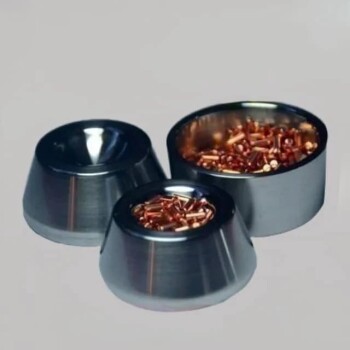
- Electron Beam Evaporation Coating Gold Plating Tungsten Molybdenum Crucible for Evaporation
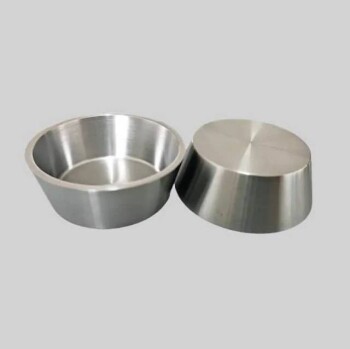
- E Beam Crucibles Electron Gun Beam Crucible for Evaporation
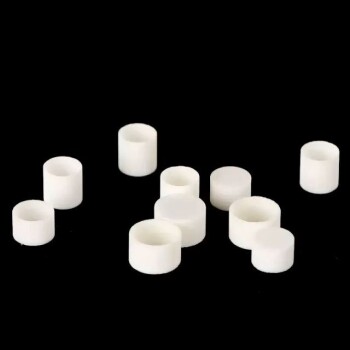
- Engineering Advanced Fine Ceramics Alumina Crucibles (Al2O3) for Thermal Analysis TGA DTA
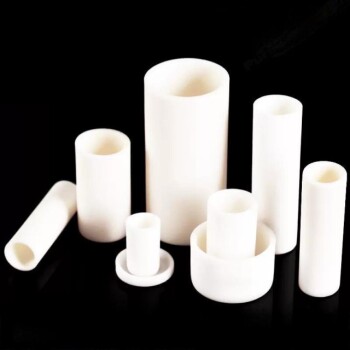
- Engineering Advanced Fine Ceramics Alumina Al2O3 Crucible With Lid Cylindrical Laboratory Crucible
- High Purity Pure Graphite Crucible for Evaporation
People Also Ask
- What is the container that holds the metal source material called in e-beam evaporation? Ensure Purity and Quality in Your Thin-Film Deposition
- What materials are used in electron beam evaporation? Master High-Purity Thin Film Deposition
- What is the process of e-beam coating? Achieve High-Purity, Precise Thin Films for Your Lab
- What is e-beam evaporation? Achieve High-Purity Thin Film Deposition for Your Lab
- What is the voltage of e-beam evaporation? Achieve Precise Thin-Film Deposition