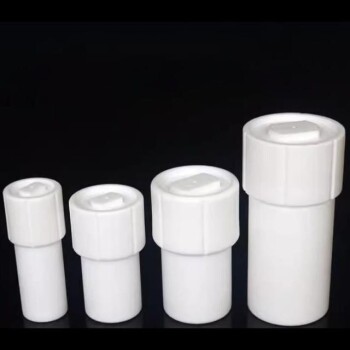
The primary advantage of using a PTFE-lined high-pressure autoclave is its ability to provide exceptional chemical corrosion resistance while maintaining the structural integrity required for high-temperature hydrothermal synthesis. This setup allows for the safe processing of acidic precursors, such as phosphoric or phytic acid, at temperatures up to 210°C, which is essential for the controlled growth and self-assembly of LiFePO4/C dual-microspheres.
A PTFE-lined autoclave combines the chemical inertness of a polymer liner with the mechanical strength of a stainless steel shell. This synergy enables a sealed, high-pressure environment that prevents contamination and facilitates the precise nucleation of nanocrystals under subcritical conditions.
Superior Chemical Resistance and Purity
Protection Against Acidic Corrosion
The synthesis of LiFePO4 often involves phosphoric acid or phytic acid, which creates a highly corrosive environment at elevated temperatures. The polytetrafluoroethylene (PTFE) liner acts as a robust barrier, protecting the stainless steel outer shell from chemical attack.
Prevention of Metal Ion Leaching
Without a liner, the reaction solution would directly contact the metal walls of the reactor, leading to the leaching of metal impurities. These impurities can disrupt the axial coordination environment of the crystals and degrade the electrochemical performance of the final LiFePO4/C material.
Maintaining High Material Purity
By ensuring a chemically inert reaction space, the PTFE liner guarantees that the purity of the precursors is maintained throughout the hydrothermal process. This is critical for achieving the specific morphology and dual-microsphere structure required for high-performance battery electrodes.
Structural Integrity Under Extreme Conditions
Support for Autogenous Pressure
The hydrothermal synthesis of LiFePO4 requires temperatures often exceeding 200°C, which generates significant autogenous pressure. The stainless steel outer shell provides the necessary mechanical strength to contain these pressures safely while the PTFE liner handles the chemistry.
Facilitating Subcritical Reactions
Under these high-pressure, high-temperature conditions, the solvent reaches a subcritical state. This state is necessary to overcome solubility limits and induce the disproportionation and complexation reactions required for crystal formation.
Controlled Nucleation and Self-Assembly
The sealed environment allows for a stable, steady-state reaction that promotes the controlled nucleation of LiFePO4. This stability is what enables the crystals to self-assemble into the desired dual-microsphere morphology, ensuring structural consistency across the batch.
Understanding the Trade-offs
Temperature Limitations
While PTFE is highly resistant to chemicals, it has a functional thermal limit, typically around 250°C. Exceeding these temperatures can cause the liner to soften or deform, potentially compromising the seal or leading to reactor failure.
Heat Transfer Efficiency
The PTFE liner acts as an insulator, which can result in slower heating and cooling rates compared to direct-contact metal reactors. This lag must be accounted for in the experimental protocol to ensure the reaction duration is accurately timed.
Pressure Safety and Maintenance
Because the autoclave is a pressurized vessel, it requires rigorous safety monitoring and regular inspection of the PTFE seal. Any degradation in the liner can allow corrosive liquids to reach the steel shell, causing "hidden" corrosion that weakens the structural integrity of the autoclave over time.
How to Optimize Your Synthesis Process
Implementing Effective Reactor Strategies
Choosing the right autoclave configuration depends on your specific synthesis requirements and safety standards.
- If your primary focus is material purity: Prioritize a high-quality PTFE liner to prevent any metal ion contamination from the reactor walls.
- If your primary focus is precise crystal morphology: Ensure the autoclave is capable of maintaining a constant temperature of at least 210°C to facilitate uniform self-assembly.
- If your primary focus is safety and longevity: Regularly inspect the PTFE liner for thinning or discoloration and never exceed the manufacturer's maximum pressure rating.
Using a PTFE-lined autoclave is the definitive standard for synthesizing high-performance LiFePO4/C dual-microspheres because it balances extreme chemical protection with the physical robustness needed for hydrothermal growth.
Summary Table:
| Key Feature | Benefit | Application in LiFePO4/C Synthesis |
|---|---|---|
| PTFE Liner | Extreme Corrosion Resistance | Protects reactor from acidic phosphoric or phytic acid precursors. |
| Steel Shell | High Mechanical Strength | Safely contains autogenous pressure at temperatures up to 210°C+. |
| Inert Surface | Prevents Metal Leaching | Ensures material purity by preventing contamination from the outer shell. |
| Sealed Design | Controlled Nucleation | Facilitates the precise self-assembly of dual-microsphere morphologies. |
Elevate Your Battery Material Synthesis with KINTEK
Precision is paramount in hydrothermal synthesis. KINTEK specializes in high-performance high-temperature high-pressure reactors and autoclaves designed specifically for demanding research. Our premium PTFE products and lined systems offer the ultimate protection against corrosive precursors, ensuring your LiFePO4/C dual-microspheres maintain the highest purity and structural integrity.
Beyond reactors, KINTEK provides a complete ecosystem for battery research tools and consumables, including crushing systems, hydraulic presses, and specialized ceramics.
Optimize your lab’s efficiency and material performance today. Contact our experts to find the perfect hydrothermal solution tailored to your research needs.
References
- Yiqiong Peng, Yongping Zhang. LiFePO<sub>4</sub>/C twin microspheres as cathode materials with enhanced electrochemical performance. DOI: 10.1039/d3ra00183k
This article is also based on technical information from Kintek Solution Knowledge Base .
Related Products
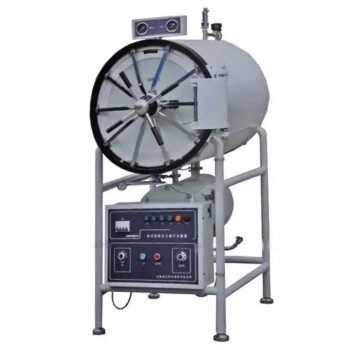
- Laboratory High Pressure Horizontal Autoclave Steam Sterilizer for Lab Use
- Stainless High Pressure Autoclave Reactor Laboratory Pressure Reactor
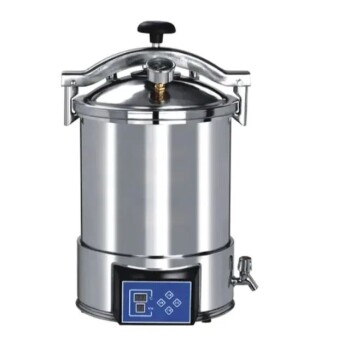
- Portable High Pressure Laboratory Autoclave Steam Sterilizer for Lab Use
- Desktop Fast High Pressure Laboratory Autoclave Sterilizer 16L 24L for Lab Use
- Laboratory High Pressure Steam Sterilizer Vertical Autoclave for Lab Department
People Also Ask
- Why is a laboratory high-pressure autoclave sterilizer necessary? Ensure Accuracy in Antibacterial Research
- What is the role of a laboratory high-pressure autoclave in the conversion of furfural to piperidine? Optimize Yields
- What is the primary function of a laboratory autoclave in the pre-treatment of medical plastic waste for liquid fuel?
- What is an autoclave laboratory equipment? The Ultimate Guide to Steam Sterilization
- What is a laboratory autoclave? A Guide to Sterilization with Pressurized Steam