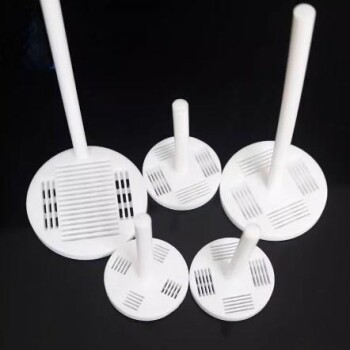
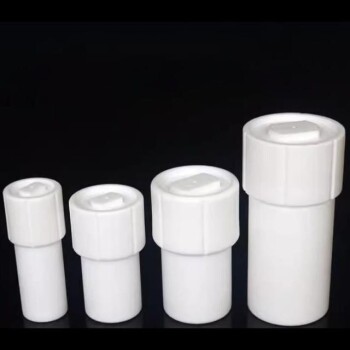
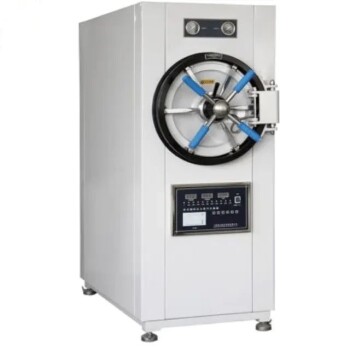
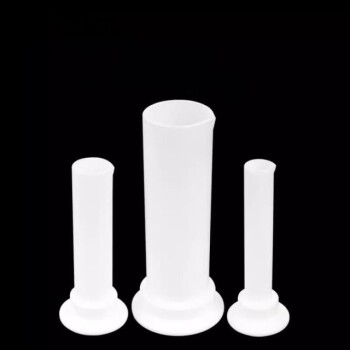
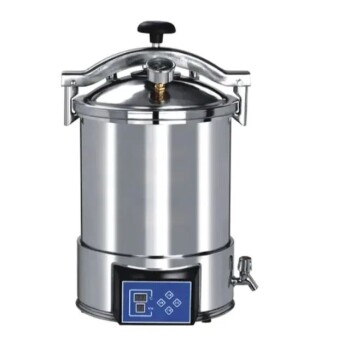
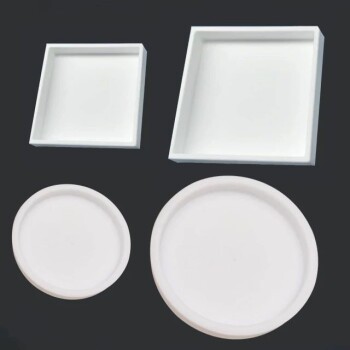
High-purity PTFE (Polytetrafluoroethylene) beakers and Teflon-lined autoclaves distinguish themselves in chemical processing through their exceptional chemical inertness and superior non-stick surface properties. These characteristics prevent solvents from corroding container walls and introducing contaminants, while simultaneously facilitating the handling of difficult, viscous materials.
Core Takeaway The definitive value of PTFE hardware lies in maintaining absolute sample integrity during synthesis. By eliminating the risk of container corrosion and surface adhesion, these vessels ensure the high purity and biocompatibility required for sensitive applications, such as biomedical nanocomposites.
Preserving Chemical Integrity
Unmatched Chemical Inertness
The primary reason for selecting high-purity PTFE is its resistance to reaction. Unlike standard glassware or metal, PTFE provides exceptional chemical inertness.
This prevents aggressive solvents or reactants from corroding the container walls. By maintaining a neutral environment, you ensure that the vessel itself does not become a variable in your chemical reaction.
Eliminating Trace Impurities
For high-performance applications, even microscopic contamination can be catastrophic. Standard containers may leach ions or particles when exposed to harsh chemicals.
PTFE vessels prevent the introduction of these trace impurities. This is critical when preparing high-performance polymer films, where purity dictates the physical and optical quality of the final product.
Operational Efficiency and Yield
The Non-Stick Advantage
Polymer solutions are frequently viscous and difficult to transfer. In standard vessels, a significant amount of material can be lost due to adhesion to the walls.
PTFE’s famous non-stick properties solve this issue. They facilitate the easy recovery of viscous polymer solutions, maximizing yield and reducing waste during the transfer process.
Simplified Maintenance
Because materials do not adhere strongly to the surface, PTFE containers are significantly easier to clean than glass or steel counterparts. This reduces the time between experiments and lowers the risk of cross-contamination between batches.
Criticality in Biomedical Applications
Meeting Biocompatibility Standards
In fields requiring strict biological safety, chemical purity is non-negotiable. The primary reference highlights the preparation of PMMA/PEG nanocomposites as a key use case.
Ensuring Safety
By preventing leaching and contamination, PTFE ensures the biocompatibility of the final product. This makes it the standard choice for synthesizing materials intended for use in biomedical contexts.
Understanding the Trade-offs
Physical Durability Considerations
While chemically robust, PTFE is physically softer than glass or stainless steel. Users must be careful to avoid scratching the interior surface with sharp metal stirring rods, which can create crevices that trap bacteria or contaminants.
Heat Transfer Dynamics
PTFE has lower thermal conductivity compared to metals. When using Teflon-lined autoclaves, researchers must account for potentially slower heating and cooling rates compared to direct metal contact, ensuring reaction protocols are adjusted accordingly.
Making the Right Choice for Your Goal
If your primary focus is High-Yield Recovery: Choose PTFE vessels when working with expensive or viscous polymer solutions to ensure you can recover the maximum amount of material without it sticking to the walls.
If your primary focus is Ultra-High Purity: Mandate the use of high-purity PTFE or Teflon-lined autoclaves to prevent solvent corrosion and eliminate the risk of trace impurities compromising your final film or composite.
If your primary focus is Biomedical Safety: Utilize PTFE hardware to guarantee the chemical inertness necessary to meet strict biocompatibility standards for medical-grade nanocomposites.
Select the vessel that protects not just your reactants, but the integrity of your data.
Summary Table:
| Feature | Advantage for Chemical Reactions | Benefit to Researchers |
|---|---|---|
| Chemical Inertness | Prevents corrosion and leaching | Maintains sample purity and integrity |
| Non-stick Surface | Eliminates material adhesion | High-yield recovery of viscous polymers |
| Biocompatibility | No toxic leaching or trace impurities | Essential for biomedical applications |
| Ease of Cleaning | Resists residue buildup | Reduces cross-contamination risks |
Elevate Your Chemical Synthesis with KINTEK Precision
Ensure absolute sample integrity and high-yield results with KINTEK’s premium laboratory solutions. Whether you are synthesizing biomedical nanocomposites or high-performance polymers, our high-temperature high-pressure reactors, Teflon-lined autoclaves, and high-purity PTFE consumables provide the chemical inertness and non-stick performance your research demands.
Why choose KINTEK?
- Comprehensive Range: From muffle and vacuum furnaces to advanced CVD and induction melting systems.
- Precision Engineering: High-durability crushing, milling, and hydraulic press systems (pellet, hot, isostatic) for material preparation.
- End-to-End Support: Specialized cooling solutions (ULT freezers, freeze dryers) and essential ceramics and crucibles.
Don't let contamination or material loss compromise your data. Contact KINTEK today to find the perfect equipment for your laboratory!
References
- Ghaith Ahmed, Ahmed Hashim. Development of nanometal nitride doped PMMA blend for biomedicine and industrial fields: Recent review. DOI: 10.30574/wjarr.2023.17.3.0405
This article is also based on technical information from Kintek Solution Knowledge Base .
Related Products
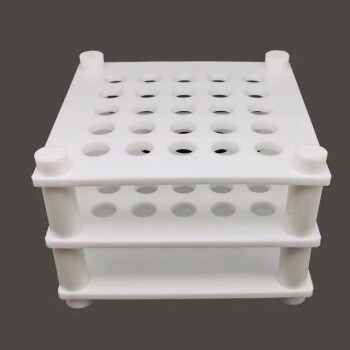
- Custom PTFE Teflon Parts Manufacturer for Centrifuge Tube Racks
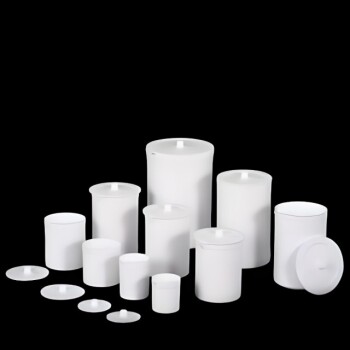
- Custom PTFE Teflon Parts Manufacturer PTFE Beaker and Lids
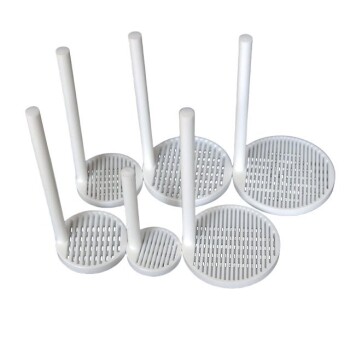
- Custom PTFE Teflon Parts Manufacturer for Cleaning Racks
- Custom PTFE Teflon Parts Manufacturer Corrosion Resistant Cleaning Rack Flower Basket
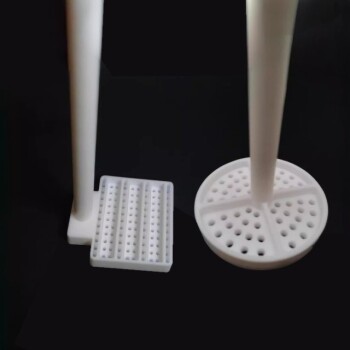
- Custom Machined and Molded PTFE Teflon Parts Manufacturer for Laboratory ITO FTO Conductive Glass Cleaning Flower Basket
People Also Ask
- Why is slender PTFE tubing necessary for flow control in multi-channel catalyst aging? Ensure Equal Gas Distribution
- Why are PTFE containers required for PCT leaching tests? Ensure Chemical Inertness and Analytical Precision
- Why are PTFE containers necessary for selective HF etching of MAX phases? Ensure Safe & Pure MXene Synthesis
- What role do PTFE containers play in trace metal detection? Ensure Analytical Precision in Photocatalysis Studies
- Why is a PTFE container required for acid leaching of silicon nanosheets? Ensure High Purity and Safety