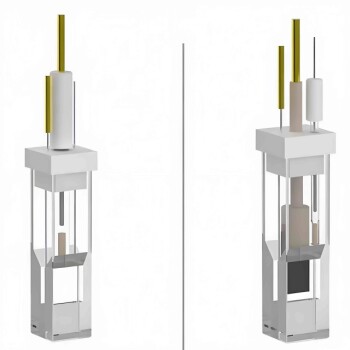
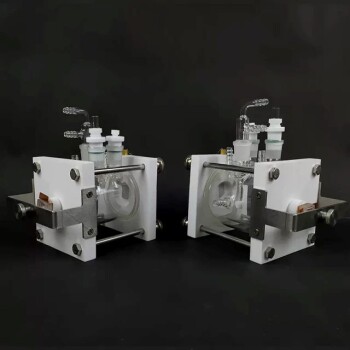
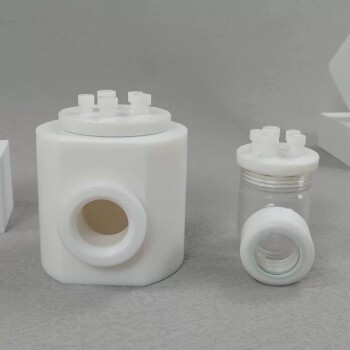
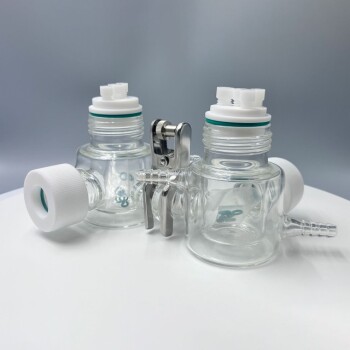
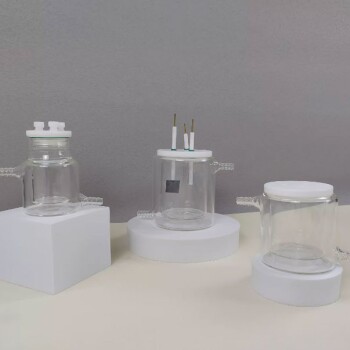
The use of a three-electrode quartz electrolytic cell is the gold standard for evaluating ZnO@RuO2 catalysts because it enables simultaneous optical transparency and high-precision electrochemical control. This specific setup ensures that simulated solar light reaches the catalyst surface without energy loss while an independent reference electrode maintains an accurate, drift-free potential at the working electrode interface.
This configuration bridges the gap between photocatalysis and electrocatalysis, allowing researchers to isolate the "photo-assisted" boost in catalytic activity by eliminating measurement errors caused by electrode polarization and light attenuation.
Maximizing Optical Efficiency and Light Delivery
Superior UV-Visible Light Transmittance
Quartz is selected for its ability to transmit the full solar spectrum, particularly in the ultraviolet-visible (UV-Vis) region. This allows external simulated light to reach the ZnO@RuO2 catalyst surface without the energy loss associated with standard glass.
Accurate Measurement of Photo-excited Carriers
By delivering lossless illumination, the cell enables the accurate measurement of transient photocurrent responses. This data is critical for understanding how effectively the ZnO@RuO2 heterostructure separates photo-excited charges and reduces recombination rates.
Simulating Real-World Photovoltaic Conditions
The quartz window allows for high-efficiency transmission that mimics real-world solar applications. This ensures that the photo-assisted electrocatalytic performance measured in the lab is representative of the material's potential in practical solar-to-chemical energy conversion.
Precision Control of Electrochemical Interfaces
Decoupling Potential from Current
The three-electrode system—consisting of the ZnO@RuO2 working electrode, a platinum counter electrode, and a reference electrode (such as SCE or Ag/AgCl)—is designed for measurement accuracy. This configuration ensures that the potential at the working electrode is not affected by the current flowing through the counter electrode.
Eliminating the IR Drop
By using an independent reference electrode, the system mitigates the potential drop (IR drop) caused by electrolyte resistance. This provides the most reliable data regarding the electrochemical interface reactions and the intrinsic efficiency of the catalyst.
Precise Monitoring of Charge Transfer
Connected to a high-precision electrochemical workstation, this cell allows for Electrochemical Impedance Spectroscopy (EIS). This technique is vital for determining the interfacial impedance and confirming the efficiency of charge transfer between the ZnO and RuO2 components.
Understanding the Trade-offs
Material Fragility and Maintenance
While quartz offers superior optical properties, it is significantly more fragile and expensive than standard laboratory glass. The cell requires meticulous handling and specialized cleaning protocols to ensure the window remains free of deposits that could block light.
Reference Electrode Compatibility
The choice of reference electrode must be carefully matched to the electrolyte to prevent potential drift. Inconsistent reference potentials can lead to incorrect interpretations of the Oxygen Evolution Reaction (OER) onset or the pseudocapacitive characteristics of the RuO2 layer.
Geometry and Light Path Constraints
The physical arrangement of the three electrodes within a small quartz cell can sometimes create shadowing effects. If the counter or reference electrodes are poorly positioned, they may partially block the light path to the ZnO@RuO2 surface, leading to underestimated photocurrents.
Optimizing Your Photo-Electrocatalytic Research
How to Apply This to Your Project
To get the most accurate data from your ZnO@RuO2 testing, consider your primary research goals:
- If your primary focus is intrinsic catalytic activity: Utilize the three-electrode configuration to eliminate polarization interference and capture the most accurate OER onset potentials.
- If your primary focus is solar energy conversion efficiency: Prioritize the alignment of the quartz window with the light source to ensure uniform, lossless illumination of the catalyst surface.
- If your primary focus is heterostructure charge dynamics: Use the cell in conjunction with EIS and transient photocurrent measurements to quantify how the ZnO@RuO2 interface reduces charge recombination.
This specialized cell setup provides the rigorous environment necessary to validate the performance of advanced bifunctional catalysts in solar-driven electrochemical applications.
Summary Table:
| Feature | Benefit for ZnO@RuO2 Testing | Research Outcome |
|---|---|---|
| Quartz Window | Lossless UV-Vis light transmission | Accurate measurement of photo-excited carriers |
| 3-Electrode Setup | Decouples potential from current flow | Eliminates IR drop and measurement polarization |
| Reference Electrode | Stable, drift-free potential control | Reliable OER onset and redox potential data |
| Optical Path | Direct illumination of catalyst surface | Precise transient photocurrent & EIS analysis |
Elevate Your Photo-Electrocatalytic Research with KINTEK
Maximize the precision of your ZnO@RuO2 characterization with KINTEK’s professional-grade laboratory solutions. We specialize in high-performance electrolytic cells and electrodes specifically designed for optical clarity and electrochemical stability.
Beyond specialized cells, KINTEK offers a comprehensive range of equipment to support your materials science breakthroughs, including:
- High-Temperature Furnaces: Muffle, tube, and vacuum furnaces for precise catalyst synthesis.
- Reactors & Autoclaves: High-pressure systems for advanced chemical processing.
- Battery Research Tools: Specialized consumables and testing equipment.
- Milling & Sieving: Precision systems for uniform catalyst preparation.
Ready to ensure drift-free data and superior optical efficiency in your next experiment? Contact KINTEK today to find the perfect equipment tailored to your research goals!
References
- Katarina Aleksić, Smilja Marković. Enhancement of ZnO@RuO2 bifunctional photo-electro catalytic activity toward water splitting. DOI: 10.3389/fchem.2023.1173910
This article is also based on technical information from Kintek Solution Knowledge Base .
Related Products
- Quartz Electrolytic Electrochemical Cell for Electrochemical Experiments
- H Type Electrolytic Cell Triple Electrochemical Cell
- PTFE Electrolytic Cell Electrochemical Cell Corrosion-Resistant Sealed and Non-Sealed
- Electrolytic Electrochemical Cell Gas Diffusion Liquid Flow Reaction Cell
- Electrolytic Electrochemical Cell with Five-Port
People Also Ask
- Why is a quartz electrolytic cell used for acrylic acid wastewater? Ensure Chemical Stability & Data Integrity
- How does the design of an electrochemical electrolytic cell influence the coating uniformity? Optimize Your Catalysts
- What are the key features of quartz that make it suitable for electrolytic cells? Discover the 4 Pillars of Superior Performance
- What is the correct shutdown and disassembly procedure after an experiment? Ensure Safety and Protect Your Equipment
- How do the electrochemical cell and three-electrode testing system collaborate? Optimize Zinc Anode Deposition Control