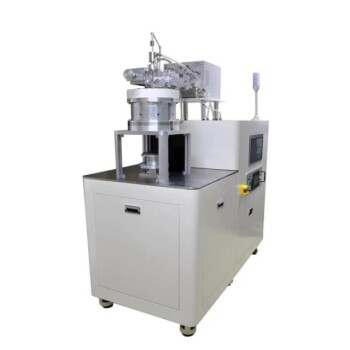
The core function of a high-pressure magnetic drive reactor is to serve as a precision simulation chamber that replicates the severe environmental conditions found in deep underground wells. It achieves this by maintaining exact high-temperature (typically 80 °C) and high-pressure CO2 (up to 2.5 MPa) parameters while utilizing a magnetic coupling system to ensure leak-free, dynamic mixing of corrosive media.
Core Takeaway The device acts as a "geological stress simulator," using a hermetically sealed magnetic drive to safely maintain volatile, high-pressure CO2 environments. This allows engineers to realistically evaluate how protective coatings on underground strings will degrade under dynamic contact with corrosive fluids without the risk of seal failure.
Replicating Deep-Well Conditions
To understand the reactor's value, you must look beyond simple containment. Its primary purpose is to mimic the specific thermodynamic and chemical stresses that lead to material failure in underground infrastructure.
Precise Environmental Control
The reactor is engineered to hold a stable environment at elevated parameters, specifically targeting 80 °C temperatures and CO2 pressures up to 2.5 MPa.
This capability allows for the accelerated testing of materials against carbon dioxide corrosion, a primary degradation mechanism in underground strings.
Simulating Chemical Aggression
Merely applying pressure is insufficient; the chemical environment must be accurate. The reactor facilitates the use of standard corrosive media, such as NACE solutions.
By controlling the atmosphere and temperature, the reactor ensures these solutions maintain their specific corrosive potential, realistically simulating the chemical attack that coatings face in the field.
The Critical Role of the Magnetic Drive
The defining technical feature of this apparatus is the magnetic coupling drive. This is not just a method of rotation; it is a safety and accuracy feature essential for high-pressure testing.
Ensuring a Leak-Free Enclosure
Standard mechanical seals can fail or leak under high pressure. The magnetic drive allows for fully enclosed, leak-free rotation.
It transmits torque through the vessel wall using magnetic force, eliminating the need for a physical shaft to penetrate the pressure boundary. This guarantees that the high-pressure CO2 atmosphere remains contained and stable throughout the test.
Dynamic Media Contact
Static immersion often fails to represent reality. The magnetic drive powers a stirring mechanism that keeps the corrosive media in constant motion.
This ensures full, dynamic contact between the NACE solution and the coating samples. It simulates the flow and physical geological stress experienced by underground strings, providing a more accurate prediction of the coating's service life.
Understanding the Trade-offs
While these reactors are powerful tools for simulation, it is important to recognize the nuances of their operation compared to broader industrial autoclaves.
Specificity vs. Versatility
The configuration described is optimized for specific underground conditions (CO2, 80 °C, 2.5 MPa). While some high-pressure autoclaves can reach extreme parameters (200-300 °C and 90 bar) for applications like refinery simulation, you must verify the reactor's specific rating matches your target environment.
Complexity of Dynamic Testing
Introducing dynamic stirring via magnetic drive adds mechanical variables to the test.
While this provides better data than static testing, it requires precise calibration to ensure the shear stress applied by the fluid matches the intended geological model, rather than creating artificially high turbulence.
Making the Right Choice for Your Goal
The utility of this reactor depends on the specific failure mechanism you are trying to predict.
- If your primary focus is Chemical Resistance: Ensure the reactor maintains the specific partial pressure of CO2 required to keep the NACE solution at the correct pH level for the duration of the test.
- If your primary focus is Physical Durability: Prioritize the magnetic drive's capability to maintain consistent stirring, ensuring the coating is subjected to realistic fluid dynamics and geological stress simulation.
Ultimately, the value of this reactor lies in its ability to decouple the mechanical drive from the pressure vessel, allowing you to test volatile, high-pressure deep-well scenarios without compromising containment safety.
Summary Table:
| Feature | Specification/Benefit | Purpose in CO2 Simulation |
|---|---|---|
| Temperature Control | Up to 80 °C (Stabilized) | Replicates deep-well thermodynamic conditions |
| Pressure Capacity | Up to 2.5 MPa CO2 | Mimics geological stress and CO2 partial pressures |
| Magnetic Drive | Leak-free magnetic coupling | Ensures total containment of volatile CO2 atmospheres |
| Mixing Mechanism | Dynamic stirring/rotation | Simulates fluid flow and shear stress on coatings |
| Media Compatibility | NACE solutions/Corrosive fluids | Evaluates material resistance to chemical aggression |
Enhance Your Material Testing with KINTEK Precision Reactors
Ensure the integrity of your underground strings by simulating the harshest geological environments with confidence. KINTEK specializes in advanced laboratory equipment, offering high-performance high-temperature high-pressure reactors and autoclaves designed specifically for CO2 corrosion studies and material degradation analysis.
From magnetic drive systems that guarantee leak-free operation to our comprehensive range of crushing and milling systems, PTFE products, and furnace solutions, we provide the tools necessary for precise research. Let our experts help you select the ideal configuration for your laboratory's needs.
Contact KINTEK Today to Optimize Your Simulation Workflow
References
- Shanshan Si, Bingying Wang. The Corrosion Performance of Hybrid Polyurea Coatings Modified with TiO2 Nanoparticles in a CO2 Environment. DOI: 10.3390/coatings14121562
This article is also based on technical information from Kintek Solution Knowledge Base .
Related Products
- Customizable High Pressure Reactors for Advanced Scientific and Industrial Applications
- Customizable Laboratory High Temperature High Pressure Reactors for Diverse Scientific Applications
- Stainless High Pressure Autoclave Reactor Laboratory Pressure Reactor
- Visual High-Pressure Reactor for In-Situ Observation
- Mini SS High Pressure Autoclave Reactor for Laboratory Use
People Also Ask
- What is the function of high-pressure reactors in the synthesis of MFI-type zeolites? Master Dry Gel Conversion.
- Graphene Fiber Synthesis: Key High-Pressure Reactor Processing Conditions Explained
- What reactor is used for high pressure reactions? Select the Right Autoclave for Your Lab
- What is the primary function of a high-pressure reactor in NiMoO4 preparation? Optimize Hydrothermal Catalyst Synthesis
- What are the hazards of high pressure reactors? A Guide to Managing Explosive Risks