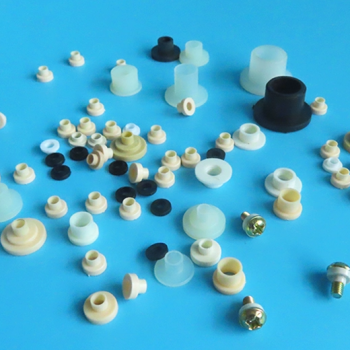
Customized silicone gaskets serve as the structural and functional foundation of an electrochemical flow cell assembly. Their primary utility is twofold: creating a hermetic seal to prevent the leakage of organic solvents and acting as a precise spacer that strictly defines the geometry and volume of the internal flow channel. By controlling these physical parameters, the gasket ensures the conditions necessary for accurate electrochemical measurements.
While the sealing capability protects the assembly from leakage, the gasket’s true technical value lies in its ability to dictate flow channel geometry. This structural precision ensures a uniform flow field, which is the prerequisite for obtaining reproducible kinetic data.
The Dual Mechanics of the Gasket
Preventing Chemical Leakage
The most immediate function of the silicone gasket is containment.
It must provide a robust seal to prevent the escape of organic solvents used within the flow cell. Failure in this area compromises the safety of the user and the integrity of the chemical solution.
Defining Channel Geometry
Beyond sealing, the gasket acts as a design element.
The specific thickness of the silicone material sets the height of the flow channel. Simultaneously, the design of the aperture (the cutout) establishes the width and shape of the path the fluid travels.
Controlling Internal Volume
Because the gasket defines the boundaries of the channel, it strictly dictates the internal volume of the cell.
Any variation in the gasket's dimensions directly alters the volume of electrolyte interacting with the electrodes.
The Consequence: Data Integrity
Creating a Uniform Flow Field
The precise geometry defined by the gasket is not arbitrary; it is engineered to control fluid dynamics.
A correctly designed gasket ensures that the flow field is uniform across the entire surface of the working electrode. Without this uniformity, the electrochemical reactions may vary across the electrode surface, leading to skewed results.
Ensuring Reproducible Kinetics
The ultimate goal of the gasket's design is data reliability.
By maintaining a consistent flow field and strictly defined volume, the gasket creates the stable physical conditions required to capture reproducible dissolution kinetics data.
Critical Trade-offs to Consider
Precision Sensitivity
Because the gasket defines the flow channel, the quality of your data is bound to the manufacturing precision of the gasket.
Even minor deviations in gasket thickness or aperture cut can alter the flow field. If the gasket compresses unevenly, it will disrupt the uniformity of the flow, rendering kinetic data inconsistent.
Material Limitations
While silicone is effective for sealing, it must be compatible with the specific organic solvents used in your experiment.
The reference emphasizes preventing organic solvent leakage, implying that the specific grade of silicone must be chemically resistant to the solvent in play to maintain the seal over time.
Ensuring Experimental Success
To maximize the performance of your electrochemical flow cell, consider your primary experimental objectives:
- If your primary focus is Safety and Containment: Ensure the silicone material is chemically compatible with your specific organic solvents to prevent degradation and leakage.
- If your primary focus is Data Reproducibility: Prioritize the precision of the gasket’s thickness and aperture cut, as these directly control the uniformity of the flow field and the validity of your kinetics data.
The gasket is not merely a seal, but a critical component that engineers the physical environment required for precise electrochemical analysis.
Summary Table:
| Function | Description | Impact on Performance |
|---|---|---|
| Hermetic Sealing | Prevents leakage of organic solvents | Ensures safety and chemical integrity |
| Geometry Definition | Sets channel height and width via thickness/aperture | Creates a uniform flow field across electrodes |
| Volume Control | Strictly dictates internal electrolyte volume | Ensures reproducible dissolution kinetics |
| Structural Support | Acts as a precise spacer between cell components | Maintains stable physical conditions for data |
Elevate Your Electrochemical Research with KINTEK Precision
Achieving reproducible kinetic data requires more than just high-quality electrodes—it demands the structural precision of expertly engineered components. KINTEK specializes in providing high-performance laboratory equipment, from electrolytic cells and electrodes to specialized high-temperature high-pressure reactors and battery research tools.
Whether you need customized silicone gaskets with exacting tolerances or comprehensive cooling solutions like ULT freezers and freeze dryers, KINTEK is your partner in laboratory excellence. Our products are designed to meet the rigorous demands of modern material science and chemical engineering.
Ready to optimize your flow cell assembly? Contact KINTEK today to discuss how our customized solutions can enhance your experimental accuracy and data integrity.
References
- Primož Jovanovič, Nejc Hodnik. In situ electrochemical dissolution of platinum and gold in organic-based solvent. DOI: 10.1038/s41529-018-0031-8
This article is also based on technical information from Kintek Solution Knowledge Base .
Related Products
- Electrolytic Electrochemical Cell Gas Diffusion Liquid Flow Reaction Cell
- Button Battery Case Gasket for Battery Lab Applications
- Customizable CO2 Reduction Flow Cell for NRR ORR and CO2RR Research
- PTFE Electrolytic Cell Electrochemical Cell Corrosion-Resistant Sealed and Non-Sealed
- Electrode Fixture for Electrochemical Experiments
People Also Ask
- How does the design of an electrochemical electrolytic cell influence the coating uniformity? Optimize Your Catalysts
- What is the correct shutdown and disassembly procedure after an experiment? Ensure Safety and Protect Your Equipment
- Why are electrolytic cells essential in titanium production? Powering Circular Efficiency and Cost Savings
- What is galvanic cell or electrolytic cell? Unlock the Secrets of Electrochemical Power
- What are the three essential components that comprise an electrolytic cell? Key Elements of Chemical Synthesis