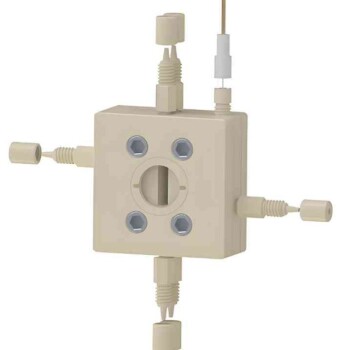
Continuous flow electrolyzers offer superior efficiency and safety compared to traditional batch cells, primarily due to their micro-spaced flow channel design. By significantly reducing ionic ohmic resistance and improving mass transfer, these systems enable higher current densities at lower operating voltages (such as 1.5 V) while effectively mitigating the safety risks associated with oxygen evolution.
The shift from batch to continuous flow represents a critical optimization of electrochemical kinetics. By structurally minimizing resistance, these systems decouple high output from high energy consumption, offering a safer and more scalable path for hydrogen production.
Structural Innovations
Micro-Spaced Flow Channels
The defining structural advantage of continuous flow electrolyzers is the implementation of micro-spaced flow channel designs. Unlike the larger gaps found in traditional batch vessels, these channels keep electrodes in close proximity.
Reduced Ionic Resistance
This compact architecture drastically lowers ionic ohmic resistance. By minimizing the distance ions must travel between electrodes, the energy lost to resistance is significantly curtailed.
Enhanced Mass Transfer
The continuous movement of fluid ensures that reactants are constantly replenished at the electrode surface. This improves mass transfer, preventing the depletion zones that often limit reaction rates in static batch cells.
Performance Gains
Higher Efficiency at Lower Voltage
Due to reduced resistance, continuous flow systems can maintain high performance at lower energy inputs. They are capable of operating effectively at voltages as low as 1.5 V.
Increased Current Density
These systems support much higher current densities than batch alternatives. This means a smaller physical footprint can produce a larger volume of hydrogen, improving the overall space-time yield.
Superior Thermal Management
Continuous flow designs facilitate the integration of heat recovery systems. The flowing electrolyte acts as a coolant, preventing hotspots and allowing for more stable thermal regulation during intense operation.
Safety and Reliability
Mitigating Oxygen Hazards
A critical performance advantage is the suppression of safety hazards linked to oxygen evolution reactions. The flow design allows for better management of gas byproducts, reducing the risk of explosive mixtures forming within the cell.
Reproducibility
(Based on supplementary context) Continuous flow reactors offer superior reproducibility. Because the reaction conditions are steady-state rather than changing over time (as in a batch), the output quality and purity remain consistent.
Managing Blockages
(Based on supplementary context) The fluid dynamics in these systems help manage salt deposition and blockage issues more effectively than static batch reactors, reducing downtime for maintenance.
Understanding the Trade-offs
System Complexity
While the core cell is efficient, the surrounding infrastructure is more complex. Continuous flow requires precise pumps, mixers, and flow controllers that traditional batch tanks do not.
Deposition Risks
While flow generally helps prevent blockages, the micro-spaced nature of the channels means that any particulate matter or severe scaling that does occur can impact performance more quickly than in a large, open batch tank.
Making the Right Choice for Your Goal
When evaluating electrolyzer technology for your specific requirements, consider the following:
- If your primary focus is energy efficiency: Prioritize continuous flow systems for their ability to deliver high current densities at low voltages (1.5 V), which directly lowers operational electricity costs.
- If your primary focus is safety and stability: Leverage the flow design to mitigate oxygen evolution risks and ensure consistent thermal management.
- If your primary focus is industrial scalability: Value the continuous nature of the system for its high reproducibility and ease of integrating heat recovery, which are essential for large-scale operations.
Continuous flow technology transforms hydrogen production from a static chemical reaction into a streamlined, high-efficiency industrial process.
Summary Table:
| Feature | Traditional Batch Electrolyzers | Continuous Flow Electrolyzers |
|---|---|---|
| Channel Design | Large, open gaps | Micro-spaced flow channels |
| Ionic Resistance | High (energy losses) | Significantly reduced |
| Operating Voltage | Typically higher | Efficient at low voltages (as low as 1.5V) |
| Current Density | Lower | Much higher (compact footprint) |
| Mass Transfer | Limited by static depletion | Enhanced by constant reactant replenishment |
| Safety Management | Risk of gas byproduct buildup | Superior management of oxygen evolution |
| Thermal Regulation | Potential for hotspots | Integrated cooling via electrolyte flow |
Maximize Your Electrochemical Precision with KINTEK
Elevate your laboratory's hydrogen production and research capabilities with KINTEK’s advanced electrochemical solutions. Whether you are transitioning to high-efficiency continuous flow electrolyzers or require high-performance electrolytic cells and electrodes, our equipment is engineered for superior safety, reproducibility, and energy efficiency.
From high-temperature high-pressure reactors to specialized battery research tools and PTFE consumables, KINTEK provides the comprehensive infrastructure needed to optimize your chemical kinetics and industrial scalability.
Ready to optimize your lab's workflow? Contact our experts today to find the perfect configuration for your research goals.
References
- Se‐Jun Yim, Dong‐Pyo Kim. Modular Flow Reactors for Valorization of Kraft Lignin and Low‐Voltage Hydrogen Production. DOI: 10.1002/advs.202204170
This article is also based on technical information from Kintek Solution Knowledge Base .
Related Products
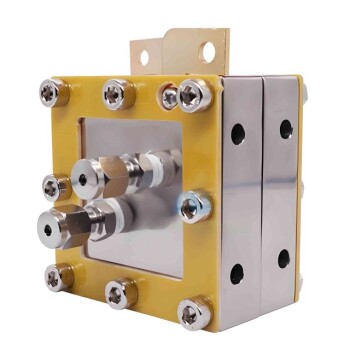
- Electrolytic Electrochemical Cell Gas Diffusion Liquid Flow Reaction Cell
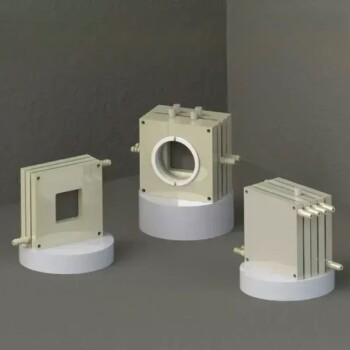
- Customizable PEM Electrolysis Cells for Diverse Research Applications
- Electric Rotary Kiln Continuous Working Small Rotary Furnace Heating Pyrolysis Plant
- PTFE Electrolytic Cell Electrochemical Cell Corrosion-Resistant Sealed and Non-Sealed
- Variable Speed Peristaltic Pump
People Also Ask
- How does the design of an electrochemical electrolytic cell influence the coating uniformity? Optimize Your Catalysts
- What is the correct shutdown and disassembly procedure after an experiment? Ensure Safety and Protect Your Equipment
- Why are electrolytic cells essential in titanium production? Powering Circular Efficiency and Cost Savings
- What is galvanic cell or electrolytic cell? Unlock the Secrets of Electrochemical Power
- What are the three essential components that comprise an electrolytic cell? Key Elements of Chemical Synthesis