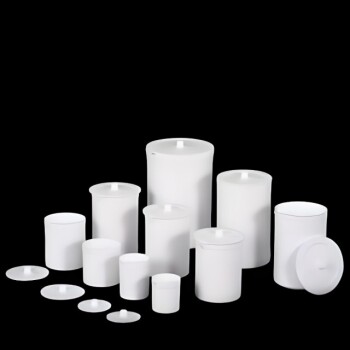
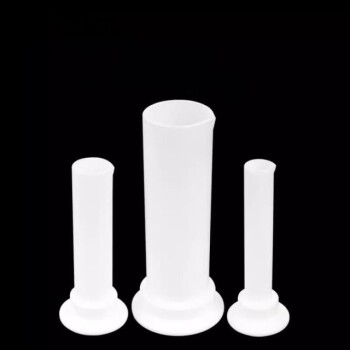
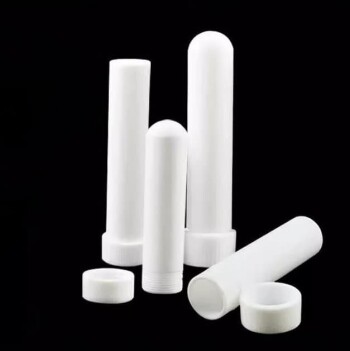
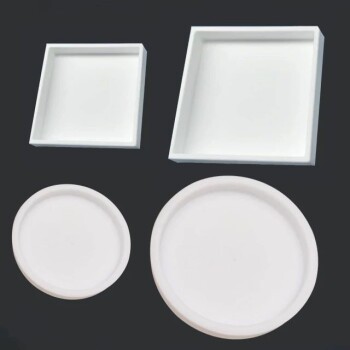
The use of Polytetrafluoroethylene (PTFE) liners in high-pressure reactors creates a critical barrier that ensures both equipment longevity and product purity during sulfuric acid leaching. This configuration utilizes the exceptional chemical inertness of PTFE to withstand high concentrations of sulfuric acid at temperatures up to 433 K. By isolating the corrosive solution from the reactor's metallic walls, these liners prevent structural damage and stop metallic impurities from contaminating the recovered lithium.
The integration of PTFE liners solves the primary conflict in acid leaching: allowing the use of aggressive chemical environments needed for extraction without compromising the structural integrity of the vessel or the purity of the final product.
Enhancing Operational Stability
The leaching of lithium-bearing minerals often requires aggressive conditions that can destroy standard equipment. PTFE liners provide the necessary resistance to facilitate this process safely.
Superior Chemical Resistance
Sulfuric acid is highly corrosive, especially at high concentrations required for effective leaching.
PTFE liners possess exceptional chemical stability, allowing the reactor to contain these aggressive solutions without degrading.
High-Temperature Tolerance
Effective leaching often relies on elevated temperatures to speed up reaction kinetics.
These liners are capable of maintaining their structural and chemical integrity at temperatures as high as 433 K. This allows operators to run high-temperature processes necessary for optimal lithium recovery rates.
Ensuring Long-Term Safety
The safety of high-pressure operations depends on the integrity of the containment vessel.
By preventing the acid from contacting the metallic outer shell, the liner eliminates the risk of acidic erosion. This protection is vital for ensuring the long-term operational safety of the equipment.
Maximizing Lithium Purity
Beyond protecting the hardware, the liner plays a crucial role in the chemistry of the extraction process itself.
Preventing Metallic Contamination
When strong acids contact metal reactor walls, they can leach ions (such as iron or nickel) into the solution.
PTFE liners form an impermeable shield that prevents the release of metallic impurity ions.
Securing Process Quality
The presence of impurities can complicate downstream processing and reduce the grade of the final lithium product.
By maintaining a chemically inert environment, the liner ensures the purity of the lithium recovery process remains uncompromised.
Understanding Operational Limits
While PTFE liners offer significant advantages, it is important to recognize the specific operational boundaries outlined in high-pressure applications.
Adhering to Temperature Constraints
The material benefits of PTFE are maintained specifically within the referenced temperature range.
Operations must be controlled to remain within the proven limit of 433 K. Exceeding this threshold could compromise the liner's stability and the safety benefits it provides.
Making the Right Choice for Your Goal
To maximize the efficiency of your lithium extraction project, consider how these technical advantages align with your specific objectives:
- If your primary focus is Product Purity: The PTFE liner is essential for preventing metallic ion contamination, ensuring the final lithium solution meets high-grade specifications.
- If your primary focus is Equipment Longevity: The liner serves as a sacrificial barrier, protecting the expensive metallic outer shell from acidic erosion and extending the reactor's service life.
Utilizing PTFE liners allows for a safer, cleaner, and more durable leaching process in aggressive acidic environments.
Summary Table:
| Feature | Technical Advantage | Impact on Lithium Leaching |
|---|---|---|
| Chemical Inertness | Resists high-concentration H2SO4 | Prevents reactor vessel erosion |
| Temperature Limit | Stable up to 433 K | Enables faster reaction kinetics |
| Contamination Shield | Non-metallic barrier | Eliminates iron/nickel ion impurities |
| Safety Protection | Isolates acidic solutions | Ensures long-term structural integrity |
Scale Your Lithium Extraction with KINTEK Precision
Maximize your recovery rates and ensure the highest product purity with KINTEK’s high-temperature high-pressure reactors and autoclaves. Specifically designed for aggressive chemical environments, our reactors featuring premium PTFE liners protect your investment from acidic erosion while eliminating metallic contamination.
Whether you are scaling battery research or optimizing industrial leaching, KINTEK provides a comprehensive range of laboratory equipment—from crushing and milling systems to advanced electrolytic cells. Partner with KINTEK today to enhance your lab's efficiency and process safety.
Contact our technical experts now to find the perfect reactor for your needs!
References
- Lin Gao, Min Wang. Recovery of Lithium from Lepidolite by Sulfuric Acid and Separation of Al/Li by Nanofiltration. DOI: 10.3390/min10110981
This article is also based on technical information from Kintek Solution Knowledge Base .
Related Products
- Custom PTFE Teflon Parts Manufacturer for Hydrothermal Synthesis Reactor Polytetrafluoroethylene Carbon Paper and Carbon Cloth Nano-growth
- Stainless High Pressure Autoclave Reactor Laboratory Pressure Reactor
- High Pressure Laboratory Autoclave Reactor for Hydrothermal Synthesis
- Customizable High Pressure Reactors for Advanced Scientific and Industrial Applications
- Custom PTFE Teflon Parts Manufacturer for Microwave Digestion Tank
People Also Ask
- What is the function of a PTFE reactor in MXene etching? Ensure Safe, High-Purity MAX Phase Conversion
- Why is a PTFE reactor required for titanium-based nano-ceramic coating solutions? Ensure Chemical Inertness & Purity
- Why must a Polytetrafluoroethylene (PTFE) reactor be used for Ti3C2TX MXene etching? Ensure Safety and Purity
- Why are PTFE reactors preferred for silver phosphate glass testing? Ensure Purity and Kinetic Accuracy
- What are the advantages of using polytetrafluoroethylene (PTFE) liners in hydrothermal synthesis reactors? High Purity