The technical advantages of using PTFE for the fluorination of layered nickelates center on its role as a stable, solid-state reagent. When heated in a sealed environment between 260 °C and 550 °C, PTFE decomposes to release tetrafluoroethylene vapor and active fluorine atoms. This mechanism provides a safer, highly controllable, and chemically precise method for substituting oxygen with fluorine in complex oxides like (Pr, Nd)4Ni3O8.
Using PTFE as a fluorine source transforms a hazardous gas-phase reaction into a manageable solid-state process. This shift enhances operational safety while providing the thermal precision necessary for delicate chemical substitutions in layered oxide structures.
Enhanced Operational Safety and Handling
Elimination of Hazardous Gas Streams
Traditional fluorination often requires fluorine gas ($F_2$) or hydrogen fluoride (HF), both of which are extremely corrosive, toxic, and difficult to store. Using PTFE as a solid fluorine source removes the need for specialized gas-handling infrastructure and high-pressure cylinders.
Chemical Stability at Ambient Conditions
The strong carbon-fluorine (C-F) bonds in PTFE make it exceptionally stable at room temperature. This allows researchers to weigh and mix the reagent with nickelate precursors without the risk of premature reaction or degradation.
Precision and Controllability of the Reaction
Controlled Decomposition Temperature
PTFE remains inert until it reaches its decomposition threshold, typically between 260 °C and 550 °C. This specific window allows for "gentle" fluorination, where fluorine atoms are released at a rate that matches the diffusion limits of the nickelate lattice.
Ideal for Sealed Environments
In a sealed reaction vessel, the decomposition of PTFE creates a localized atmosphere of tetrafluoroethylene vapor and fluorine atoms. This environment facilitates the uniform substitution of fluorine at oxygen sites within the layered (Pr, Nd)4Ni3O8 structure.
Precise Stoichiometric Control
Because PTFE is a solid with a known fluorine content, it is easier to calculate and deliver precise stoichiometric amounts. This precision is critical for maintaining the structural integrity of layered nickelate oxides during the substitution process.
Maintaining Chemical Purity and Integrity
Exceptional Chemical Inertness
PTFE is almost completely non-reactive with other reagents until it reaches decomposition temperatures. This ensures that the fluorine source does not introduce unwanted metallic impurities or side reactions that could compromise the nickelate sample.
Prevention of Reaction Vessel Contamination
PTFE’s non-stick and non-wetting properties prevent the fluorine source from adhering to or reacting with the internal surfaces of laboratory consumables. This protects the reaction vessel from corrosion and ensures the final product remains high-purity.
Understanding the Trade-offs
Temperature Limitations
The primary drawback is the fixed decomposition range of PTFE; if the nickelate phase requires fluorination at temperatures below 260 °C or significantly above 550 °C, PTFE may be ineffective or lead to secondary phase formation.
Pressure Management
Since PTFE releases vapor (tetrafluoroethylene) upon heating, the reaction must be carefully managed in sealed containers. Excessive pressure build-up can pose a physical risk if the vessel is not rated for the volume of gas produced during decomposition.
Byproduct Management
While the fluorine atoms are incorporated into the nickelate, the carbon-based byproducts of PTFE decomposition must be accounted for. In some systems, residual carbon could potentially impact the electronic properties of the resulting oxide if not properly managed.
How to Apply This to Your Research
Selecting the right fluorination method depends on your specific material requirements and safety constraints.
- If your primary focus is safety and ease of use: Utilize PTFE as a solid-state precursor to avoid the significant infrastructure costs and hazards associated with $F_2$ or HF gas.
- If your primary focus is stoichiometric precision: Leverage the ability to weigh solid PTFE to achieve exact fluorine-to-oxygen substitution ratios in layered nickelate structures.
- If your primary focus is high-purity synthesis: Ensure your reaction temperature stays within the 260 °C to 550 °C range to maximize the efficiency of fluorine release while minimizing vessel contamination.
By leveraging the thermal decomposition of PTFE, researchers can achieve sophisticated chemical substitutions in nickelate oxides with a level of safety and precision unattainable through traditional gas-phase methods.
Summary Table:
| Feature | Advantage of PTFE in Fluorination |
|---|---|
| Physical State | Stable solid-state reagent; replaces hazardous gases ($F_2$, HF) |
| Reaction Window | Controlled decomposition and fluorine release between 260°C – 550°C |
| Stoichiometry | Enables precise calculation of fluorine-to-oxygen substitution ratios |
| Operational Safety | Eliminates the need for specialized gas-handling infrastructure |
| Chemical Purity | Non-reactive at ambient temperatures; prevents vessel contamination |
Elevate Your Materials Research with KINTEK
Precision is paramount when managing delicate chemical substitutions like nickelate fluorination. KINTEK provides the professional-grade tools you need to succeed, from essential PTFE products, ceramics, and crucibles to advanced high-temperature furnaces (muffle, vacuum, and atmosphere) and high-temperature high-pressure reactors.
Whether you are a researcher focused on stoichiometric precision or a lab looking to replace hazardous gas-phase reactions with safer solid-state processes, KINTEK delivers the reliability your work demands. Our extensive portfolio also features hydraulic presses, crushing systems, and cooling solutions tailored for high-performance laboratory environments.
Ready to optimize your synthesis workflow? Contact us today to explore how KINTEK’s specialized equipment and consumables can support your next scientific breakthrough.
References
- Yuki Wako, M. Uehara. Chemical Substitution of Ni-site and O-site in High-<i>T</i><sub>c</sub> Superconductor Candidate (Pr, Nd)<sub>4</sub>Ni<sub>3</sub>O<sub>8</sub>. DOI: 10.7566/jpscp.38.011049
This article is also based on technical information from Kintek Solution Knowledge Base .
Related Products
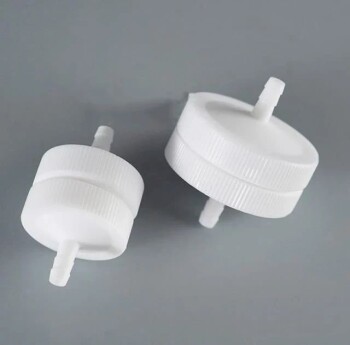
- Custom PTFE Teflon Parts Manufacturer for Sampling Filters
- Custom PTFE Teflon Parts Manufacturer for Hydrothermal Synthesis Reactor Polytetrafluoroethylene Carbon Paper and Carbon Cloth Nano-growth
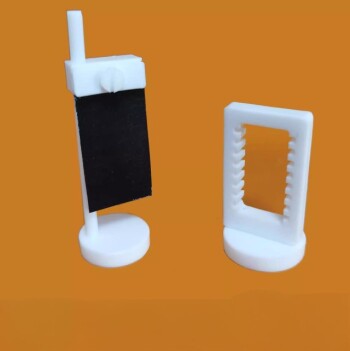
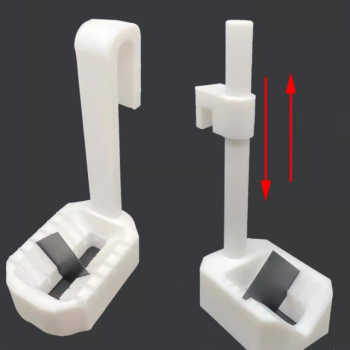
- Custom PTFE Wafer Holders for Lab and Semiconductor Processing
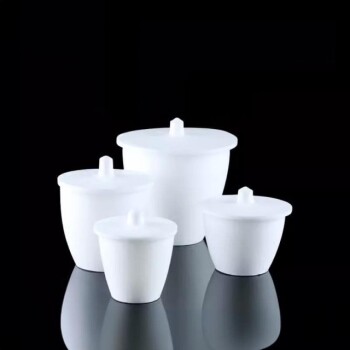
- Custom Machined and Molded PTFE Teflon Parts Manufacturer with PTFE Crucible and Lid
- Customizable PTFE Wafer Carriers for Semiconductor and Lab Applications
People Also Ask
- What are the advantages of using PTFE filters for ionic component analysis? Ensure Accurate Sample Quantification
- Why are PTFE membrane filters selected for rice husk fractionation? Ensuring Purity in Harsh Separation Stages
- Is PTFE corrosion resistant? Discover the Ultimate Chemical Resistance for Your Lab
- What are the specific applications of PTFE in micro-batch slug flow systems? Enhance Your Microfluidic Reaction Purity
- How is PTFE utilized for insulation in Alloy 22 corrosion setups? Ensure Signal Purity & Accuracy