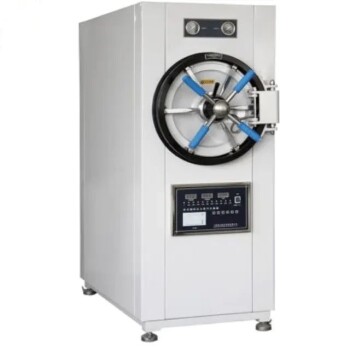
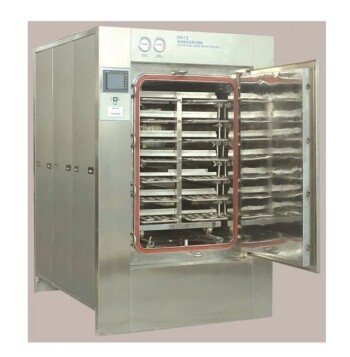
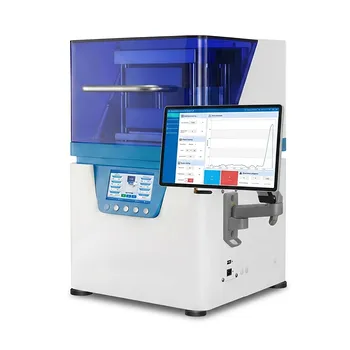
Hydrothermal autoclaves create a specialized, high-energy reaction environment that is essential for the precise chemical transformations required in advanced material synthesis. Specifically, these vessels provide a sealed, high-temperature, and high-pressure system that facilitates the controlled hydrolysis and nucleation of cobalt sources directly onto the MXene substrate.
High-pressure digestion tanks enable a controlled solvothermal environment where high kinetic energy promotes the directional growth of Co-LDH nanosheets, ensuring a stable, non-aggregated architecture and superior interfacial bonding between the active material and the MXene surface.
The Mechanics of the Hydrothermal Environment
Synergy of High Temperature and High Pressure
In a sealed autoclave, solvents can be heated well beyond their boiling points, creating a high-pressure hydrothermal environment. This state increases the kinetic energy of the reactants, allowing for chemical pathways that are otherwise inaccessible at ambient pressure.
Controlled Hydrolysis and Nucleation
The elevated temperatures within the tank drive the controlled hydrolysis of solvent components and precursors, such as cobalt salts and urea. This process ensures that nucleation occurs uniformly across the substrate, leading to the dense, in-situ formation of cobalt-based hydroxides.
Promoting Directional Growth
The high-pressure environment facilitates directional growth, causing cobalt-based hydroxides to organize into specific nanosheet arrays. These arrays extend outward from the $Ti_3C_2T_x$ (MXene) surface, creating a complex, three-dimensional structure that maximizes surface area.
Impact on MXene and Co-LDH Architecture
Preventing Nanosheet Stacking and Aggregation
One of the primary challenges with MXene is the tendency of its nanosheets to restack due to van der Waals forces. The in-situ growth of Co-LDH arrays acts as a physical spacer, effectively preventing the stacking and aggregation of the MXene layers.
Establishing Strong Interfacial Interactions
The high-pressure conditions ensure a strong interfacial interaction between the Co-LDH and the conductive MXene substrate. This bond is critical for creating efficient electron transport paths, which enhances the overall electrochemical performance of the composite material.
Enhancing Porosity and Surface Area
Similar to the recrystallization observed in other hydrothermal processes, the autoclave environment allows for the development of specific mesoporous structures. These structures are essential for high ion exchange and adsorption capabilities in the final catalyst or electrode.
Understanding the Trade-offs and Constraints
Kinetic Control vs. Over-Growth
While high temperatures accelerate reactions, excessive heat or prolonged reaction times can lead to uncontrolled crystal growth. This may result in oversized Co-LDH sheets that block the internal pores of the MXene, reducing the accessible surface area.
System Complexity and Safety
Operating high-pressure digestion tanks requires rigorous adherence to safety protocols and temperature limits. The sealed nature of the system means that pressure buildup is internal and invisible, necessitating high-quality vessel construction and precise monitoring to prevent equipment failure.
Energy Consumption and Scalability
The requirement for sustained high temperatures makes hydrothermal synthesis more energy-intensive than room-temperature methods. For industrial-scale applications, the cost of specialized high-pressure equipment and the energy required for heating must be weighed against the performance gains of the resulting material.
Strategic Implementation for Material Synthesis
Making the Right Choice for Your Goal
To achieve the best results when synthesizing Co-LDH/MXene composites, consider the following recommendations based on your primary objective:
- If your primary focus is maximizing conductivity: Ensure the reaction time is optimized to create a dense but thin Co-LDH layer that maintains a strong, low-resistance interface with the MXene surface.
- If your primary focus is preventing MXene restacking: Prioritize the uniformity of the Co-LDH nucleation to ensure the entire surface of the MXene is "decorated," effectively acting as a permanent spacer.
- If your primary focus is high-surface-area adsorption: Focus on controlling the concentration of precursors and the reaction temperature to foster the growth of mesoporous structures within the arrays.
By mastering the high-pressure hydrothermal environment, researchers can bridge the gap between individual material properties and high-performance composite architectures.
Summary Table:
| Key Condition | Physical Mechanism | Benefit to Co-LDH/MXene Synthesis |
|---|---|---|
| High Temperature | Increases kinetic energy beyond boiling points | Drives controlled hydrolysis and uniform nucleation |
| High Pressure | Creates a subcritical solvothermal state | Facilitates directional growth of nanosheet arrays |
| Sealed Environment | Prevents solvent loss and maintains concentration | Ensures strong interfacial bonding and prevents stacking |
| Kinetic Control | Accelerated chemical pathways | Develops specific mesoporous structures for ion exchange |
Elevate Your Material Research with KINTEK Precision
Achieving the perfect in-situ growth of Co-LDH arrays requires uncompromising control over temperature and pressure. KINTEK specializes in high-performance laboratory solutions, offering a robust range of high-temperature high-pressure reactors and hydrothermal autoclaves designed for the most demanding material synthesis protocols.
Whether you are preventing MXene restacking or optimizing electrochemical performance, our equipment ensures the stability and safety your research deserves. Beyond reactors, explore our comprehensive portfolio of muffle furnaces, vacuum systems, and essential ceramic consumables tailored for advanced material science.
Ready to optimize your hydrothermal synthesis? Contact KINTEK Today to find the perfect equipment for your lab and drive your innovation forward.
References
- Zeyu Yuan, Lili Wang. Effects of Multiple Ion Reactions Based on a CoSe<sub>2</sub>/MXene Cathode in Aluminum‐Ion Batteries. DOI: 10.1002/adma.202211527
This article is also based on technical information from Kintek Solution Knowledge Base .
Related Products
- High Pressure Laboratory Autoclave Reactor for Hydrothermal Synthesis
- Automatic High Temperature Heated Hydraulic Press Machine with Heated Plates for Lab
- Laboratory High Pressure Steam Sterilizer Vertical Autoclave for Lab Department
- Manual High Temperature Heated Hydraulic Press Machine with Heated Plates for Lab
- Automatic Heated Hydraulic Press Machine with Heated Plates for Laboratory Hot Press
People Also Ask
- What role does a high-pressure reactor (autoclave) play in the synthesis of NiCuFe-LDH? Master Hydrothermal Growth
- What Role Does a High-Pressure Reactor or Autoclave Play in HA Catalyst Synthesis? Achieve High Surface Area Materials
- What equipment is required for hydrothermal synthesis of Ga0.25Zn4.67S5.08? Optimize Your Semiconductor Production
- What is the function of a high-pressure reactor in the hydrothermal synthesis of boehmite? Expert Process Insights
- What role does an autoclave play in the synthesis of MnO2 nanofibers? Mastering Hydrothermal Growth