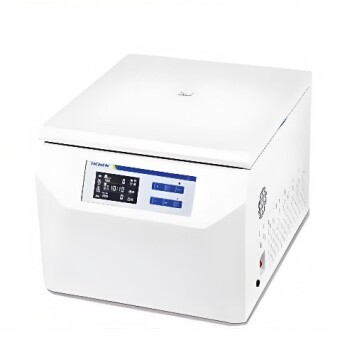
A high-pressure reactor is essential to create a sealed environment capable of sustaining temperatures up to 210°C and oxygen pressures up to 15 bar. These specific physical conditions are required to facilitate oxidative alkaline leaching, which is the primary mechanism for recovering gallium from smartphone pyrolysis residues.
The reactor’s ability to maintain high heat and pressurized oxygen allows the process to overcome the chemical stability of gallium compounds, converting them into soluble forms when atmospheric methods fail.
The Physical Environment for Extraction
To successfully recover gallium, the reactor must simultaneously control temperature, pressure, and containment.
The Role of Thermal Energy
The process requires elevated temperatures, specifically reaching up to 210°C.
This thermal energy is necessary to activate the leaching reaction. Without this specific heat threshold, the chemical breakdown of the residue is inefficient.
The Necessity of High Pressure
Temperature alone is insufficient; the reactor must also provide high oxygen pressure, reaching up to 15 bar.
This pressure forces oxygen into the reaction interface. It ensures that the oxidative environment is potent enough to act upon the solid residues effectively.
A Sealed System
The high-pressure reactor functions as a sealed environment.
This containment is critical to maintain the delicate balance of temperature and pressure. It prevents the loss of reagents and ensures the internal atmosphere remains consistent throughout the leaching duration.
Overcoming Chemical Barriers
The "Deep Need" for using a high-pressure reactor is not just about heating material; it is about breaking down chemically stubborn substances.
Targeting Stable Compounds
Smartphone residues contain gallium arsenide (GaAs), which is a highly stable compound.
Under normal conditions, GaAs resists breaking down. The high-pressure reactor provides the aggressive oxidative environment needed to destabilize this compound.
Creating Soluble Gallates
The ultimate goal of the physical stress is to convert solid gallium compounds into soluble gallates.
Once the gallium is in a soluble gallate form, it can be dissolved into the alkaline solution and separated from the rest of the solid residue.
Accelerating Reaction Kinetics
The most critical function of the reactor is solving the problem of reaction kinetics.
The combination of 210°C heat and 15 bar pressure dramatically increases the speed of the reaction. This ensures the recovery is physically viable within a reasonable timeframe.
Understanding the Process Trade-offs
While high-pressure leaching is effective, it is important to understand why it is strictly necessary compared to simpler methods.
The Atmospheric Limitation
You cannot substitute this process with standard atmospheric leaching.
Under atmospheric pressure, the reaction kinetics for oxidizing gallium arsenide are extremely slow or non-existent. Attempting this recovery without a high-pressure reactor results in a failure to liberate the gallium from the residue.
Making the Right Choice for Your Goal
When designing a recovery process for smartphone residues, the high-pressure reactor is a non-negotiable component for gallium yield.
- If your primary focus is Chemical Conversion: You must utilize the reactor to oxidize stable gallium arsenide (GaAs) into soluble gallates.
- If your primary focus is Process Efficiency: You must apply conditions of 210°C and 15 bar to overcome the kinetic limitations that halt reactions at atmospheric pressure.
The high-pressure reactor is the definitive solution for transforming stable, solid waste into recoverable liquid assets.
Summary Table:
| Feature | Optimal Operating Condition | Role in Gallium Recovery |
|---|---|---|
| Temperature | Up to 210°C | Activates leaching reactions & breaks chemical stability |
| Oxygen Pressure | Up to 15 bar | Forces oxidation at the solid-liquid reaction interface |
| Environment | Sealed Pressure Vessel | Maintains reagent balance and consistent kinetics |
| Target Compound | Gallium Arsenide (GaAs) | Converts stable solids into soluble gallates |
Unlock High-Efficiency Gallium Recovery with KINTEK
To successfully transform chemically stable smartphone waste into valuable liquid assets, precise control over heat and pressure is non-negotiable. KINTEK specializes in advanced high-temperature high-pressure reactors and autoclaves designed to withstand the rigorous demands of oxidative alkaline leaching.
Our comprehensive laboratory solutions include:
- Specialized Reactors: Precision-engineered for high-pressure kinetics and corrosive alkaline environments.
- Material Processing: High-performance crushing, milling, and sieving systems for residue preparation.
- Thermal & Fluid Control: Muffle furnaces, cooling solutions, and homogenizers to support every stage of your research.
Whether you are focusing on gallium recovery or advanced battery research, KINTEK provides the high-quality consumables—including PTFE products, ceramics, and crucibles—needed for success.
Ready to elevate your lab's extraction capabilities? Contact our technical experts today to find the perfect reactor system for your application!
References
- Benedikt Flerus, Bernd Friedrich. Recovery of Gallium from Smartphones—Part II: Oxidative Alkaline Pressure Leaching of Gallium from Pyrolysis Residue. DOI: 10.3390/met10121565
This article is also based on technical information from Kintek Solution Knowledge Base .
Related Products
- Customizable Laboratory High Temperature High Pressure Reactors for Diverse Scientific Applications
- Customizable High Pressure Reactors for Advanced Scientific and Industrial Applications
- Stainless High Pressure Autoclave Reactor Laboratory Pressure Reactor
- Mini SS High Pressure Autoclave Reactor for Laboratory Use
- High Pressure Laboratory Autoclave Reactor for Hydrothermal Synthesis
People Also Ask
- How do high-pressure and high-temperature reactors ensure the effective treatment of lignocellulosic wastewater in WAO?
- What equipment is required for high-pressure high-temperature reactions? Master Extreme Chemistry Safely
- How do you control high pressure in a reactor? A Guide to Safe & Stable Operation
- Why is argon better than nitrogen for inert atmosphere? Ensure Absolute Reactivity & Stability
- How does initial oxygen pressure affect the wet oxidation of pharmaceutical sludge? Master Your Oxidation Depth