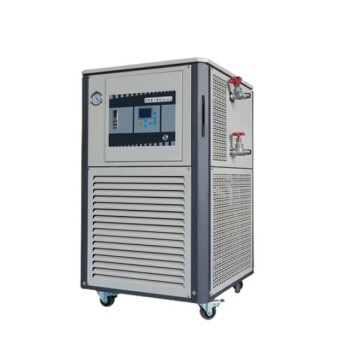
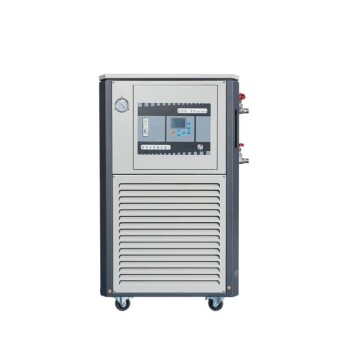
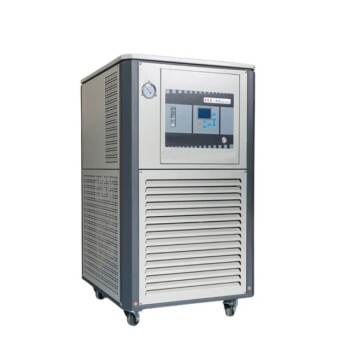
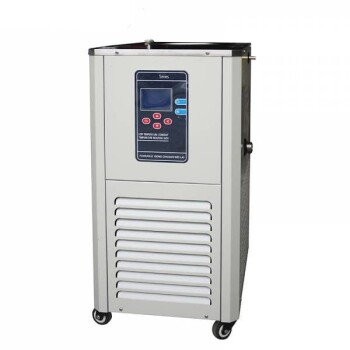
The primary function of a high-precision constant temperature reaction vessel is to act as a rigorous thermodynamic control system during the sol-gel preparation process. Specifically, it stabilizes the environment for the hydrolysis and condensation reactions of 3-glycidyloxypropyltrimethoxysilane (GPTMS). This precise thermal regulation ensures the steady conversion of alkoxy groups, such as methoxy, into reactive silanol groups.
By eliminating thermal fluctuations, the vessel prevents local overheating and the resulting uneven gelation. This control is the deciding factor in producing a hybrid sol with a highly controllable and consistent chemical composition.
Controlling the Chemical Conversion
Regulating Hydrolysis and Condensation
The core chemical mechanism in this process involves the hydrolysis and condensation of GPTMS. These reactions are highly sensitive to thermal energy.
A high-precision vessel maintains the exact thermodynamic conditions required for these reactions to proceed at a controlled rate. This prevents the reaction from stalling or accelerating unpredictably.
Managing Alkoxy Group Conversion
For the sol-gel process to be successful, specific chemical groups must be altered. The vessel ensures the steady conversion of alkoxy groups (specifically methoxy) into silanol groups.
Without precise temperature control, this conversion can become erratic. A stable environment guarantees that the chemical transformation occurs uniformly throughout the mixture.
Ensuring Material Homogeneity
Preventing Local Overheating
One of the most significant risks in sol-gel preparation is thermal inconsistency within the reactor.
If the temperature is not uniform, local overheating can occur in specific zones of the mixture. This vessel is designed specifically to mitigate these hot spots and maintain a homogeneous thermal profile.
Eliminating Uneven Gelation
Thermal spikes caused by local overheating lead directly to structural defects. The primary defect caused by this instability is uneven gelation.
By strictly controlling the temperature, the vessel ensures the gelation process is uniform. This results in a hybrid sol that is structurally consistent rather than patchy or defective.
The Risks of Thermal Instability
The Consequence of Imprecision
It is critical to understand that the "high-precision" aspect of the vessel is not merely a feature, but a necessity for quality control.
The trade-off for lacking this precision is a loss of control over the chemical composition. If the thermodynamic environment fluctuates, you cannot guarantee the ratio of converted silanol groups, rendering the final hybrid sol unpredictable.
Stability vs. Speed
While some processes prioritize speed, this specific preparation prioritizes controllable chemical composition.
Attempting to rush the reaction without constant temperature regulation introduces variables that compromise the integrity of the final material. The vessel enforces a steady state that prioritizes quality over uncontrolled reaction kinetics.
Making the Right Choice for Your Process
To achieve the best results with GPTMS-based sol-gel preparation, align your equipment choice with your specific quality targets:
- If your primary focus is Chemical Homogeneity: Prioritize a vessel that guarantees the steady conversion of alkoxy groups into silanol groups.
- If your primary focus is Defect Prevention: Ensure your system has the precision to eliminate local overheating, which is the root cause of uneven gelation.
Ultimately, the use of a high-precision vessel transforms the sol-gel process from a variable chemical reaction into a reliable manufacturing procedure.
Summary Table:
| Key Feature | Functional Role in GPTMS Process | Impact on Sol-Gel Quality |
|---|---|---|
| Thermodynamic Control | Stabilizes hydrolysis and condensation rates | Ensures steady conversion of alkoxy to silanol groups |
| Thermal Uniformity | Eliminates local overheating and thermal spikes | Prevents structural defects and uneven gelation |
| Precision Regulation | Maintains exact temperature throughout reaction | Guarantees controllable and consistent chemical composition |
| Process Stability | Transforms variable reactions into reliable procedures | Achieves high material homogeneity and structural integrity |
Elevate Your Chemical Synthesis with KINTEK Precision
Achieving the perfect hybrid sol requires more than just a recipe; it demands absolute environmental control. KINTEK specializes in high-performance laboratory equipment designed for the most rigorous research requirements. Our high-temperature high-pressure reactors and autoclaves are engineered to eliminate thermal fluctuations, ensuring your GPTMS-based processes achieve maximum homogeneity without the risk of uneven gelation.
Whether you are focusing on battery research, advanced ceramics, or complex chemical synthesis, KINTEK provides the comprehensive tools you need—from crushing and milling systems to precise hydraulic presses and specialized electrolytic cells.
Ready to transform your sol-gel preparation into a reliable, high-yield procedure?
Contact KINTEK Experts Today to find the ideal reaction vessel for your laboratory.
References
- Himani Shivhare -, Dr Preeti Chincholikar -. 3-Glycidoxypropyltrimethoxysilan: Description, and Analysis of Works Approaches and Applications. DOI: 10.36948/ijfmr.2023.v05i05.6389
This article is also based on technical information from Kintek Solution Knowledge Base .
Related Products
- High Temperature Constant Temperature Heating Circulator Water Bath Chiller Circulator for Reaction Bath
- High Purity Pure Graphite Crucible for Evaporation
- 100L Heating Chilling Circulator Cooling Water Bath Circulator for High and Low Temperature Constant Temperature Reaction
- 50L Heating Chilling Circulator Cooling Water Bath Circulator for High and Low Temperature Constant Temperature Reaction
- 5L Heating Chilling Circulator Cooling Water Bath Circulator for High and Low Temperature Constant Temperature Reaction
People Also Ask
- What is the necessity of a circulating water bath in chlorate production? Optimize Yield & Purity with Precision
- How does a constant temperature circulator support the leaching reaction of gold scrap? Optimize Gold Recovery Results
- How do constant temperature circulators impact weight-loss immersion tests? Ensure Precision in Corrosion Analysis
- Why is a constant temperature water bath used for precursor storage in CVD? Achieve Stable Nanocrystalline SiC Deposition
- Why is a high-precision constant temperature water bath necessary for anaerobic digestion? Ensure Success at 37±0.02°C