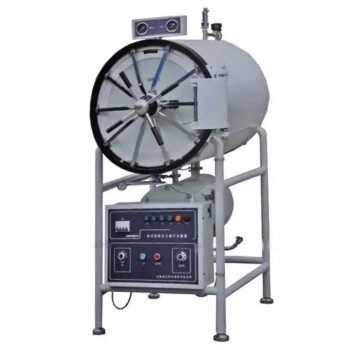
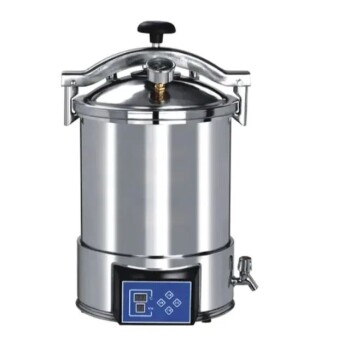
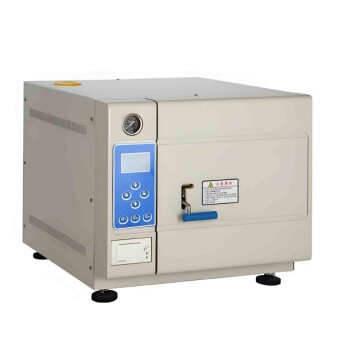
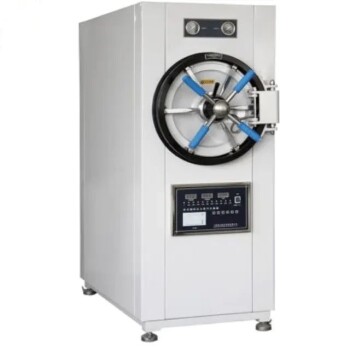
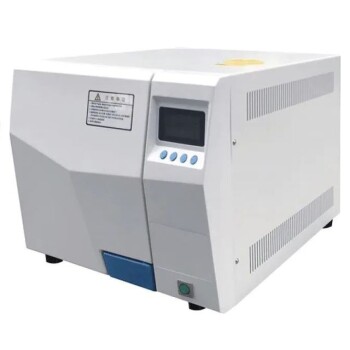
A high-pressure hydrothermal autoclave functions as a precision reaction chamber that creates a closed, elevated temperature and pressure environment. In the context of the urea hydrolysis method, this specific environment is required to drive the slow, controlled breakdown of urea, resulting in the uniform release of hydroxide ions necessary for synthesizing Mg-Al-LDH films.
The autoclave provides the thermodynamic conditions needed to transform a chaotic precipitation reaction into a controlled growth process, ensuring the formation of dense, oriented films rather than loose powder.
The Mechanics of Film Formation
Creating the Reaction Environment
The autoclave physically seals the reaction mixture, allowing pressure to build naturally as the temperature rises.
This closed system enables the solution to maintain a constant temperature, typically between 90 and 120 °C, for the duration of the synthesis.
Controlling Chemical Kinetics
The core purpose of the autoclave in this specific method is to facilitate the slow hydrolysis of urea.
Under standard conditions, precipitation might occur too quickly or unevenly. Inside the autoclave, urea decomposes gradually.
This results in a uniform release of hydroxide ions throughout the solution, rather than a sudden local concentration spike.
Facilitating Co-precipitation
The controlled presence of hydroxide ions triggers the simultaneous precipitation (co-precipitation) of magnesium and aluminum metal ions.
Because the environment is stable and the ion release is slow, these materials have time to self-assemble directly on the substrate surface.
Ensuring Crystal Orientation
The high-pressure conditions promote the growth of Layered Double Hydroxide (LDH) crystals in specific orientations.
Instead of forming random aggregates, the crystals grow into a complete and dense layer, significantly improving the structural integrity of the final film.
Critical Process Considerations
Time-Dependent Quality
The hydrothermal method is not instantaneous; it relies on maintaining conditions over extended periods.
Rushing the process by reducing autoclave time often leads to incomplete film coverage or poor crystallinity.
The "Black Box" Limitation
Because the autoclave is a sealed, high-pressure vessel, you cannot manipulate the reaction once it starts.
All parameters—precursor ratios, substrate placement, and temperature profiles—must be perfectly calculated beforehand, as real-time adjustments are impossible during the active phase.
Optimizing Your Synthesis Strategy
To get the most out of your hydrothermal process, align your parameters with your specific end goals:
- If your primary focus is film density: Maintain the temperature strictly within the 90-120 °C range to ensure the kinetics favor tight crystal packing.
- If your primary focus is coating uniformity: Prioritize the duration of the heat treatment to allow the slow hydrolysis of urea to fully complete the co-precipitation across the entire substrate.
Success in Mg-Al-LDH preparation relies on trusting the autoclave to regulate the delicate balance between ion release and crystal growth.
Summary Table:
| Feature | Role in Urea Hydrolysis/LDH Synthesis |
|---|---|
| Temperature Control | Maintains 90–120 °C to drive gradual urea decomposition |
| Pressure Stability | Creates a closed system for thermodynamic crystal growth |
| Reaction Kinetics | Ensures uniform hydroxide ion release for co-precipitation |
| Film Morphology | Promotes dense, oriented crystal layers over random powder |
Elevate Your Material Synthesis with KINTEK Precision
Achieving the perfect Mg-Al-LDH film requires more than just chemistry; it requires uncompromising hardware. KINTEK specializes in high-performance high-temperature high-pressure reactors and autoclaves designed to maintain the precise thermodynamic conditions your research demands.
Whether you are focusing on battery research, advanced coatings, or chemical synthesis, our comprehensive range of laboratory equipment—from crushing and milling systems to isostatic presses and calcination furnaces—ensures your process is repeatable and efficient.
Ready to optimize your hydrothermal results? Contact our laboratory specialists today to find the ideal solution for your specific application needs.
References
- Junsheng Wu, Yizhong Huang. In Situ Formation of Decavanadate-Intercalated Layered Double Hydroxide Films on AA2024 and their Anti-Corrosive Properties when Combined with Hybrid Sol Gel Films. DOI: 10.3390/ma10040426
This article is also based on technical information from Kintek Solution Knowledge Base .
Related Products
- High Pressure Laboratory Autoclave Reactor for Hydrothermal Synthesis
- Mini SS High Pressure Autoclave Reactor for Laboratory Use
- Stainless High Pressure Autoclave Reactor Laboratory Pressure Reactor
- Automatic High Temperature Heated Hydraulic Press Machine with Heated Plates for Lab
- Customizable High Pressure Reactors for Advanced Scientific and Industrial Applications
People Also Ask
- What role does a high-pressure reactor (autoclave) play in the synthesis of NiCuFe-LDH? Master Hydrothermal Growth
- What Role Does a High-Pressure Reactor or Autoclave Play in HA Catalyst Synthesis? Achieve High Surface Area Materials
- What equipment is required for hydrothermal synthesis of Ga0.25Zn4.67S5.08? Optimize Your Semiconductor Production
- What is the function of a high-pressure reactor in the hydrothermal synthesis of boehmite? Expert Process Insights
- What role does an autoclave play in the synthesis of MnO2 nanofibers? Mastering Hydrothermal Growth