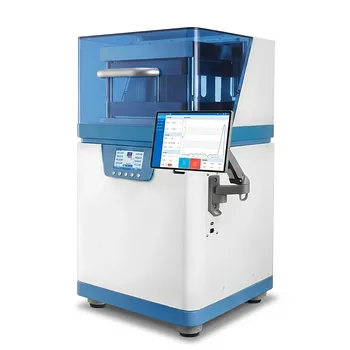
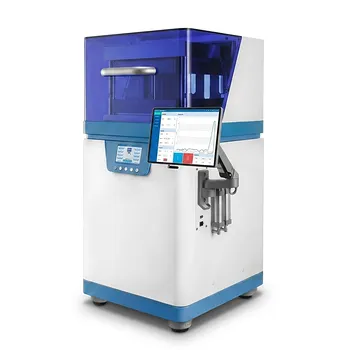
The high-temperature high-pressure (HTHP) reactor is the critical vessel for solvothermal synthesis, providing a sealed environment that keeps solvents liquid far beyond their atmospheric boiling points. This specific physical state dramatically increases the solubility of precursors, enabling the efficient coordination of neodymium (Nd) and iron (Fe) ions with organic ligands. By maintaining these conditions, the reactor ensures the formation of high-quality, crystalline bimetallic frameworks that would be impossible to synthesize under standard laboratory conditions.
The HTHP reactor acts as a kinetic accelerator for NdFeMOF synthesis, utilizing autogenous pressure to force the coordination of metal ions and ligands into a highly ordered, crystalline lattice. It transforms the solvent into a high-energy medium that facilitates uniform crystal growth and structural integrity.
Enabling the Solvothermal Environment
Overcoming Atmospheric Boiling Points
The primary function of the reactor is to prevent solvents from evaporating when heated above their standard boiling points. By maintaining the liquid state at elevated temperatures, the system provides a high-energy medium necessary for complex chemical transformations.
Enhancing Solvent Dissolving Capacity
Under high-pressure and high-temperature conditions, the physical properties of the solvent change, significantly increasing its ability to dissolve metal salts and organic ligands. This enhanced solubility ensures that all reactants are fully available in the liquid phase, which is a prerequisite for uniform reaction kinetics.
Generating Autogenous Pressure
As the temperature inside the sealed reactor rises, it generates internal autogenous pressure. This pressure helps stabilize the reaction environment and facilitates the penetration of reactants into the growing framework structures.
Driving the Coordination Chemistry
Accelerating Coordination Reactions
The high-energy environment within the reactor speeds up the coordination reaction between the neodymium and iron atoms and the organic ligand framework. This acceleration is vital for bimetallic MOFs, where the integration of two different metal species requires precise kinetic control to ensure a homogeneous distribution.
Facilitating Stable Bond Formation
The elevated pressure and temperature provide the necessary activation energy to form stable coordination bonds between the metal ions and ligands. These conditions are essential for producing high-quality NdFeMOF precursors with high crystallinity and well-defined geometric morphologies.
Ensuring Bimetallic Integration
In NdFeMOF synthesis, the reactor ensures that both neodymium and iron ions compete or cooperate effectively for coordination sites. This controlled environment prevents the formation of unwanted monometallic phases and promotes a true bimetallic framework.
Optimizing Structural Integrity and Crystallinity
Promoting Uniform Nucleation
The reactor environment allows for "burst nucleation," where a large number of crystal nuclei form simultaneously. This results in a more uniform particle size distribution throughout the resulting NdFeMOF batch.
Controlling Crystal Growth and Pore Structure
By maintaining stable heating over extended periods (often several hours to days), the reactor facilitates slow, controlled crystal growth. This process is critical for developing the regular pore structures and specific crystal plane exposures that define the performance of the MOF.
Maximizing Structural Foundation
The integrity of the NdFeMOF precursor is established within this pressurized environment. The resulting "structural foundation" is what allows the material to maintain its porosity and stability during subsequent processing or application.
Understanding the Trade-offs
Equipment and Safety Constraints
Operating at high temperatures and pressures requires specialized, heavy-duty autoclaves or reactors, often lined with Teflon (PTFE) to resist corrosion. These systems carry inherent safety risks if the pressure limits are exceeded or if the seals fail during the heating cycle.
Kinetic vs. Thermodynamic Control
While high heat accelerates reactions, excessive temperatures can lead to the formation of the most thermodynamically stable phase rather than the desired metastable MOF structure. Precise temperature control is required to avoid "over-cooking" the material into dense, non-porous metal oxides.
Scalability Challenges
Solvothermal synthesis in HTHP reactors is often a batch process, which can limit large-scale production. Transitioning from small laboratory autoclaves to industrial-scale high-pressure vessels introduces complexities in heat transfer and uniform pressure distribution.
Applying This Technology to Your Synthesis Goal
How to Apply This to Your Project
- If your primary focus is maximizing crystallinity: Utilize the reactor to maintain a steady, lower temperature for a longer duration (e.g., 24–48 hours) to allow for slow, ordered crystal growth.
- If your primary focus is controlling particle size: Focus on the ramp-up rate of the temperature to trigger rapid nucleation, followed by a shorter "dwell" time to limit the growth phase.
- If your primary focus is bimetallic homogeneity: Ensure the solvent choice in the reactor optimizes the solubility of both the Nd and Fe precursors equally to prevent one metal from dominating the framework.
The HTHP reactor is the indispensable tool that bridges the gap between raw chemical precursors and the highly organized, functional architecture of a bimetallic organic framework.
Summary Table:
| Key Reactor Function | Impact on NdFeMOF Synthesis | Physical Mechanism |
|---|---|---|
| Solvothermal Control | Enables liquid state above boiling points | Pressurized containment |
| Precursor Solubility | Ensures uniform reactant availability | Enhanced solvent dissolving capacity |
| Kinetic Acceleration | Speeds up Nd and Fe coordination | High-energy thermal medium |
| Structural Precision | Promotes uniform nucleation & crystallinity | Stable autogenous pressure |
Elevate Your Material Synthesis with KINTEK Precision
Achieving the perfect bimetallic organic framework requires more than just chemistry—it requires the right environment. KINTEK specializes in high-performance laboratory solutions designed for the most demanding research applications. Our industry-leading high-temperature high-pressure reactors and autoclaves provide the stability and control necessary for superior NdFeMOF crystallization and bimetallic homogeneity.
Beyond reactors, our comprehensive portfolio supports your entire workflow:
- Thermal Processing: Muffle, tube, vacuum, and atmosphere furnaces.
- Material Preparation: Hydraulic presses (pellet, hot, isostatic) and advanced crushing/milling systems.
- Sample Integrity: High-purity ceramics, crucibles, and PTFE-lined vessels.
Ready to optimize your solvothermal synthesis? Contact our technical experts today to find the ideal equipment for your lab and accelerate your breakthrough research!
References
- Pradeep Sambyal, Il‐Kwon Oh. Magnetically and Electrically Responsive Soft Actuator Derived from Ferromagnetic Bimetallic Organic Framework. DOI: 10.1002/smll.202207140
This article is also based on technical information from Kintek Solution Knowledge Base .
Related Products
- Customizable Laboratory High Temperature High Pressure Reactors for Diverse Scientific Applications
- High Pressure Laboratory Autoclave Reactor for Hydrothermal Synthesis
- Stainless High Pressure Autoclave Reactor Laboratory Pressure Reactor
- Customizable High Pressure Reactors for Advanced Scientific and Industrial Applications
- Mini SS High Pressure Autoclave Reactor for Laboratory Use
People Also Ask
- How do high-pressure and high-temperature reactors ensure the effective treatment of lignocellulosic wastewater in WAO?
- What equipment is required for high-pressure high-temperature reactions? Master Extreme Chemistry Safely
- How do you control high pressure in a reactor? A Guide to Safe & Stable Operation
- How does initial oxygen pressure affect the wet oxidation of pharmaceutical sludge? Master Your Oxidation Depth
- Why is argon better than nitrogen for inert atmosphere? Ensure Absolute Reactivity & Stability