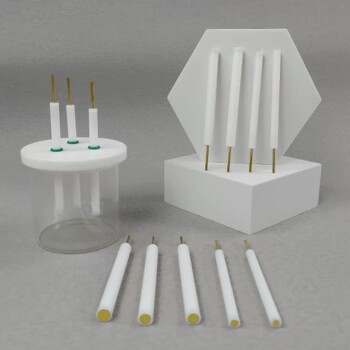
The platinum electrode serves as the primary current-carrying component in a three-electrode hydrogen evolution reaction (HER) system. Its fundamental role is to complete the electrical circuit by facilitating the counter-reaction—typically the Oxygen Evolution Reaction (OER)—with minimal resistance. This ensures that the measured electrochemical data reflects the true performance of the working electrode catalyst rather than being limited by the kinetics of the counter electrode.
The platinum counter electrode provides a high-conductivity, catalytically active surface that completes the electrical circuit while preventing current flow through the reference electrode. This arrangement ensures that the working electrode's potential remains stable and that the recorded kinetic data is accurate and unhindered by system resistance.
Completing the Electrical Circuit
Providing a High-Conductivity Return Path
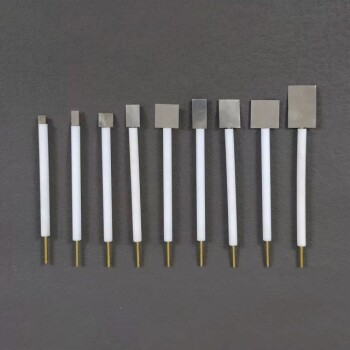
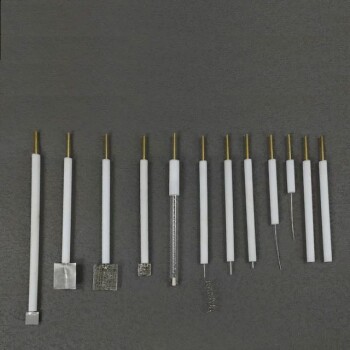
The platinum (Pt) electrode—often in the form of a wire, sheet, or mesh—acts as the auxiliary path for charge to return to the source. It carries the full experimental current generated during the hydrogen evolution process.
Maintaining Charge Balance
In any electrochemical cell, the rate of reduction at the cathode must be balanced by an equal rate of oxidation at the anode. Pt facilitates the counter-reaction efficiently, ensuring that for every electron consumed at the working electrode, a corresponding charge transfer occurs at the counter electrode to maintain electrolyte neutrality.
Protecting the Reference Electrode
In a three-electrode setup, the Pt electrode prevents current from flowing through the reference electrode. This is critical because current flow would cause potential polarization in the reference, leading to unstable and inaccurate voltage measurements.
Minimizing Polarization and Kinetic Interference
High Electrocatalytic Activity
Platinum possesses superior catalytic activity for both the Oxygen Evolution Reaction (OER) and the Hydrogen Evolution Reaction (HER). This high activity ensures that the counter-reaction proceeds with extremely low overpotential, preventing the counter electrode from becoming the rate-limiting step of the experiment.
Chemical Inertness and Stability
Platinum is chosen for its exceptional chemical resistance in both strong acids and concentrated alkaline media (such as 6 M KOH). Its inert nature prevents the electrode from dissolving or participating in unwanted side reactions that could alter the electrolyte chemistry.
Ensuring Precise Potential Control
Because the Pt electrode has low polarization resistance, the potentiostat can maintain the exact desired potential at the working electrode. This allows researchers to acquire reliable polarization curves and impedance data that truly represent the catalyst's behavior.
Understanding the Trade-offs and Pitfalls
The Risk of Platinum Redeposition
A significant pitfall in HER testing is the potential for platinum dissolution from the counter electrode, especially during high-current OER. Dissolved Pt ions can migrate across the cell and deposit onto the working electrode, leading to "false positive" results where the tested catalyst appears more active than it actually is.
Surface Area Requirements
If the surface area of the platinum counter electrode is too small, it may become mass-transport limited. To avoid this, the surface area of the Pt electrode should ideally be significantly larger (often 10 to 100 times) than that of the working electrode to ensure it never bottlenecks the system.
Cost and Material Availability
While platinum is the "gold standard" for counter electrodes due to its performance, its high cost is a practical limitation. In some industrial-scale screenings, researchers may seek alternatives, though few materials match platinum's combination of conductivity and catalytic transparency.
How to Optimize Your HER Testing System
When setting up your electrochemical cell, consider these best practices to ensure the platinum counter electrode functions correctly:
- If your primary focus is high-current density testing: Use a platinum mesh rather than a wire to maximize the available surface area and prevent the counter-reaction from limiting your results.
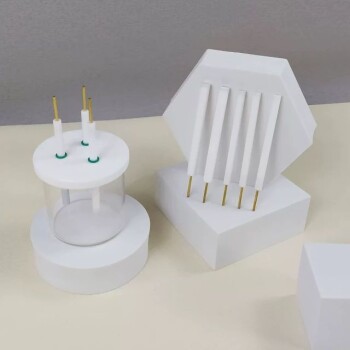
- If your primary focus is high-precision catalyst benchmarking: Utilize a H-cell or a fritted glass divider to physically isolate the platinum counter electrode and prevent dissolved Pt ions from contaminating the working electrode.
- If your primary focus is long-term stability studies: Regularly clean the platinum electrode with dilute acid and flame annealing to remove accumulated contaminants that could increase polarization resistance over time.
By correctly utilizing the platinum counter electrode as a transparent facilitator of charge, you ensure that your research accurately captures the fundamental kinetics of your hydrogen evolution catalysts.
Summary Table:
| Feature | Primary Function | Research Benefit |
|---|---|---|
| Circuit Completion | Provides a high-conductivity return path | Maintains charge balance and electrolyte neutrality |
| High Catalytic Activity | Facilitates counter-reactions (OER/HER) | Minimizes overpotential and prevents system bottlenecks |
| Chemical Inertness | Resists corrosion in acids and alkalis | Prevents electrode dissolution and side reactions |
| Reference Protection | Prevents current flow through the reference | Ensures stable potential control and accurate voltage data |
| Surface Area Support | Offers ample reaction sites (mesh/sheet) | Prevents mass-transport limitations during high-current tests |
Elevate Your Electrochemical Research with KINTEK
Precision in hydrogen evolution reaction (HER) testing starts with high-performance components. KINTEK specializes in providing premium laboratory equipment designed for accuracy and durability. From high-purity platinum electrodes (mesh, wire, and sheet) and specialized electrolytic cells to advanced battery research tools, high-temperature high-pressure reactors, and high-temperature furnaces, we offer a comprehensive range to support your innovations.
Don't let system resistance or electrode contamination compromise your catalyst benchmarking. Whether you need reliable platinum consumables, PTFE products, or sophisticated crushing and milling systems, our experts are here to provide the tools that deliver reproducible results.
Contact KINTEK today to optimize your lab's performance!
References
- Lili Zhang, Guangfeng Wu. Charge Redistribution of Co9S8/MoS2 Heterojunction Microsphere Enhances Electrocatalytic Hydrogen Evolution. DOI: 10.3390/biomimetics8010104
This article is also based on technical information from Kintek Solution Knowledge Base .
Related Products
- Platinum Sheet Electrode for Laboratory and Industrial Applications
- Rotating Platinum Disk Electrode for Electrochemical Applications
- Platinum Sheet Electrode for Battery Lab Applications
- Platinum Auxiliary Electrode for Laboratory Use
- RRDE rotating disk (ring disk) electrode / compatible with PINE, Japanese ALS, Swiss Metrohm glassy carbon platinum
People Also Ask
- What is a common use for a platinum sheet electrode? As a Reliable Counter Electrode in Electrochemical Cells
- What is the most critical guideline for immersing a platinum sheet electrode in an electrolyte? Ensure Accurate Electrochemical Measurements
- What is the purity of the platinum sheet in a platinum sheet electrode? The Key to Reliable Electrochemical Data
- What is the expected lifespan of a platinum sheet electrode? Maximize Your Electrode's Service Life
- What are the available specifications for platinum sheet electrodes? Find the Perfect Fit for Your Electrochemical Needs